

















































The United States (U.S) has approved a potential $1 billion (Ksh129.2 trillion) foreign military sale to Saudi Arabia, covering helicopter logistics support, spare parts, and aviation training for the Royal Saudi Land Forces Aviation Corps (RSLFAC).
The State Department cleared the deal on Monday, December 2, and the Defense Security Cooperation Agency (DSCA) has notified Congress for review.
Multi-Billion Dollar Deal
The proposed sale consists of two separate packages, each valued at approximately $500 million (Ksh64.6 trillion).
The first package is a Cooperative Logistics Supply Support Arrangement (CLSSA), which grants Saudi Arabia access to a U.S.-managed system for officially demanding the supply of spare and repair parts for its helicopter fleet.
This includes critical components for UH-60 Black Hawk utility helicopters, AH-64 Apache attack helicopters, CH-47F Chinook cargo helicopters, Schweizer 333 light helicopters, and Aerial Scout platforms.
The arrangement ensures streamlined maintenance and operational readiness for Saudi Arabia’s U.S.-origin rotary-wing assets.
The second package is a blanket order aviation training program for Saudi aircrews and maintenance personnel.
Under this agreement, U.S Army instructors from the Training and Doctrine Command (TRADOC) will provide comprehensive flight and maintenance training, ranging from initial to advanced levels.
Training will cover multiple helicopter types, including the AH-64E Apache, CH-47F Chinook, UH-72A Lakota, and UH-60L/M Black Hawk.
Instruction will take place at U.S.-based facilities, balancing existing infrastructure without requiring additional U.S personnel deployment to Saudi Arabia.
America’s Aim in Helping Saudi Arabia
According to DSCA, the proposed sale aims to strengthen Saudi Arabia’s ability to maintain and operate its helicopter fleet effectively, enhance interoperability with U.S forces, and support regional stability.
“The sale aligns with U.S. foreign policy and national security objectives by improving the security of a strategic Gulf partner.”
Officials pointed out that the transaction will not alter the military balance in the Middle East and will not adversely impact U.S defence readiness.
The approval comes amid broader U.S.-Saudi defence cooperation efforts.
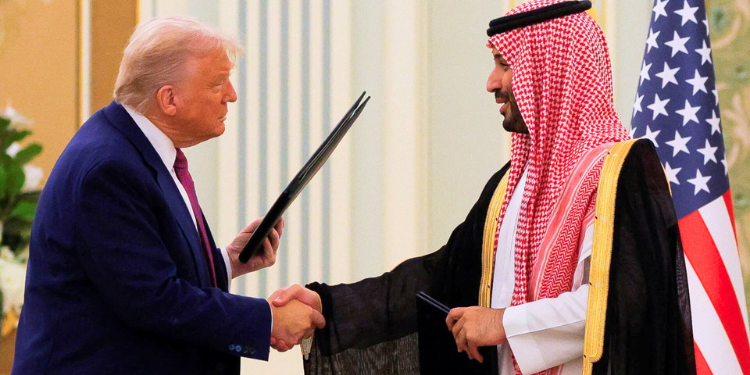
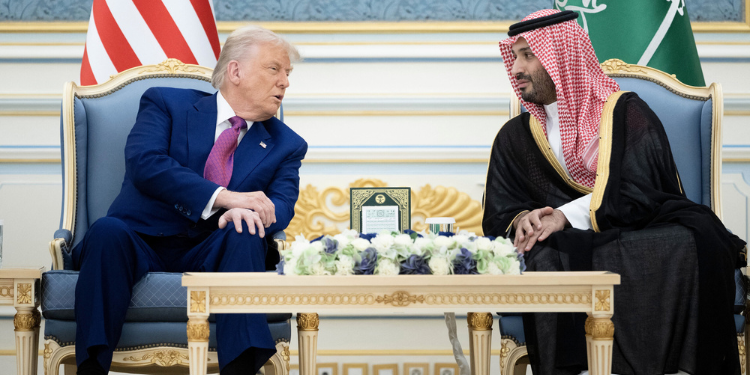
In recent weeks, Crown Prince Mohammed bin Salman visited the White House for high-level talks with President Donald Trump, during which military modernization and arms sales were the main topics.
The helicopter support and training deal adds to Saudi Arabia’s ongoing pursuit of advanced U.S weaponry, including its request for F-35 Joint Strike Fighter jets, a proposal that has faced congressional scrutiny over technology security and human rights concerns.
A Huge Decision Awaits
Congress now has 30 days to review the helicopter deal, with lawmakers expected to raise questions about Saudi Arabia’s human rights record and regional policies.
Most Saudi Arabian media outlets, however, expect the sale to proceed given its focus on sustainment rather than new combat platforms.
Also Read: U.S Issues Update After Peace Deal Talks With Top Ukrainian Officials
Unlike fighter jet acquisitions, the helicopter support package is viewed as a maintenance and readiness measure that will be critical to Saudi Arabia’s ability to respond to internal and external security challenges.
The RSLFAC relies heavily on U.S.-made helicopters for troop transport, surveillance, and close air support missions.
Sustaining these assets is essential for the kingdom’s defense stability, particularly amid regional tensions involving Iran and ongoing security operations along its borders.
By providing training and logistical support rather than deploying U.S personnel, the arrangement minimizes direct involvement while reinforcing Saudi Arabia’s self-sufficiency.
Also Read: Airlines Defy Trump’s Airspace Warning, Continue Flights to Venezuela
If Congress approves the sale, implementation will proceed through established Foreign Military Sales channels.
Delivery schedules and training timelines will be finalized in coordination with the Pentagon and Saudi defense authorities.
No offset agreements have been announced, and the U.S. government does not anticipate additional contractor presence in Saudi Arabia.
Follow our WhatsApp Channel and X Account for real-time news updates.