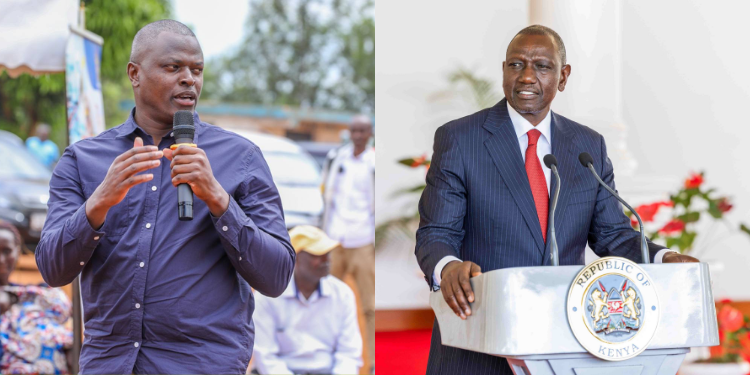
Kiharu Lawmaker Ndindi Nyoro has proposed measures he says could lower petrol and diesel prices in Kenya to below KSh200 per litre after the Energy and Petroleum Regulatory Authority (EPRA) announced the latest fuel price increases.
In a press statement on Saturday, October 17, Nyoro urged President William Ruto’s administration to reduce fuel importers’ and distributors’ margins by KSh10 per litre, remove the KSh7 fuel levy introduced in 2024 and provide a KSh5.5 billion subsidy for petrol and diesel.
Under his proposal, super petrol would drop from KSh226.96 to KSh197.96 per litre, while diesel would fall from KSh227.76 to KSh198.77.
Nyoro criticised the latest price increases, saying they would add a burden on households and businesses already struggling with the cost of living.
“It is insensitive for the government to have announced such hikes in fuel prices. Adequate interventions are needed to cushion Kenyans and the economy. We are already at an inflation rate of 6.8%. The current trend is already unbearable,” Nyoro said.
How Nyoro Wants Fuel Prices Reduced
Ndindi Nyoro proposed reducing importers’ and distributors’ margins by KSh10 per litre for both petrol and diesel.
He also called for a KSh5.5 billion subsidy for the two fuels. Based on estimated monthly consumption of about 450 million litres, he said the subsidy would lower pump prices by approximately KSh12 per litre.
Also Read: EPRA Announces New Fuel Prices for October-November Cycle
His third proposal is to remove the KSh7 fuel levy introduced in 2024.
According to the figures in his presentation, the three measures would reduce fuel prices by KSh29 per litre. The proposed calculations do not include any reduction in Value Added Tax (VAT).
The changes would bring super petrol to KSh197.96 per litre and diesel to KSh198.77 per litre, based on the prices listed in his presentation.
Why EPRA Increased Fuel Prices
EPRA announced the latest price review on Wednesday, October 14, raising the price of super petrol in Nairobi by KSh12.93 per litre, diesel by KSh9.90 and kerosene by KSh28.49.
The new prices took effect at midnight on October 15 and will remain in force until November 14, 2026.
Super petrol now retails at a maximum of KSh226.96 per litre in Nairobi, while diesel costs KSh227.76 and kerosene KSh219.87.
EPRA attributed the increases to higher international prices for imported petroleum products. The average landed cost of imported super petrol rose by 11.81 per cent between August and September, from US$874.26 to US$977.55 per cubic metre.
Diesel’s landed cost rose 11.32 per cent, from US$957.05 to US$1,065.38 per cubic metre, while kerosene rose 9.41 per cent, from US$1,003.87 to US$1,098.31.
The regulator also said it would not apply fuel price stabilisation during the latest pricing cycle, explaining that the money saved could cushion consumers if prices rose further in the future.
Nyoro Questions Fuel Costs and Importers’ Margins
While EPRA cited higher international prices, Ndindi Nyoro questioned the costs included in the pump prices, arguing that taxes, levies, distribution costs and industry margins account for a substantial share of what motorists pay.
Also Read: EPRA Signals Possible Fuel Price Increases in the Coming Months
His presentation listed the product cost of super petrol at KSh126.97 per litre and diesel at KSh138.21. Distribution costs were listed at KSh5.03 for petrol and KSh4.67 for diesel.
Nyoro also argued that the increase in importers’ margins during a period of high fuel prices was unacceptable. He further said the government should apply the KSh21.5 billion fuel subsidy allocation he cited for the current financial year to help lower pump prices.
Nyoro Calls for End to Government-to-Government Fuel Deals
Ndindi Nyoro also called for an end to the government-to-government (G-to-G) fuel import arrangement, arguing that Kenya should allow competition to determine prices.
He questioned the margins paid to fuel importers and demanded greater transparency in the government’s dealings with oil suppliers.
The MP further called for the publication of the investment agreement involving Dangote East African Petroleum Refinery and the disclosure of the refinery’s shareholding structure.
“Kenyans must get the investment agreement of Dangote East African Petroleum Refinery. Off-take of product, even when prices are uncompetitive, cannot be accepted,” Nyoro said.
He also opposed the involvement of government officials in Turkana oil and argued that fuel purchase agreements should not oblige Kenya to buy products at uncompetitive prices.
Matatu Operators Raise Fares After Fuel Hike
The latest fuel price increases have also prompted matatu operators to raise fares, adding to the pressure on commuters.
On October 15, matatu owners’ association boss Albert Karakacha announced a 10 per cent fare increase, saying operators had to adjust prices to cover their rising costs.
“Today we woke up, and we found that the fuel has gone up, and as the association, we’ve consulted widely, and we’ve told our members to increase by 10% because we are businessmen and we need to make a profit,” Karakacha said.
He urged President Ruto to honour an earlier pledge to keep diesel prices lower in Mombasa, saying the latest increase contradicted an agreement reached with the President during a meeting in the coastal city in early May.
Karakacha also called on the government to consider reducing fuel taxes to ease the burden on consumers. He apologised to parents who had budgeted for transport ahead of school closures, saying operators needed to raise fares to sustain their businesses.
Follow our WhatsApp Channel and X Account for real-time news updates.