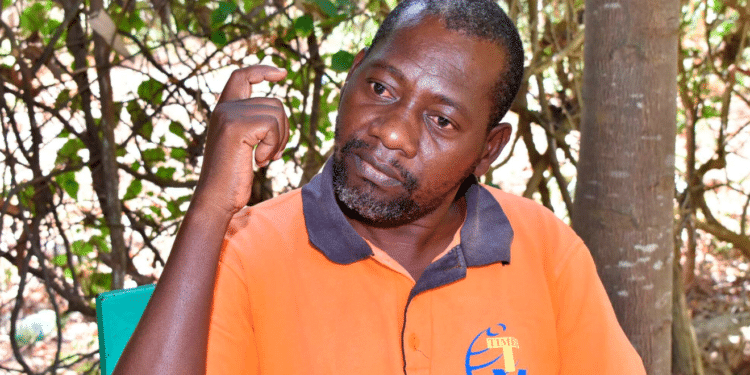
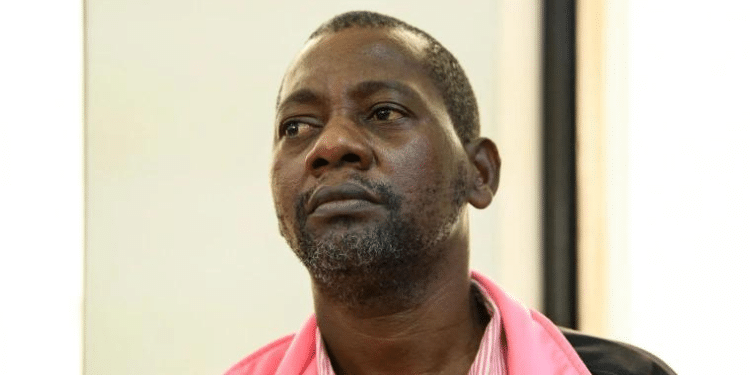
Three years after the discovery of mass graves in Shakahola Forest shocked the country and drew global attention, the High Court in Mombasa has convicted Paul Mackenzie Nthenge and his co-accused in a landmark case linked to the deaths of 191 people.
The accused had been facing 191 murder counts relating to deaths that prosecutors said occurred between January 2021 and September 2023.
Delivering the judgment at the Mombasa Law Courts, Justice Diana Kavedza-Mochache found that the prosecution had proved its case and held the accused criminally responsible in one of the country’s most significant criminal trials arising from the Shakahola tragedy.
The case stemmed from investigations launched after authorities uncovered mass graves and rescued starving followers from a remote settlement associated with Mackenzie’s Good News International Church in 2023.
The discoveries sparked national outrage and prompted one of the largest criminal investigations in Kenya’s recent history.
Court Upholds Paul Mackenzie’s Prosecution Case
During the trial, the prosecution called 121 witnesses, including survivors, investigators, relatives of victims and forensic experts. Prosecutors relied on postmortem reports, government analyst findings and other exhibits to support the charges.
The State argued that followers were encouraged to undertake extreme fasting in preparation to “meet Jesus” and alleged that Mackenzie initiated and directed the process.
Prosecutors told the court that a structured system existed within the settlement and that vulnerable followers were subjected to teachings and instructions that ultimately resulted in death.
The prosecution further presented evidence showing that some victims died from starvation, while others exhibited signs consistent with asphyxia, neck compression and traumatic injuries.
Also Read: Waiguru Reveals Why She’s Better Than Kindiki and Can’t Deputise Sifuna
Earlier in the proceedings, Justice Kavedza-Mochache had ruled that the prosecution had established a prima facie case and placed the accused on their defence.
Bible Verses and Rejection of Huduma Namba
Paul Mackenzie’s teachings were anchored on an apocalyptic interpretation of scripture that portrayed modern institutions as obstacles to salvation.
Witnesses told the court that he repeatedly relied on biblical passages concerning the end times, healing and spiritual separation to justify his directives to followers.
Central among them was Matthew 24, in which Jesus warns of tribulation and the coming judgment.
According to evidence presented in court, Mackenzie used the chapter to convince followers that the world was in its final days and that believers had to detach themselves from earthly systems in preparation for Christ’s return.
Followers were consequently encouraged to abandon jobs, withdraw children from school and relocate to Shakahola to await salvation.
The court also heard references to James 5:14, which encourages the sick to seek prayer and anointing by church elders.
Witnesses testified that Paul Mackenzie elevated spiritual healing above conventional medicine, teaching followers that hospitals and modern healthcare reflected a lack of faith in God.
Several former followers told the court that believers were discouraged from seeking medical treatment and were instead instructed to rely entirely on prayer.
Another passage that featured prominently in the teachings was Luke 8, particularly the Parable of the Sower, which speaks about receiving and preserving God’s word.
Prosecutors argued that Mackenzie used these teachings to reinforce obedience and separation from outside influences, encouraging followers to reject alternative viewpoints and fully submit the the movement’s doctrines.
Court proceedings further heard that Mackenzie linked government programmes to biblical prophecies contained in the Book of Revelation, warning followers that the Huduma Namba system represented the “mark of the beast”.
Witnesses testified that believers were instructed to reject government registration programmes, national identity systems and other state institutions, which Mackenzie allegedly portrayed as instruments of a corrupt world preparing for the end times.
Jonestown Comparison to Shakahola
In one of the most striking references contained in the judgment, Justice Diana Kavedza-Mochache drew parallels between the Shakahola tragedy and the infamous 1978 Jonestown massacre in Guyana, widely regarded as one of the deadliest cult disasters in modern history.
Also Read: Matatu Operators Clarify on Countrywide Strike Over Fuel Prices
The Jonestown tragedy unfolded under the leadership of Jim Jones, founder of the People’s Temple, a movement that initially attracted thousands through messages of social justice, equality and communal living.
Over time, however, Jones consolidated absolute control over his followers, many of whom relocated with him to a remote settlement known as Jonestown in the South American nation of Guyana.
There, members lived in isolation and under strict control as Jones demanded complete loyalty and obedience.
The movement ended in catastrophe on November 18, 1978, when more than 900 people, including hundreds of children, died after being compelled to consume poison in what became one of the largest losses of civilian life linked to a cult leader.
The disaster shocked the world and transformed “Jonestown” into a symbol of the devastating consequences of religious manipulation and blind devotion to a single individual.
Follow our WhatsApp Channel and X Account for real-time news updates.