

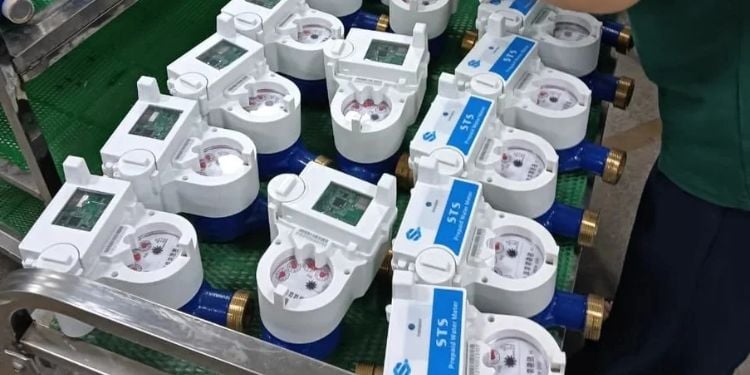
The Water Resources Authority (WRA) has issued a new directive requiring certain water abstractors in Kenya to install smart meters by April 15, 2027, as part of measures to strengthen the monitoring of water use and discharge.
In a notice, the Authority stated that the requirement applies to all Category B, C and D water abstractors under the Water (Resources) Regulations, 2025, which came into effect on March 7, 2025.
“In this regard, the Water (Resources) Regulations, 2025, which came into effect on 7th March 2025, require all Category B, C and D water abstractors to install Smart meters by 15th April 2027,” the statement read in part.
WRA explained that the installation of smart meters is intended to improve the measurement of water abstracted from natural sources and effluent discharged by water users. The system will also support equitable water allocation, accountability and sustainable management of the country’s water resources.
According to the Authority, accurate measurement will enable transparent billing based on actual water consumption while encouraging responsible and efficient water use.
Smart Meter Requirements for Consumers and Suppliers
WRA has directed water consumers and suppliers involved in the purchase and installation of smart meters to ensure that the devices meet its technical specifications before they are acquired.
Under Regulation 73 of the Water (Resources) Regulations, 2025, the Authority must periodically publish technical specifications through an Application Programming Interface (API).
The API provides the technical requirements that smart meter manufacturers, vendors and water abstractors must follow to ensure that the devices can communicate with WRA’s central meter data management system.
“In accordance with Regulation 73 of the Water (Resources) Regulations, 2025, WRA is required to periodically publish the technical specifications (API) to guide water users and smart meter manufacturers on the acquisition of compatible automated meters and their integration with the Authority’s central meter data management system.”
WRA has made the specifications available through its Smart Meters Vendor Portal at https://meter.wra.go.ke/apis.
Before purchasing a smart meter, affected parties have been advised to confirm with suppliers that the device meets WRA’s requirements.
This is intended to prevent the acquisition of meters that cannot connect to the Authority’s central monitoring system.
What the WRA Smart Meter Technical Specifications Require
Water Resources Authority (WRA) has published technical documentation outlining how smart meters must transmit water consumption data to its central monitoring system.
According to the API documentation available on the WRA Smart Meters Vendor Portal, compatible devices must submit readings through a single endpoint, POST /api/v1/meter-readingsusing JSON format and an authentication key generated through the vendor portal.
Each meter must transmit three mandatory details: its unique identification number, total water volume recorded and the date and time of the reading in Coordinated Universal Time (UTC).
The system also supports additional information, including water flow rate, pressure, battery level, signal strength, temperature, geographical coordinates and alarm flags. WRA recommends submitting these details where the installed devices can capture them.
Also Read: EPRA Announces Three Electricity Price Adjustments on November Bills
Successful submissions receive a 200 response confirming that the readings have been received and processed. The response also provides the meter’s identification details, registration status, recorded volume and time of receipt.
Errors Vendors Must Avoid When Connecting Smart Meters
WRA’s documentation identifies four possible error responses during data transmission.
-
401 – Unauthorised: Missing or invalid API authentication key.
-
400 – Bad Request: Missing meter identification number.
-
415 – Unsupported Media Type: Incorrect data format instead of the required JSON.
-
500 – Internal Server Error: Unexpected server-side problem.
Four Steps Required When Installing Smart Meters
WRA has outlined four mandatory steps that water abstractors and their vendors must follow when acquiring, installing and connecting the devices.
- Buy: Purchase a smart meter that complies with WRA’s published API specifications.
- Install: Fit the device at the approved point of water abstraction or effluent discharge.
- Connect: Have the vendor or installer connect the meter to WRA’s central system using the published API.
- Seal: Contact the nearest WRA office to arrange an inspection and sealing of the installed meter.
Also Read: Nairobi Water Announces Fresh Changes Affecting Household Water Supply
The Authority has emphasised the importance of following the onboarding process to ensure that the devices are properly integrated into its monitoring system.
WRA has advised consumers, suppliers and other affected parties seeking clarification to visit their nearest Authority office.
The Authority can also be reached through its emergency hotline on 0700 056472.
Additional inquiries can be sent through its official email addresses, [email protected] and [email protected]. Information on approved vendors and smart meter technical specifications is available through its website and vendor portal.
Follow our WhatsApp Channel and X Account for real-time news updates and subscribe to our YouTube Channel for in-depth interviews.