Tuesday, June 2, 2026
  • News
    • Latest News
    • Breaking News
    • Fact Check
    • Investigations
    • Explainers
  • Politics
    • Global Politics
    • Elections
    • Government & Policy
    • Diplomacy
    • Conflicts & Security
    • Political Analysis
  • Business
    • Global Economy
    • Markets
    • Technology
    • Startups
    • Energy
    • Finance
  • World News
    • Americas
    • Asia
    • Asia Pacific
    • Africa
    • Europe
    • Middle East
  • Africa
    • Central Africa
    • East Africa
    • West Africa
    • Southern Africa
  • Health
    • Global Health
    • Public Health
    • Health Policy
    • Medical Research
    • Diseases & Conditions
    • Mental Health
    • Nutrition
    • Climate & Health
    • Health Explainers
  • Sports
    • Athletics
    • Basketball
    • Boxing
    • Cricket
    • Football
    • Formula 1
    • Golf
    • Rugby
  • Weather
    • Climate Business
    • Climate Change
    • Climate Solutions
    • Living Green
  • Culture
    • Arts
    • Film & TV
    • Food
    • Music
    • Lifestyle
    • Travel
  • Opinion
    • Editorials
    • Letters
  • Behind The Brand
REGISTER
LOGIN
No Result
View All Result
The Kenya Times
  • News
    • Latest News
    • Breaking News
    • Fact Check
    • Investigations
    • Explainers
  • Politics
    • Global Politics
    • Elections
    • Government & Policy
    • Diplomacy
    • Conflicts & Security
    • Political Analysis
  • Business
    • Global Economy
    • Markets
    • Technology
    • Startups
    • Energy
    • Finance
  • World News
    • Americas
    • Asia
    • Asia Pacific
    • Africa
    • Europe
    • Middle East
  • Africa
    • Central Africa
    • East Africa
    • West Africa
    • Southern Africa
  • Health
    • Global Health
    • Public Health
    • Health Policy
    • Medical Research
    • Diseases & Conditions
    • Mental Health
    • Nutrition
    • Climate & Health
    • Health Explainers
  • Sports
    • Athletics
    • Basketball
    • Boxing
    • Cricket
    • Football
    • Formula 1
    • Golf
    • Rugby
  • Weather
    • Climate Business
    • Climate Change
    • Climate Solutions
    • Living Green
  • Culture
    • Arts
    • Film & TV
    • Food
    • Music
    • Lifestyle
    • Travel
  • Opinion
    • Editorials
    • Letters
  • Behind The Brand
  • News
    • Latest News
    • Breaking News
    • Fact Check
    • Investigations
    • Explainers
  • Politics
    • Global Politics
    • Elections
    • Government & Policy
    • Diplomacy
    • Conflicts & Security
    • Political Analysis
  • Business
    • Global Economy
    • Markets
    • Technology
    • Startups
    • Energy
    • Finance
  • World News
    • Americas
    • Asia
    • Asia Pacific
    • Africa
    • Europe
    • Middle East
  • Africa
    • Central Africa
    • East Africa
    • West Africa
    • Southern Africa
  • Health
    • Global Health
    • Public Health
    • Health Policy
    • Medical Research
    • Diseases & Conditions
    • Mental Health
    • Nutrition
    • Climate & Health
    • Health Explainers
  • Sports
    • Athletics
    • Basketball
    • Boxing
    • Cricket
    • Football
    • Formula 1
    • Golf
    • Rugby
  • Weather
    • Climate Business
    • Climate Change
    • Climate Solutions
    • Living Green
  • Culture
    • Arts
    • Film & TV
    • Food
    • Music
    • Lifestyle
    • Travel
  • Opinion
    • Editorials
    • Letters
  • Behind The Brand
No Result
View All Result
The Kenya Times ~ Trending, Breaking News and Videos
No Result
View All Result
ADVERTISEMENT

IMF Is Failing Countries Like Kenya: Why, and What Can Be Done About It

The ConversationbyThe Conversation
July 3, 2024
Reading Time: 7 mins read
President Williamaruto And Imf Director Kristalina Georgieva In Rome During Italy - Africa Summit. Photo/Pcs.

President WilliamaRuto and IMF Director Kristalina Georgieva in Rome during Italy - Africa Summit. PHOTO/PCS.

FacebookTwitterLinkedInRedditWhatsApp
Advertisement

The recent Kenyan protests are a warning that the International Monetary Fund (IMF) is failing. The public does not think it is helping its member countries manage their economic and financial problems, which are being exacerbated by a rapidly changing global political economy.

To be sure, the IMF is not the only cause of Kenya’s problems with raising the funds to meet its substantial debt obligations and deal with its budget deficit. Other causes include the failure of the governing class to deal with corruption, to spend public finances responsibly and to manage an economy that produces jobs and improves the living standards of Kenya’s young population.

The country has also been hammered by drought, floods and locust infestations in recent years. In addition, its creditors are demanding that it continue servicing its large external debts despite its domestic challenges and a difficult international financial and economic environment.

The IMF has provided financial support to Kenya. But the financing is subject to tough conditions which suggest that debt obligations matter more than the needs of long-suffering citizens. This is despite the IMF claiming that its mandate now includes helping states deal with issues like climate, digitalisation, gender, governance and inequality.

Unfortunately, Kenya is not an isolated case. Twenty-one African countries are receiving IMF support.
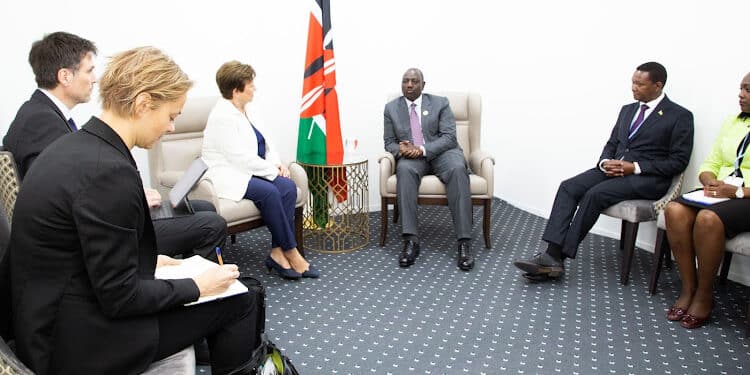
President William Ruto In A Meeting With Imf Managing Director Kristalina Georgieva, Css Alfred Mutua, Davis Chirchir Among Other Leaders. Photo/Pcu.
President William Ruto in a meeting with IMF managing director Kristalina Georgieva, CSs Alfred Mutua, Davis Chirchir among other leaders. PHOTO/PCU.

In Africa, debt service, on average, exceeds the combined amounts governments are spending on health, education, climate and social services.

The tough conditions attached to IMF financing have led the citizens of Kenya and other African countries to conclude that a too powerful IMF is the cause of their problems. However, my research into the law, politics and history of the international financial institutions suggests the opposite: the real problem is the IMF’s decline in authority and efficacy.

Some history will help explain this and indicate a partial solution.

The history of IMF

When the treaty establishing the IMF was negotiated 80 years ago, it was expected to have resources equal to roughly 3% of global GDP. This was to help deal with the monetary and balance of payments problems of 44 countries. Today, the IMF is expected to help its 191 member countries deal with fiscal, monetary, financial and foreign exchange problems and with “new” issues like climate, gender and inequality.


Also Read: Malema Stands with Kenyans, Calls Out IMF and World Bank


To fulfil these responsibilities, its member states have provided the IMF with resources equal to only about 1% of global GDP.

The decline in its resources relative to the size of the global economy and of its membership has at least two pernicious effects.

The first is that it is providing its member states with less financial support than they require if they are to meet the needs of their citizens and comply with their legal commitments to creditors and citizens. The result is that the IMF remains a purveyor of austerity policies. It requires a country to make deeper spending cuts than would be needed if the IMF had adequate resources.

The second effect of declining resources is that it weakens the IMF’s bargaining position in managing sovereign debt crises. This is important because the IMF plays a critical role in such crises. It helps determine when a country needs debt relief or forgiveness, how big the gap between the country’s financial obligations and available resources is, how much the IMF will contribute to filling this gap and how much its other creditors must contribute.

When Mexico announced that it could not meet its debt obligations in 1982, the IMF stated that it would provide about a third of the money that Mexico needed to meet its obligations, provided its commercial creditors contributed the remaining funds. It was able to push the creditors to reach agreement with Mexico within months. It had sufficient resources to repeat the exercise in other developing countries in Latin America and eastern Europe.

The conditions that the IMF imposed on Mexico and the other debtor countries in return for this financial support created serious problems for these countries. Still, the IMF was an effective actor in the 1980s debt crisis.

Today, the IMF is unable to play such a decisive role. For example, it has provided Zambia with less than 10% of its financing needs. It has been four years since Zambia defaulted on its debt and, even with IMF support, it has not yet concluded restructuring agreements with all its creditors.
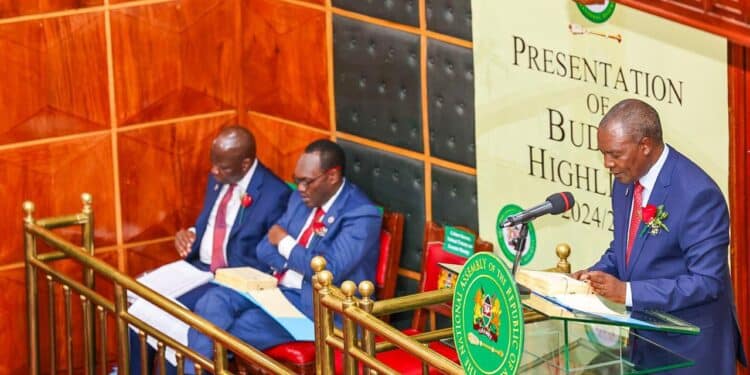
Prof. Njuguna Ndung'U And President William Ruto At A Past Event. Photo/Pcs.
Prof. Njuguna Ndung’u presenting budget estimates in Parliament. PHOTO/Treasury.

What is to be done?

The solution to this problem requires the rich countries to provide sufficient finances for the IMF to carry out its mandate. They must also surrender some control and make the organisation more democratic and accountable.

In the short term, the IMF can take two actions.

First, it must set out detailed policies and procedures that explain to its own staff, to its member states and to the inhabitants of these states what it can and will do. These policies should clarify the criteria that the IMF will use to determine when and how to incorporate climate, gender, inequality and other social issues into IMF operations.

They should also describe with whom it will consult, how external actors can engage with the IMF and the process it will follow in designing and implementing its operations. In fact, there are international norms and standards that the IMF can use to develop policies and procedures that are principled and transparent.


Also Read: IMF Warns of Decline in Africa’s Economic Growth Amid Superpower Pressure


Second, the IMF must acknowledge that the issues raised by its expanded mandate are complex and that the risk of mistakes is high.

Consequently, the IMF needs a mechanism that can help it identify its mistakes, address their adverse impacts in a timely manner and avoid repeating them.

In short, the IMF must create an independent accountability mechanism such as an external ombudsman who can receive complaints.

Currently, the IMF is the only multilateral financial institution without such a mechanism. It therefore lacks the means for identifying unanticipated problems in its operations when they can still be corrected and for learning about the impact
of its operations on the communities and people it is supposed to be helping.The Conversation

Danny Bradlow, Professor/Senior Research Fellow, Centre for Advancement of Scholarship, University of Pretoria

This article is republished from The Conversation under a Creative Commons license. Read the original article.
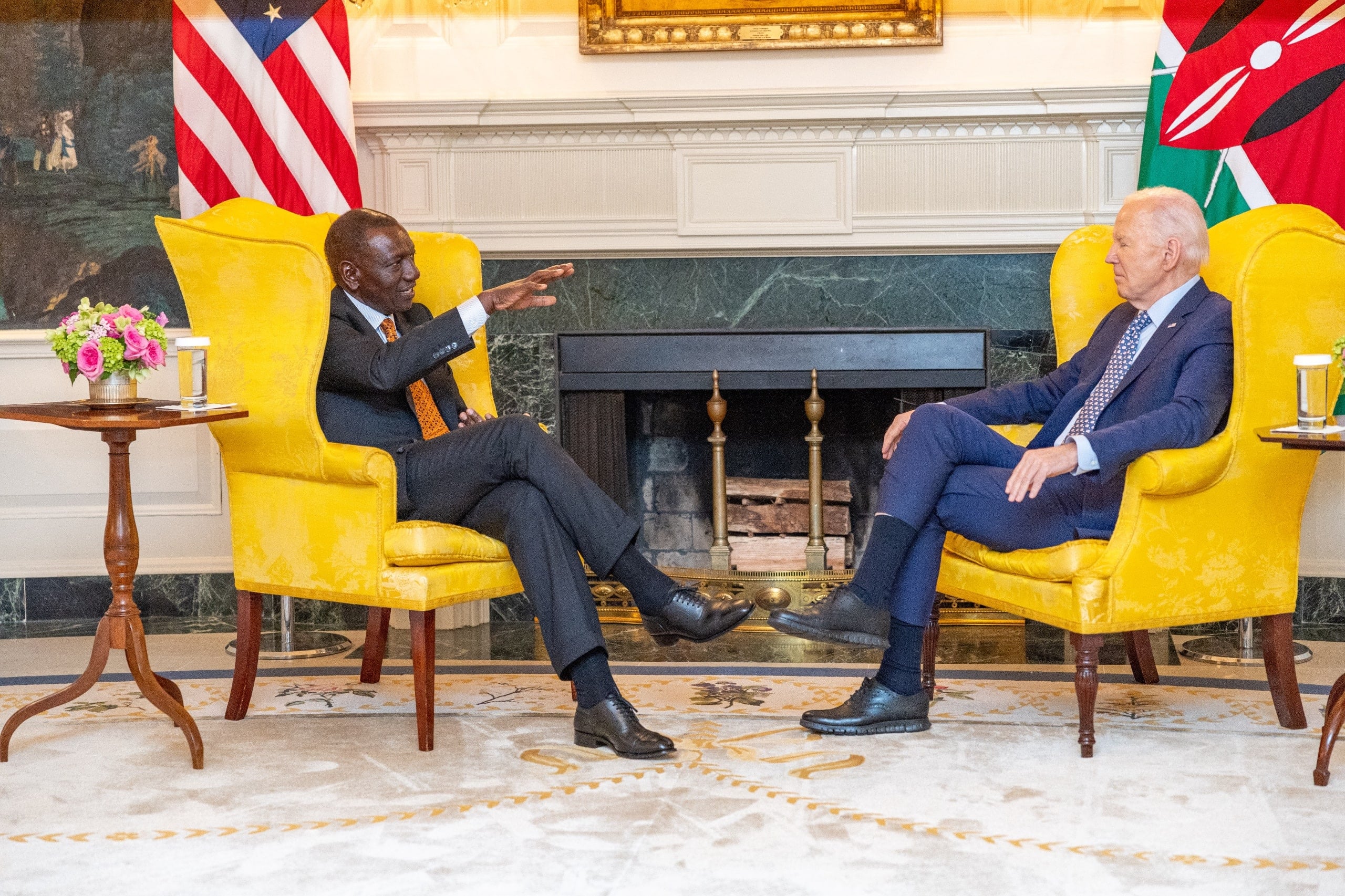
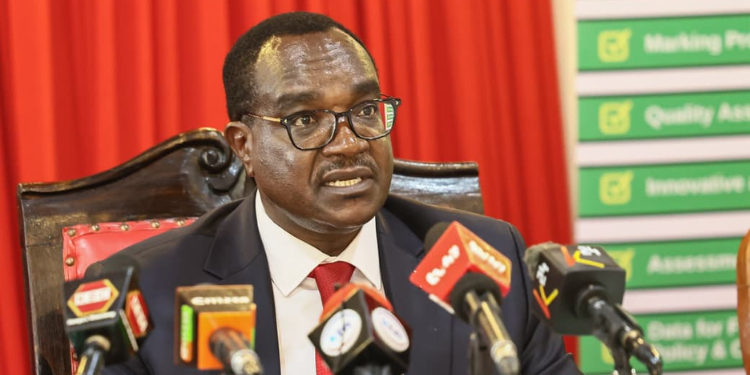
President William Ruto Meets Us President Joe Biden. Photo/Pcs
President William Ruto meets US President Joe Biden. PHOTO/PCS
Tags: Anti-tax protestsIMFOccupy ParliamentOccupy State HousePresident William Ruto
The Conversation

The Conversation

The Conversation is an independent news organization that publishes evidence-based articles written by experts to help readers understand diverse topics. We cover a wide range of areas including arts, culture, education, health, politics, science, and more¹. Their content is characterized by in-depth analysis, research, news, and ideas from leading academics and researchers. The Conversation aims to provide academic rigor with journalistic flair.

Related Posts

Moe Has Vowed To Take Action Against Utumishi Girls School Principal Over School Fire That Killed 16 Learners.

Opinion | How Kenya Failed the Girls of Utumishi Academy

June 2, 2026
Is Kenya Losing Its Morals? Rising Deviant Behavior And Rampant Crime

Opinion | The Mother Who Hates Her Own Children: Kenya’s Moral Collapse

June 2, 2026
Bolt Breaks Silence On Kenya Exit Rumours, Dismisses Viral Shutdown Notice

Bolt Sets the Record Straight on Reports of Shutting Down in Kenya

June 2, 2026
Treasury Invites Applications For Board Recruitment Across 39 State-Owned Enterprises

Opinion | How New Taxes on Bank Card Transactions Charges Will Raise the Costs for Ordinary Kenyans if Adopted by Parliament

June 1, 2026
ADVERTISEMENT

The Kenya Times Facebook

LATEST ARTICLES

  • Pressure on Ruto to Allow Atheism in All Schools Countrywide
  • Here Are The 6 Things That Make Certain Sports a Lot More Popular
  • Emotional Utumishi Girls Survivor Recounts Horrific Night That Killed Classmates, Calls for Justice
  • Ruto Recalls How Leaders Warned Him Against Appointing Francis Ogolla
  • Trump Nominates Diplomat Henry Wooster as US Ambassador to Kenya
  • High Court Orders Govt to Disclose All Agreements and Approvals on Ebola Facility
  • Opinion | How Kenya Failed the Girls of Utumishi Academy
  • Lenana School Suspends Learning After Student Unrest
  • Maurice Ogeta Finally Reveals Raila’s Last Moments and How He Died 
  • Ruto Explains Why He Allowed US to Have Ebola Quarantine at Laikipia Air Base
  • Opinion | The Mother Who Hates Her Own Children: Kenya’s Moral Collapse
  • Bolt Sets the Record Straight on Reports of Shutting Down in Kenya
  • Ex-Catholic Priest Arrested Over Calls to Overthrow Ruto
  • Nairobi Mentioned as Trump Cut Number of Embassies in Africa
  • Why Transgender Troops Can Now Serve in the U.S. Military
ADVERTISEMENT

Company

About Us

Our Authors

Our Experts

Social Media

Policies

Privacy Policy

House Rules

Standards and Policies

Terms and Conditions

Subscription

My Account

Contact Us

Contact Us

Join Our Team

Advertise With Us

© Copyright 2026 | The Kenya Times | All Rights Reserved

Welcome Back!

Sign In with Facebook
Sign In with Google
Sign In with Linked In
OR

Login to your account below

Forgotten Password? Sign Up

Create New Account!

Sign Up with Facebook
Sign Up with Google
Sign Up with Linked In
OR

Fill the forms below to register

All fields are required. Log In

Retrieve your password

Please enter your username or email address to reset your password.

Log In
Your Privacy and Cookies
We use cookies on our website to give you the most relevant experience by remembering your preferences and repeat visits. By clicking “Accept”, you consent to the use of ALL the cookies.
Do not sell my personal information.
Cookie settingsACCEPT
Privacy & Cookies Policy

Privacy Overview

This website uses cookies to improve your experience while you navigate through the website. Out of these cookies, the cookies that are categorized as necessary are stored on your browser as they are essential for the working of basic functionalities of the website. We also use third-party cookies that help us analyze and understand how you use this website. These cookies will be stored in your browser only with your consent. You also have the option to opt-out of these cookies. But opting out of some of these cookies may have an effect on your browsing experience.
Necessary
Always Enabled
Necessary cookies are absolutely essential for the website to function properly. This category only includes cookies that ensures basic functionalities and security features of the website. These cookies do not store any personal information.
Functional
Functional cookies help to perform certain functionalities like sharing the content of the website on social media platforms, collect feedbacks, and other third-party features.
Performance
Performance cookies are used to understand and analyze the key performance indexes of the website which helps in delivering a better user experience for the visitors.
Analytics
Analytical cookies are used to understand how visitors interact with the website. These cookies help provide information on metrics the number of visitors, bounce rate, traffic source, etc.
Advertisement
Advertisement cookies are used to provide visitors with relevant ads and marketing campaigns. These cookies track visitors across websites and collect information to provide customized ads.
Others
Other uncategorized cookies are those that are being analyzed and have not been classified into a category as yet.
SAVE & ACCEPT
LOGIN | REGISTER
  • Login
  • Sign Up
  • Cart
No Result
View All Result
  • News
    • Latest News
    • Breaking News
    • Investigations
    • Explainers
    • Fact Check
  • Politics
    • Global Politics
    • Conflicts & Security
    • Elections
    • Diplomacy
    • Government & Policy
    • Political Analysis
  • Business
    • Global Economy
    • Markets
    • Technology
    • Startups
    • Energy
    • Finance
  • World News
    • Americas
    • Asia
    • Asia Pacific
    • Africa
    • Europe
    • Middle East
  • Africa
    • East Africa
    • West Africa
    • Southern Africa
    • Central Africa
  • Health
    • Global Health
    • Public Health
    • Health Policy
    • Medical Research
    • Diseases & Conditions
    • Mental Health
    • Nutrition
    • Climate & Health
    • Health Explainers
  • Sports
    • Athletics
    • Basketball
    • Boxing
    • Cricket
    • Football
    • Formula 1
    • Golf
    • Rugby
  • Weather
    • Climate Business
    • Climate Change
    • Climate Solutions
    • Living Green
  • Culture
    • Arts
    • Film & TV
    • Food
    • Lifestyle
    • Music
    • Travel
  • Opinion
    • Editorials
    • Letters
  • Behind The Brand
  • Contact Us

Not enough quota to unlock this post
Unlock left : 0
Are you sure want to cancel subscription?