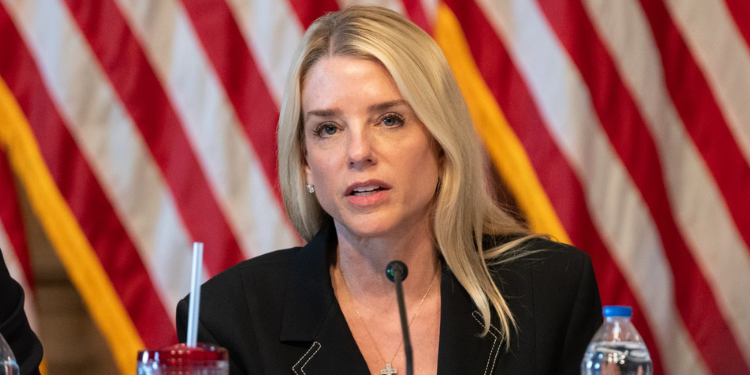

A senior official in the administration of President Donald Trump has reportedly relocated to a military base in the Washington area after facing threats linked to drug cartels and backlash surrounding the government’s handling of records tied to Jeffrey Epstein.
According to a report by The New York Times, Attorney General Pamela Bondi moved from a private apartment in the capital within the past month after federal law enforcement flagged what sources described as a growing number of threats.
The report further said that the relocation was prompted by “an array of threats flagged to her staff by federal law enforcement,” including criticism and threats communicated through investigators.
One catalyst cited by officials was the capture and prosecution of Nicolás Maduro, the former leader of Venezuela, earlier in January this year.
A senior official with direct knowledge of the matter told the Times that threats increased following the Maduro case, which authorities believed could provoke retaliation from criminal networks tied to international drug trafficking.
The report said Bondi is now living in one of several heavily guarded residences located on or near military installations around the nation’s capital — facilities sometimes used by administration officials facing elevated security risks.
Epstein files dispute intensifies
The reported move comes as tensions escalate in Washington over the Justice Department’s handling of Epstein-related records.
Earlier this month, the House Oversight Committee voted to subpoena the Attorney General, demanding testimony about how the U.S. Department of Justice reviewed and released millions of documents connected to the Epstein investigation.
The motion received bipartisan backing after five Republicans joined Democrats in supporting the subpoena introduced by South Carolina Rep. Nancy Mace.
In a statement following the vote, Mace said:
“AG Bondi will testify about missing Epstein evidence. The videos, the audio, the documents, the DOJ is hiding.”
“The American people deserve transparency. Survivors deserve justice. We’re delivering both. Accountability is coming.”
Scrutiny of the Justice Department intensified after a review found discrepancies in the number of Epstein-related records available through the DOJ’s online document library.
Officials had previously said more than 3 million pages would be made public under the Epstein Files Transparency Act.
However, a later analysis found the department currently hosts about 2.7 million pages, while tens of thousands of files totaling roughly 65,500 pages were no longer accessible through previously active links.
Some of the removed files reportedly contained explicit images or personally identifiable information connected to nearly 100 victims, including documents with unredacted photographs and birthdates.
However, the Justice Department pushed back on the claims with a DOJ spokesperson said the analysis appeared “fundamentally flawed,” adding that the department “has not deleted any files from the library.”
Bondi and DOJ explain redactions
In a report submitted to Congress earlier this year, Bondi and Deputy Attorney General Todd Blanche outlined the legal justification for redactions applied to Epstein records.
The department said the released material covered multiple categories, including investigative files, flight manifests, financial records, and documents connected to the prosecution of Epstein associate Ghislaine Maxwell.
According to the report:
“No records were withheld or redacted on the basis of embarrassment, reputational harm, or political sensitivity.”
Also Read: Lawmakers Move to Force Testimony from Trump’s AG Over Epstein Files
Officials said redactions were primarily applied to protect victims, remove child sexual abuse material, and safeguard sensitive investigative details.
The report also included a list of government officials and politically exposed persons whose names appear in the records, noting that inclusion “does not indicate wrongdoing.”
The New York Times report noted that several senior administration officials have moved into secure housing at military installations in or around Washington in recent months.
Officials cited threats from criminal groups, foreign adversaries, and political protesters as reasons for the increased security measures.
Bondi is expected to testify before lawmakers in the coming weeks as congressional oversight of the Epstein files continues.
Follow our WhatsApp Channel and X Account for real-time news updates.