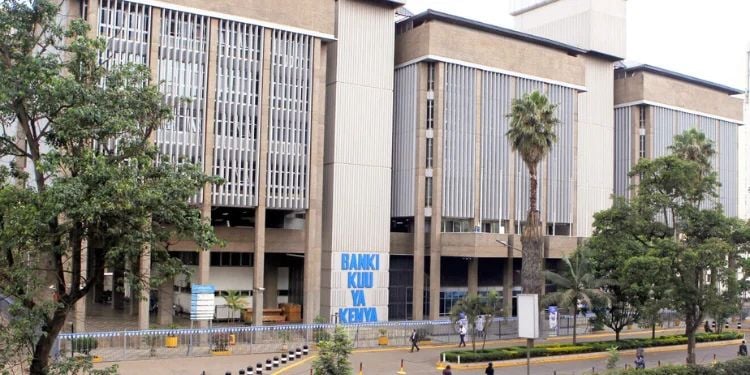

The the Central Bank of Kenya (CBK) has revealed that the Kenya shilling continued to remain stable against the US dollar in the week ending October 15, 2026.
According to the latest CBK weekly bulletin, the shilling traded at KSh 129.81 against the US dollar on October 15, down from KSh 129.94 on October 8.
CBK’s daily exchange rates showed the dollar trading at KSh 129.89 on Friday, October 16, up slightly from the previous day’s rate.
“The Kenya Shilling remained stable against major international and regional currencies during the week ending October 15, 2026. It exchanged at KSh 129.81 per U.S. dollar on October 15, compared to KSh 129.94 on October 8,” CBK said.
The latest figures indicate the shilling strengthened slightly against the dollar during the week before moving slightly on October 16.
The dollar exchange rate is closely watched by businesses importing goods, travellers and Kenyans making payments in foreign currencies. Changes in the rate can affect the local cost of imported products and expenses paid in dollars.
CBK Releases New Exchange Rates as Kenya Shilling Holds Steady
The CBK’s daily exchange rates for October 16 also showed the pound sterling trading at KSh 172.74 and the euro at KSh 145.81.
Regionally, CBK data showed the shilling at Ksh 31.17 per Ugandan shilling, Ksh 20.36 per Tanzanian shilling, and Ksh 11.35 per Rwandan franc.
It also traded at Ksh 82.27 per 100 Japanese yen and Ksh 7.89 against the South African rand.
The rates provide a reference for individuals and businesses exchanging currencies, although the rates offered by banks and foreign exchange bureaus may differ.
Exchange rates play an important role in international trade, as many transactions involve foreign currencies, particularly the US dollar.
Kenya imports petroleum, machinery, vehicles, electronics, chemicals, some medicines, industrial equipment and many other products from outside the country.
Kenyan companies therefore frequently need dollars or other foreign currencies to pay overseas suppliers.
A stronger shilling usually helps importers and consumers of imported products. A weaker shilling can make imports more expensive but can sometimes benefit exporters, tourism businesses and Kenyans receiving income in foreign currencies.
A key factor supporting the shilling’s stability is the consistent growth in diaspora remittances.
Remittance inflows to Kenya rose to USD 438.5 million in September 2026, up from USD 419.6 million recorded in September 2025.
The increase was 4.5 per cent year on year, according to the CBK report.
However, cumulative remittances over the 12 months to September 2026 fell by 1 per cent to USD 5.032 billion, down from USD 5.080 billion in the corresponding period a year earlier.
Remittances remain an important source of foreign exchange earnings for Kenya and support the country’s balance of payments.
Also Read: Investors Bid Over Six Times Amount Offered for CBK’s 91-Day Treasury Bill
Kenya’s Foreign Exchange Reserves Remain Above Minimum Requirement
The CBK also reported that Kenya’s foreign exchange reserves stood at USD 14.689 billion as of October 15, equivalent to 5.9 months of import cover.
The reserves remained above the statutory minimum requirement of four months of import cover.
Foreign exchange reserves help the country meet external payment obligations, including import payments. They also buffer external financial pressures.
The money market remained liquid during the week ending October 15, with commercial banks holding average excess reserves of KSh 20.5 billion above the 3.25 per cent cash reserve requirement.
Meanwhile, in the government securities market, bids for Treasury bills reached KSh 68.5 billion against an advertised KSh 28 billion at the October 15 auction. This represented a performance rate of 244.6%.
Interest rates on the 91-day and 182-day Treasury bills declined, while the rate on the 364-day bill increased marginally.
In a separate auction held on October 14, reopened 30-year Treasury bonds attracted bids worth KSh 83.8 billion against an advertised amount of KSh 50 billion, representing a performance rate of 167.7 per cent.
The amounts represent bids received and do not necessarily indicate the value of securities accepted by the government.
Also Read: CBK Reveals What Will Determine When Kenya Gets a New IMF Loan
Global Oil and Gold Prices Rise
The CBK report also noted international market movements, with Murban crude oil prices rising to USD 102.39 per barrel on October 15 from USD 101.67 on October 8.
The rise came amid supply-risk concerns tied to geopolitical tensions in the Middle East.
Spot gold prices also rose to USD 4,170.25 per ounce from USD 4,133.93 over the same period, as investors increased allocations to safe-haven assets amid uncertainty in global markets.
The report further noted that US headline inflation rose to 3.7 per cent in September from 3.4 per cent in August, mainly due to higher energy prices. Core inflation increased to 2.6 per cent, remaining above the US Federal Reserve’s 2 per cent target.
The US Dollar Index weakened by 0.15 per cent during the week.
Follow our WhatsApp Channel and X Account for real-time news updates.