
Ugandan New Members of Parliament have been cautioned that failure to consistently attend parliamentary sittings could result in the loss of their seats, as Parliament reinforces strict enforcement of attendance requirements to improve discipline and legislative productivity.
The warning was issued by the Clerk to Parliament, Mr. Adolf Mwesige Kasaija, during an orientation session for newly elected legislators. He emphasized that attendance is not a ceremonial expectation but a binding legal responsibility tied to an MP’s mandate to represent constituents, participate in lawmaking, and conduct government oversight.
According to Mr. Kasaija, any legislator who misses 15 consecutive parliamentary sittings without written authorization from the Speaker of Parliament risks being declared to have vacated their seat, in line with the Rules of Procedure of Parliament.
“You risk losing your legislative seat if you miss 15 consecutive parliamentary sittings without written permission from the Speaker,” he cautioned, stressing that permission must be formally granted and documented.
Legal and procedural framework behind the warning
The warning is anchored in Uganda’s parliamentary rules, which require Members of Parliament to attend sittings regularly unless officially excused. Under parliamentary procedure, attendance is considered a core duty, and prolonged unexplained absence is treated as abandonment of office.
Also Read: Uganda’s Revenue Staff Killed in Tragic Elephant Accident
The Clerk’s statement reflects long-standing provisions that allow Parliament to declare a seat vacant if an MP fails to attend sittings for an extended period without a valid justification. This mechanism is intended to protect the integrity of representation and ensure that constituencies are not left without active legislative participation.
Parliamentary legal experts note that such rules are common in legislative systems across the world, designed to balance elected privilege with accountability.
Why attendance has become a major concern
In recent years, absenteeism has repeatedly been flagged as a challenge affecting parliamentary efficiency in Uganda. Poor attendance has been linked to delayed debates, slow bill processing, and disruptions to oversight activities.
One of the most affected areas has been plenary sessions, where quorum requirements must be met for official business to proceed. On several occasions, sittings have reportedly been adjourned or delayed due to low MP attendance or the absence of key ministers required to respond to questions.
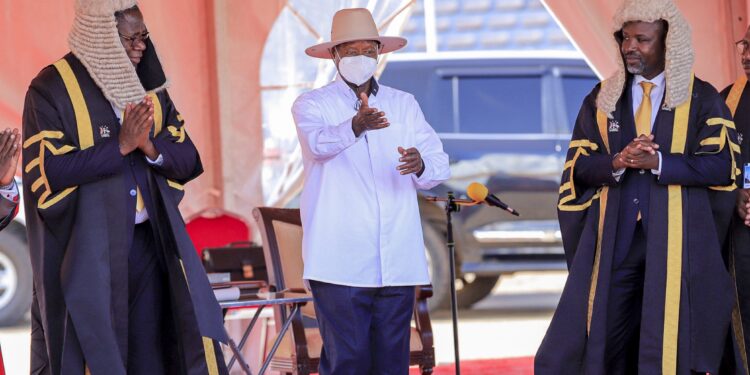
Parliament leadership has previously expressed concern that absenteeism undermines the credibility of the House, especially when members fail to attend debates on critical national issues such as budgets, accountability reports, and governance reforms.
Speaker’s office tightening enforcement
The Office of the Speaker has, in recent years, taken a firmer stance on attendance discipline. Attendance registers are now strictly maintained, and MPs’ participation records are monitored more closely than before.
Parliamentary sources indicate that repeated absenteeism may trigger administrative action, including formal warnings and, in extreme cases, initiation of procedures to declare a seat vacant.
The requirement for written permission from the Speaker is particularly important. MPs who anticipate absence due to illness, official foreign travel, or unavoidable circumstances must secure approval in advance. Without this approval, absences are considered unauthorized.
Impact on accountability and representation
Observers say strict enforcement of attendance rules is intended to strengthen accountability to voters, who expect their elected representatives to actively participate in national decision-making.
Also Read: Anita Among, the Accountant Who Rose to Become Uganda’s Speaker of Parliament
Analysts argue that absenteeism weakens parliamentary oversight of government, reduces scrutiny of public expenditure, and limits the effectiveness of constituency representation.
Civil society groups have in the past called for Parliament to publish regular attendance records to increase transparency and allow citizens to monitor the performance of their MPs.
Orientation as part of broader institutional reform
The warning came during an orientation program designed to induct new legislators into parliamentary procedures, ethics, and operational rules. Such programs are standard at the start of a new parliamentary term and aim to ensure MPs understand legislative conduct expectations from the outset.
Parliamentary officials say the current induction emphasizes discipline, accountability, and efficiency, reflecting growing public pressure for better performance from elected leaders.
Conclusion
With Parliament signaling a stricter enforcement phase on attendance, MPs are being reminded that legislative office carries enforceable responsibilities. The warning from the Clerk underscores a shift toward tighter institutional discipline, in which prolonged absence without authorization may no longer be tolerated and could carry serious political consequences, including the loss of a seat.
Follow our WhatsApp Channel and X Account for real-time news updates.