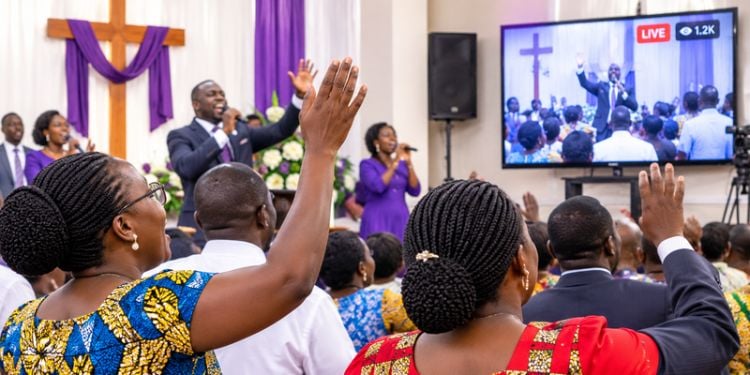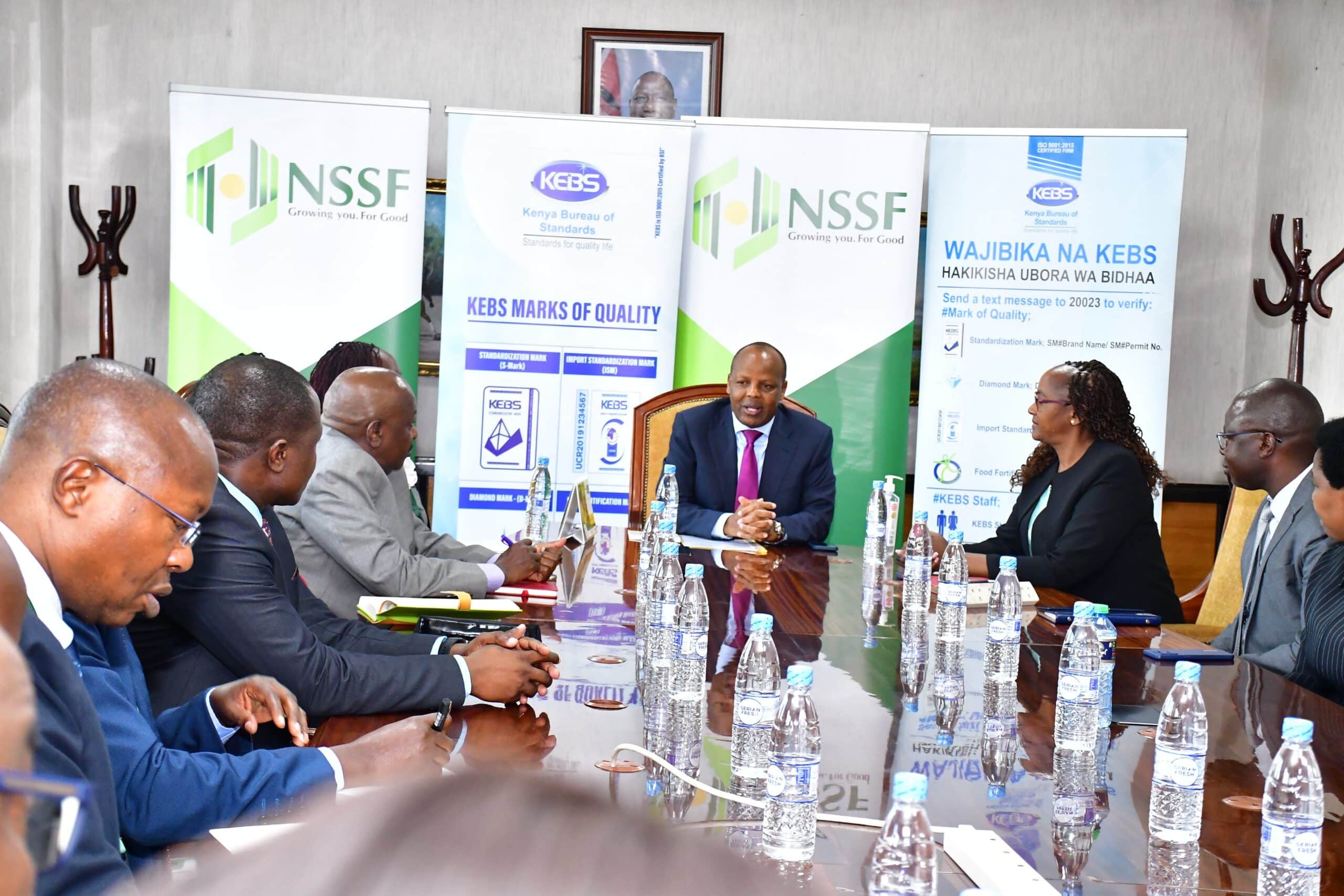
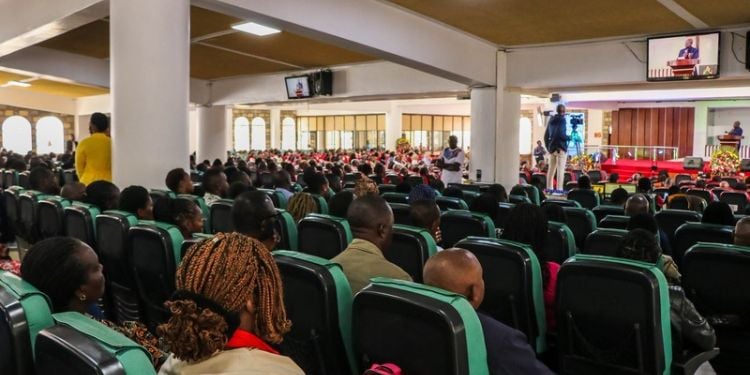
Outgoing Data Commissioner Immaculate Kassait has warned churches and other religious institutions against livestreaming services featuring identifiable worshippers without obtaining appropriate consent, raising questions about the privacy rights of congregants.
Speaking at a data privacy forum on Wednesday, November 18, Kassait explained that recording and broadcasting people during religious gatherings constitutes processing personal data under Kenya’s Data Protection Act, 2019.
She said churches must inform congregants whenever filming is taking place and obtain appropriate consent before livestreaming services to online audiences.
Kassait maintained that religious institutions must respect the privacy rights of people attending their services, particularly when their images can be viewed by audiences beyond the church premises.
“You’re processing data, so it’s important just to get consent,” she said.
Her remarks were followed by public notices from several churches outlining their filming, photography and livestreaming policies, with some providing options for worshippers who do not wish to appear in recordings.
Churches Issue Notices on Filming and Livestreaming
On Saturday, November 21, 2026, Bishop Ben Kiengei’s Jesus Christ Compassion Ministries (JCM) issued a notice titled Public Notice: Live Broadcasting, Filming and Recording, informing worshippers that their images and voices could be captured during church activities.
“By entering our church premises, you acknowledge that filming, photography, audio recording and live broadcasting may take place during services and other church activities. Your image, voice or appearance may therefore be captured and featured in JCM TV programmes and digital media content,” the notice read.
Harrison K. Ng’ang’a’s Christian Foundation Fellowship issued a similar notice on Friday, November 20, informing worshippers that photography, video recording and livestreaming could take place during services and ministry events.
Africa Inland Church (AIC) Milimani in Nairobi later published a filming and photography disclaimer, telling members, visitors, and other attendees that photographs and videos could be taken during services and events.
“We understand that not everyone may be comfortable appearing in photographs or videos. If you prefer not to be photographed or recorded, kindly inform a member of the Media Team, and your preference will be respected,” the notice stated.
What the Constitution and Data Protection Act Say
Article 31 of the Constitution of Kenya, 2010, protects every person’s right to privacy. It includes protection against unnecessary disclosure of information relating to an individual’s family or private affairs and interference with private communications.
The provision states:
“Every person has the right to privacy, which includes the right not to have—
(a) their person, home or property searched;
(b) their possessions seized;
(c) information relating to their family or private affairs unnecessarily required or revealed; or
(d) the privacy of their communications infringed.”
The right to privacy also applies to the handling and publication of identifiable photographs and videos.
In an earlier court ruling, the High Court reaffirmed the protection offered by Article 31 against unnecessary disclosure of private affairs.
Beyond the Constitution, the Data Protection Act, 2019, regulates how organisations collect, use, store and share identifiable personal information.
Section 2 defines consent as an express, unequivocal, free, specific and informed indication of an individual’s wishes through a statement or clear affirmative action agreeing to the processing of their personal data.
Section 25 requires organisations that process personal information to do so lawfully, fairly, and transparently. It also requires personal data to be collected for explicit and legitimate purposes and limited to what is necessary.
Under Section 29, churches must inform congregants before collecting their personal data. This includes explaining why recordings are being made, how the information will be used, their rights and any third parties to whom the information may be disclosed.
“A data controller or data processor shall, before collecting personal data, in so far as practicable, inform the data subject of: (a) the rights of the data subject specified under section 26,” it reads in part.
Section 30 outlines circumstances in which personal data may be processed without consent, including where processing is necessary for a legal obligation, vital interests, public-interest tasks or legitimate interests that do not unjustifiably override an individual’s fundamental rights.
Section 32 addresses consent requirements, places the burden on the data controller to demonstrate that valid consent was obtained, and provides for the withdrawal of consent.
Also Read: What Facebook Users Must Do to Avoid Losing Their Data Ahead of Meta’s Profile Deletion
Section 63 provides for administrative penalties of up to KSh5 million or one per cent of annual turnover for a commercial undertaking, whichever is lower.
Steps to Take if a Church Broadcasts You Without Consent
Individuals who believe a church has violated their data protection rights can take several steps to seek redress.
- Write to the church: Ask it to stop broadcasting the footage, remove the recording from its platforms, and confirm in writing what action it has taken.
- File a complaint with the Data Commissioner: Affected individuals can lodge a complaint with the Office of the Data Protection Commissioner (ODPC), which can investigate alleged violations of the Data Protection Act.
- Seek court intervention: An individual can petition the High Court under Article 31 of the Constitution for appropriate remedies, including a declaration of violation, damages, or an injunction.
- Consider additional legal claims: If the broadcast also contains false and damaging statements about an individual, you may consider a separate defamation claim.
When Can You Sue a Church for Livestreaming Your Face?
Although appearing in a church recording does not automatically mean that your privacy rights have been violated, certain circumstances could give rise to a legal claim.
One possible ground is when a church broadcasts identifiable footage of a congregant without obtaining valid consent or establishing another lawful basis for processing the information.
Another situation involves recordings that expose sensitive aspects of an individual’s private life. For instance, footage showing someone seeking counselling, healing or deliverance could raise additional privacy concerns depending on the circumstances and how the material is used.
Also Read: What Charges and Penalties Do Pedestrians Face for Ignoring Footbridges?
A claim may also arise where a church uses someone’s image in commercial advertisements, fundraising campaigns or promotional material without the necessary permission or lawful basis.
Footage involving minors or material that exposes individuals to embarrassment, stigma or harm may also raise additional legal concerns.
However, the circumstances surrounding the recording and publication matter.
A wide shot of a congregation in which individuals are not the focus may present a different legal situation from a close-up broadcast identifying a particular worshipper.
Similarly, footage used only for internal projection within a church may raise different considerations from recordings distributed publicly on Facebook, YouTube or television.
Consent and the circumstances under which it was obtained are also important when determining whether a legal violation occurred.
Follow our WhatsApp Channel and X Account for real-time news updates and subscribe to our YouTube Channel for in-depth interviews.