
The Confederation of African Football (CAF) has approved a historic resolution making Kiswahili one of its official languages, elevating the widely spoken African language to the same status as English, French, Arabic and Portuguese across the continent’s football governing body.
The decision was adopted during CAF’s 48th Ordinary General Assembly held in Abuja, Nigeria, where representatives from all 54 CAF Member Associations gathered alongside members of the CAF Executive Committee, vice-presidents, sponsors, partners and football stakeholders from across Africa.
CAF said the decision reflects its commitment to embracing Africa’s linguistic and cultural diversity while strengthening the representation of African languages within football structures across the continent.
The elevation of Kiswahili carries significant symbolic and practical implications for African football.
Unlike English, French and Portuguese, which spread across the continent through colonial influence, Kiswahili originated in Africa and developed through centuries of interaction among communities along the East African coast and inland trade routes.
Today, Kiswahili is spoken across Kenya, Tanzania, Uganda, Rwanda, Burundi, the Democratic Republic of Congo, Mozambique, Malawi, Zambia, Somalia, South Sudan and the Comoros. Regional organizations, including the East African Community and the African Union, also recognize it.
Historic Recognition for Kiswahili
The CAF decision comes amid a broader continental push to strengthen African languages within major institutions.
In 2022, the African Union adopted Kiswahili as one of its official working languages, making it the first African language to receive such recognition within the continental political body.
Also Read: Aboud Omar Loses Cool, Blasts Kenyans
Football remains the continent’s most popular sport, with CAF overseeing major competitions including the Africa Cup of Nations, CAF Champions League, CAF Confederation Cup and women’s football tournaments.
By granting Kiswahili official status, CAF opens the door for greater use of the language in official documents, meetings, football development programmes and communication with member associations.
The decision is also expected to resonate strongly in East Africa, where preparations are underway for the 2027 Africa Cup of Nations to be jointly hosted by Kenya, Uganda and Tanzania.
The three East African nations, where Kiswahili serves either as a national or widely spoken language, will stage the tournament for the first time in the region’s history.
CAF Backs Infantino Bid
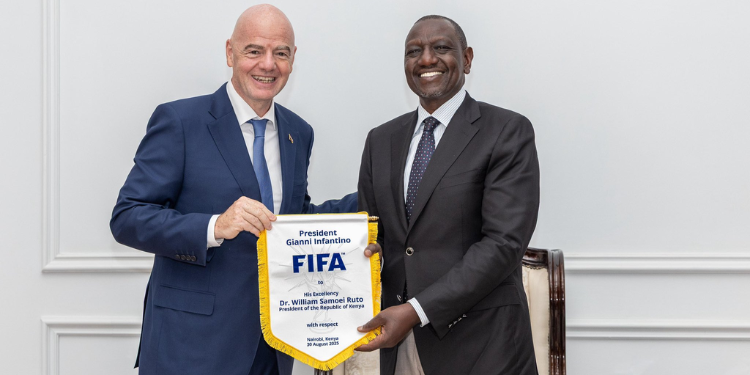
Beyond the language resolution, delegates attending the Abuja assembly reaffirmed unanimous support for the re-election of Gianni Infantino as FIFA president ahead of the 77th FIFA Congress scheduled for Rabat, Morocco, on March 18, 2027.
Also Read: Premier League Matchweek 11 Fixtures: Full Schedule, Kick-off Times and How to Watch in Kenya
CAF President Dr Patrice Motsepe thanked Nigerian President Bola Ahmed Tinubu, the Nigerian government, the Nigeria Football Federation, and the people of Nigeria for hosting the gathering and supporting African football.
The endorsement gives Infantino an advantage, particularly because Africa accounts for 54 of the governing body’s 211 voting member associations.
Each association has one vote, giving the continent significant influence over the outcome.
Infantino, who has led FIFA since 2016, is seeking another term but faces competition from French Football Federation President Philippe Diallo and Japan Football Association honorary president Kozo Tashima.
The contest has drawn attention after disagreements over FIFA’s governance, transparency, and proposed commercial investment plans.
UEFA has raised concerns about Infantino’s leadership, while several African football administrators have maintained their support for the incumbent.
Tashima has also criticized FIFA’s handling of the suspension of United States forward Folarin Balogun during the 2026 World Cup.
Follow our WhatsApp Channel and X Account for real-time news updates and our YouTube Channel for in-depth interviews.