
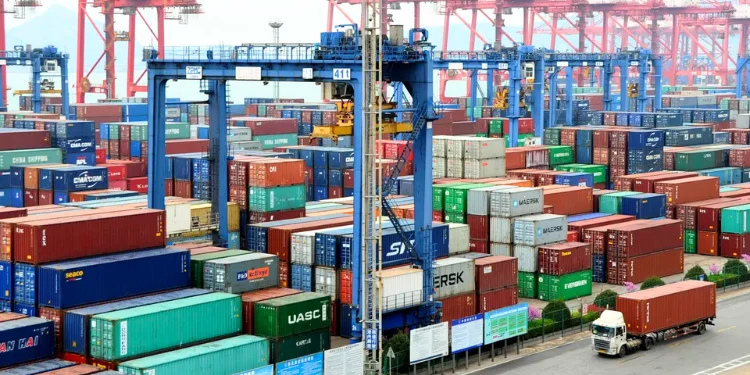
The Kenya Revenue Authority (KRA) has defended new restrictions on goods permitted in Ksh2 million consolidated containers, saying the changes are intended to curb smuggling of high-value goods and tax evasion without introducing new taxes for small traders.
According to the Commissioner for Customs and Border Control, Lilian Nyawanda, on November 20, the reclassification was intended to promote fairness and simplicity rather than introduce new taxes.
“It is not a new tax. Taxes are set by Parliament and the East African Community, not by KRA, and the list introduces no new taxation,” Nyawanda said.
She clarified that the listed goods had not been banned from importation but would be declared and taxed according to their individual values and applicable duty rates.
“Any additional revenue comes from goods that are escaping the taxes the law already sets, not from small traders importing ordinary goods,” she said.
KRA Publishes List of Goods Excluded From Consolidated Cargo
KRA informed cargo clearance stakeholders that the items listed in its notice were excluded from consolidated cargo clearance under the Ksh2 million framework.
The authority urged stakeholders to take note of the exclusions and ensure compliance with the applicable customs clearance requirements.
According to the KRA-published list, 11 categories of goods are excluded from consolidated cargo clearance under the Ksh2 million framework.
The excluded items include assorted foodstuffs, complete kitchen sets, designer brands of finished manufactured products, and plant and machinery. However, the machinery restriction does not cover small-scale equipment such as handheld tractors and similar machinery used in agriculture and small industries.
Other excluded goods are smartphones and watches, second-hand clothes and shoes, wooden, steel and aluminium doors, televisions, and car accessories such as audio systems, speakers, dash cameras, reversing cameras, parking sensors and GPS navigation devices.
The list also covers musical instruments, public address systems, entertainment equipment and related accessories, and sanitary ware.
Also Read: KRA Introduces New Tax Invoice Rules for Farmers and Small Businesses
Other Conditions on Imported Goods
KRA also identified 19 categories of goods that may be allowed under consolidated cargo clearance subject to specific conditions.
They include cables, ready-made garments, fabrics, interlining materials, beddings and household linen, carpets, cosmetics, toiletries and beauty products.
The list also covers new motorcycle spare parts and accessories, new shoes, terry towels, auto paints, epoxy and related products, padlocks, curtain accessories, door locks and handles, and hardware items such as machetes, meters and valves.
Other goods that may qualify include bathroom accessories such as towel holders, towel bars and shower heads; cosmetic and haircare products; henna; and computer and mobile phone accessories.
Also Read: KRA Clarifies Invoice Systems Accepted for Government Payments
However, KRA said the items could only be included in consolidated cargo shipments if they met three conditions.
First, the combined volume of the listed goods must not exceed five per cent of the total cargo volume, measured in cubic metres (CBM).
Second, importers must fully declare all the items on the invoice, customs entry and importers’ list, specifying the description and quantity of each product.
Third, the goods will be assessed using applicable unit values determined through the relevant customs valuation methods.
Follow our WhatsApp Channel and X Account for real-time news updates and subscribe to our YouTube Channel for in-depth interviews.