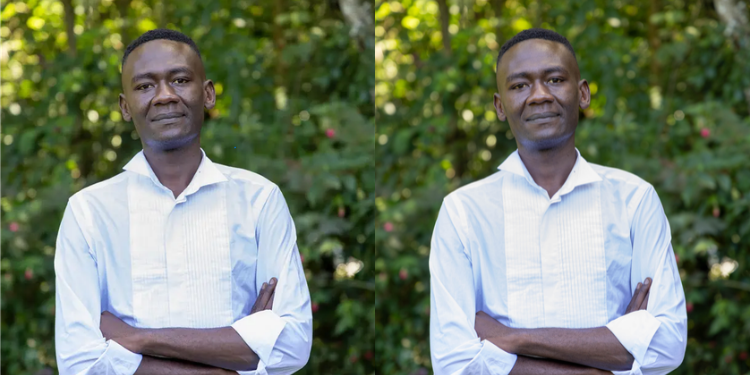
Through ELF-Africa’s VirtueLEAD Fellowship, community organiser Samuel Omare is rethinking what it means to lead, moving beyond achieving results to examining the values and behaviours that shape how those results are achieved.
Tearing down a drainage system he had helped build was not a decision Samuel Omare wanted to make. The project had already cost his organisation money, and rebuilding it meant acknowledging that the first attempt had fallen short.
But when heavy rains exposed weaknesses in the drainage system at Wahenga Courtyard, a colleague challenged the design and proposed an alternative. Omare faced a choice: defend a decision he had already invested in or listen to a different perspective. He chose to listen. The drainage system was reconstructed, improving water flow and reducing flooding in the courtyard.
For Omare, a community organiser and Chairperson of Wahenga Organization in Nairobi County, this was more than a practical decision about infrastructure. It reflected a fundamental shift in how he understood leadership.
Once convinced that being a good leader meant taking charge and driving results, Omare learned that leadership also requires humility, patience, and the willingness to acknowledge that someone else may have a better answer.
His experience raises a broader question about leadership development in Kenya: What happens when we invest not only in what young leaders can do, but also in who they are and how they lead?
Beyond results: Samuel Omare Rethinks what makes a good leader
Since 2011, Omare has helped transform neglected public spaces into cleaner, greener, and safer community environments. His work as an artist, human rights defender and community organiser has been driven by a commitment to improving the lives of people around him.
But passion and good intentions did not always translate into good leadership.
“I had the fire in me. I was driven, but I carried all the weight by myself. And I was sometimes hard on my people,” he recalls.
Omare describes himself as having been impatient, quick to anger, and sometimes militant in his approach. He was determined to achieve results, but did not always consider how his approach affected the people he worked with.
During a community project under the Public Space Network, disagreements arose after equipment purchased for the work failed to meet the required standards. What should have been a discussion about resolving the problem escalated into conflict, with some members physically confronting each other in front of visiting supervisors.
The incident strained relationships and left Omare reflecting on how conflict could undermine the very work his team was trying to achieve.
It exposed a difficult reality: a leader can be committed to doing good and still struggle with the character and interpersonal demands of leadership.
Developing the person behind the leader
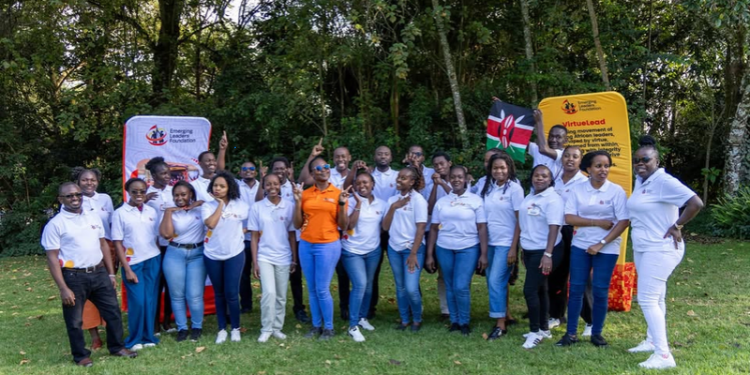
This gap between leadership ambition, competence, and character is what Emerging Leaders Foundation-Africa (ELF-Africa) seeks to address through its VirtueLEAD Fellowship.
The nine-month programme brought together 20 emerging leaders from across Kenya to examine how their values, decisions and behaviour influence the people and institutions they lead.
Unlike approaches that focus primarily on leadership skills and performance, VirtueLEAD places character formation at the centre of leadership development.
The programme cultivates five core virtues: love, hope, integrity, humility and courage, alongside African leadership practices and mindsets including Ubuntu, African dignity, healing and forgiveness, listening and self-awareness.
For Vicky Mulema, Programme Officer at ELF-Africa, the fellowship was also an opportunity to examine whether character could be intentionally developed among young leaders from diverse backgrounds.
Mulema explained that the programme was designed as a pilot to explore whether sustained investment in character development could produce observable changes in how participants approached leadership.
Through immersive learning, coaching, counselling and practical application, fellows were encouraged to examine their strengths, confront limiting beliefs and reflect on the values guiding their decisions.
For Samuel Omare, the coaching sessions became particularly important.
“We did an analysis of my strengths and my weaknesses, and I now know much better about myself and what I am supposed to do to improve,” he explains.
The process encouraged him to confront aspects of his leadership he had previously overlooked, including his reactions to disagreement, his expectations of colleagues and his tendency to assume responsibility for everything.
Samuel Omare began to recognise that being decisive did not mean having all the answers, and that listening to others was not a sign of weak leadership.
From personal reflection to leading differently
The real test of character-driven leadership development is whether the lessons extend beyond the training room into how leaders make decisions, manage relationships and exercise responsibility.
At Wahenga Organization, Samuel Omare has begun putting these lessons into practice.
Rather than chairing every meeting himself, he has introduced rotational leadership, allowing colleagues to take turns facilitating discussions and contributing to decisions.
He is also paying greater attention to members who remain quiet during meetings, recognising that silence does not necessarily mean agreement or the absence of valuable ideas.
These may seem like small adjustments, but they represent a shift in how authority and responsibility are shared within the organisation.
Where criticism once provoked frustration or anger, Omare is increasingly willing to hear opposing views and consider alternatives before making decisions.
The drainage reconstruction at Wahenga Courtyard is one example.
“I am glad I listened to him because we no longer experience significant water flooding at the courtyard,” he told The Kenya Times.
The decision required him to accept a financial loss on the original investment, but also demonstrated an important lesson: humility in leadership is not simply about admitting mistakes. It is about being willing to change course when a better solution emerges.
Why character matters in leadership development
Omare’s experience offers a practical illustration of how character-driven leadership development can shape the way young people lead.
Leadership is often measured through visible achievements: projects completed, resources mobilised, institutions built or communities reached. These outcomes matter. But they tell only part of the story.
Equally important are the values and behaviours that determine how leaders engage others, respond to pressure, navigate disagreement and make decisions.
This connection between personal development and leadership practice was also reflected in feedback from the VirtueLEAD cohort.
According to Mulema, 30 per cent of fellows identified active listening as a key value they had developed during the programme. Other values highlighted included courage, humility, hope, love and Ubuntu.
While these reflections do not establish long-term behavioural change, they offer early indications of the areas in which participants perceived personal growth.
For ELF-Africa, the fellowship offers an opportunity to show why character formation should be integral to leadership development, rather than an optional addition to technical skills and competence.
The organisation hopes that lessons from the programme will encourage other institutions, including government agencies, to integrate values-based leadership development into their approaches to building leadership capacity.
For young leaders working in communities and institutions, these lessons are not abstract. They shape whether people feel heard, whether disagreements become opportunities for learning or sources of conflict, and whether leadership creates space for others to participate.
Samuel Omare’s journey illustrates how structured reflection, coaching and the deliberate practice of values can help leaders question established habits and adopt different ways of exercising authority.
For him, the work of becoming a better leader continues. But the difference is increasingly evident in the choices he describes making: listening before dismissing an idea, sharing responsibility instead of carrying it alone, and recognising that achieving results should not come at the expense of the people involved.
Follow our WhatsApp Channel and X Account for real-time news updates and subscribe to our YouTube Channel for in-depth interviews.