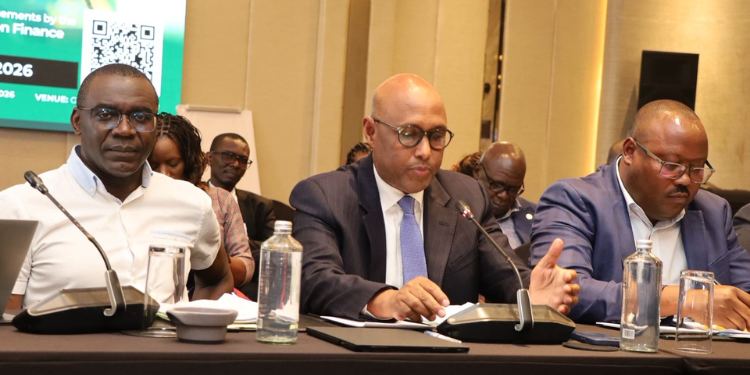
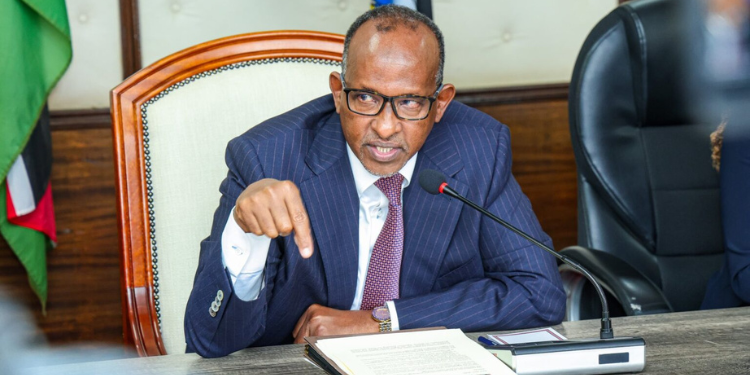
A fresh controversy has emerged over Kenya’s Ebola preparedness measures after Health Cabinet Secretary Aden Duale rejected claims that seven American humanitarian workers were being quarantined at the controversial US-funded Ebola facility at Laikipia Air Base, even as American-linked sources maintained that the group was under observation in Kenya.
Speaking at Jomo Kenyatta International Airport while receiving a consignment of emergency Ebola medical supplies donated by the Government of India, Duale dismissed reports that the seven Americans were being held at the Laikipia facility.
He insisted that construction of the center had been halted following a court order and that the government had fully complied with the ruling.
The CS said reports linking the Americans to the facility were inaccurate and maintained that Kenya had respected the court’s decision.
He also disputed international reports on the matter, saying his ministry was guided by facts on the ground and not external reporting.
Duale Denies Ebola Quarantine Claims
The issue, however, has drawn attention because of statements made by Samaritan’s Purse, a Christian humanitarian organization involved in international health emergencies.
Also Read: Fresh Doctors’ Strike Looms Over Unpaid CBA Salary Arrears
According to the organization’s president and chief executive officer, Franklin Graham, seven members of its disaster assistance response team were being quarantined at an isolation center in Kenya for 21 days despite showing no symptoms of Ebola.
“Samaritan’s Purse has seven American Disaster Assistance Response Team staff members at the isolation center in Kenya. None of them have any symptoms, but they are being quarantined by the Kenyan government for 21 days,” the CEO said on July 17.
Duale rejected the claims, adding that Kenya remains Ebola-free with more than 270,000 travelers screened so far and that the government has operationalized 21quarantine centers across the country.
He noted that laboratories had been placed on high alert and that two mobile laboratories had been deployed in western Kenya near the Uganda border to strengthen disease surveillance.
He further claimed that the construction of the Laikipia facility was stopped as per court orders, challenging anyone who differs from his account to visit the Laikipia site and confirm the status of the facility.
Duale further defended the government’s decision not to disclose the locations of quarantine and isolation centers.
He argued that naming the facilities publicly could discourage Kenyans from seeking healthcare services at hospitals designated for emergency response.
“If I say that this particular hospital is a quarantine station, we all know what will happen. Kenyans will not go to that hospital,” the CS stated.
The remarks came as Kenya received Ebola preparedness supplies from India valued at Sh60 million.
Also Read: Salaries, Allowances and Retirement Benefits for Judges in Kenya
The donation included Personal Protective Equipment (PPE), sample transportation kits, infrared thermometers and other critical materials intended to support the country’s response capacity.
Ebola Threat Remains
The latest developments come against the backdrop of continued concern over Ebola outbreaks in the Democratic Republic of Congo, with health authorities insisting that vigilance remains necessary even as Kenya reports no confirmed cases.
“The situation is still developing rapidly in the Democratic Republic of Congo (DRC), and we must all stay vigilant,” said Patrick Amoth, the Director General of the Ministry of Health.
According to the World Health Organization, the Democratic Republic of Congo had recorded 2,423 confirmed Ebola cases and 967 deaths as of July 19.
The outbreak has affected five provinces: Ituri, North Kivu, South Kivu, Haut-Uele and Tshopo.
Ituri remains the epicenter, accounting for more than 90 percent of cases.
WHO says this is the fastest-growing Ebola outbreak on record and has spread substantially faster than previous outbreaks in the DRC.
Armed conflict, population movement, weak health infrastructure and attacks on health facilities are complicating containment efforts.
Follow our WhatsApp Channel and X Account for real-time news updates.