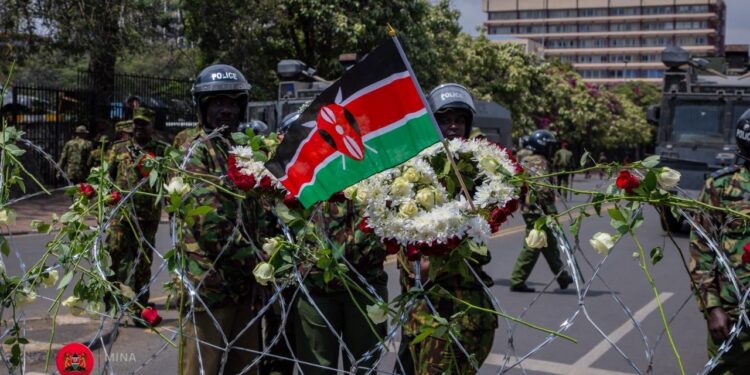

The government has approved Ksh83.65 million in compensation for 259 victims of human rights violations linked to demonstrations and public protests under Phase VI of the ongoing compensation program.
A statement issued on Thursday by the Panel of Experts on Compensation of Victims of Human Rights Violations, led by Prof Makau Mutua, said the beneficiaries include civilians and uniformed officers who suffered injuries or economic losses during protests.
The panel said the compensation follows the processing and verification of claims submitted under various categories of harm.
Among the beneficiaries are seven claimants classified under aggravated injury cases, who will receive between Ksh1.5 million and Ksh2.5 million each.
A further 35 people categorized as severe injury victims will receive Ksh1 million each.
Majority of Claims Involve Minor Injuries
According to the panel, 54 claimants with moderate injuries will receive KSh500,000 each, while 133 people classified under minor injuries will receive KSh50,000 each.
Another 30 claimants who suffered economic losses will also receive KSh50,000 each.
The compensation package brings the total amount approved under the phase to KSh83.65 million.
Also Read: How Thousands of Kenyan Job Seekers Are Finding Work Through NEAIMS: How to Apply
The panel said it continues to receive submissions through official channels and urged victims who have not yet lodged claims to come forward for consideration.
It noted that the panel verifies and authenticates all applications before deciding, and that it will notify successful claimants of the outcome.
The panel further said it remains committed to ensuring no eligible victim is left behind and vowed to continue providing regular updates on the program.
It also pledged to continue engaging with victims and beneficiaries to address concerns, clarify the status of claims, and ensure fair treatment throughout the compensation process.
The compensation programme was established to provide redress to victims of human rights violations, including those arising from demonstrations and public protests, as part of broader efforts to promote justice, accountability and reparations.
Hundreds of Human Rights Claims Still Under Assessment
The compensation program has faced criticism from victims and human rights groups who say payments should be accompanied by investigations and prosecution of those responsible for killings, injuries, torture and other abuses.
In March 2026, the High Court in Kisumu ordered Ksh38.3 million in compensation for victims of excessive and unlawful police force during the 2023 Azimio protests, alongside orders requiring IPOA to complete investigations.
The program has also faced legal challenges over the mandate and operation of the compensation panel.
In 2025, a court challenge halted the panel’s work, with the dispute focusing on its legal basis and the framework used to compensate victims.
Also Read: CBK Reveals Why Some Kenyans Will Pay More for Bank Loans Under New System
In August 2026, the panel said it had not paid 472 eligible claimants because of insufficient documentation.
It said cases involving enforced disappearances were undergoing further investigation and verification because of their complexity.
Prof Makau Mutua’s team also reviewed some cases after victims submitted updated medical reports, which led to the reclassification of injuries and increased compensation in some cases.
How Victims Can Register
Victims can register their claims online through the official Victims Compensation Portal, by email, or in person at the Panel of Experts’ offices on the Ground Floor of KICC in Nairobi.
Victims can also lodge claims through the Kenya National Commission on Human Rights (KNCHR), IPOA, and other state agencies.
Victims who previously filed claims with KNCHR or IPOA do not need to submit new applications because the panel will transfer their records.
Applicants should provide their full name, contact details, and information about the violation, including the date, location, and witnesses where available.
Supporting documents may include medical reports, P3 forms, hospital or pharmacy receipts, police records, witness statements, photographs or videos.
For deaths, applicants may provide a post-mortem report, burial permit and identification documents.
Follow our WhatsApp Channel and X Account for real-time news updates.