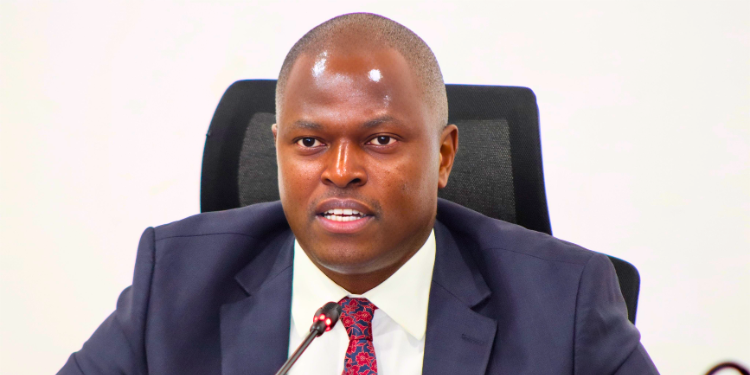

Treasury Cabinet Secretary John Mbadi said the government’s proposed PAYE tax reduction bill is complete and has been forwarded to the Attorney General ahead of its submission to Parliament.
In an interview on Citizen TV on November 17, Mbadi said the Treasury had finished the bill and was awaiting completion of the legal review process before presenting it to lawmakers.
“The bill is ready. I think it is now with the Attorney General. We will take it to Parliament before the break for recess,” Mbadi said.
He said he signed the bill during the previous week and forwarded it to the Attorney General’s office for consideration before it is tabled in the National Assembly.
Mbadi noted that the proposed PAYE reductions require amendments to existing law before they can take effect.
“The process of reducing PAYE requires an amendment to the law and that amendment must pass through Parliament before implementation,” he said.
He added that implementation would only begin after Parliament debates and approves the proposed legal changes.
Mbadi on Debt Growth and Stable Shilling
Mbadi also updated the country’s debt position, saying the rate of public debt growth had slowed from about 15 per cent in the 2022/23 financial year to about 8 per cent currently.
“Today it is 8%. Meaning we have slowed the growth down,” he said.
According to the Treasury CS, Kenya’s debt-to-GDP ratio has declined from approximately 72 per cent to 69 per cent.
Also Read: Ndidi Nyoro Acquires New 20 Million Shares After Selling KPLC Stake
He also said external debt as a percentage of GDP had reduced from 38 per cent to 32 per cent.
Mbadi further stated that debt denominated in US dollars had fallen from 68 per cent of external debt to 55 per cent.
On debt servicing, he said the country’s debt service-to-export ratio had improved significantly, dropping from about 40 per cent in 2024 to 18 per cent.
Addressing the stability of the Kenyan shilling, Mbadi said the government had removed near-term debt default risks through liability management operations.
He added that Kenya’s foreign exchange reserves rose from about 7 billion US dollars in 2022 to 14.7 billion US dollars, providing import cover of about 5.9 months.
Pending Bills, Infrastructure and SHA
Mbadi also said Cabinet approved a plan to pay part of the government’s pending bills owed to suppliers, institutions, and other claimants.
“We are going to pay for universities, we are going to pay NHIF, we are going to pay Kenyans up to a certain threshold,” he said.
He declined to provide additional details, saying President William Ruto would make a formal announcement on the matter.
Also Read: Mombasa to Host African Headquarters as Kenya Wins Fresh Two-Year Term
On infrastructure financing, Mbadi said the National Infrastructure Fund was operational and managing more than Ksh343 billion in assets.
He said the fund had identified several projects, including the expansion of Jomo Kenyatta International Airport, the Nairobi-Mombasa Highway and the Rironi-Mau Summit Highway.
Mbadi also addressed concerns raised in a World Bank report on the cost of projects including the Standard Gauge Railway.
He said agencies such as the Ethics and Anti-Corruption Commission (EACC), the Directorate of Criminal Investigations (DCI) and the Auditor General should investigate any allegations contained in the report.
The CS defended the participation of CRBC in public procurement, saying the company had not been blacklisted or found culpable by any competent authority.
“If they are still contractors that are allowed to tender for business, you can’t deny them that opportunity,” Mbadi said.
On healthcare, Mbadi said 33.6 million Kenyans had registered under the Social Health Authority programme, while 10.1 million had accessed primary healthcare services since 2024.
He added that about 78 per cent of SHA claims were being settled within the same month they were submitted, compared to the former NHIF system.
Follow our WhatsApp Channel and X Account for real-time news updates and our YouTube Channel for in-depth interviews.