
Wiper Patriotic Front Party leader Kalonzo Musyoka has claimed credit for helping secure the lifting of Sudan’s 20-month ban on Kenyan tea imports, insisting that President William Ruto had nothing to do with the decision.
Speaking on Saturday, November 14, 2026, during a funeral service for former Deputy President Rigathi Gachagua’s sister, Kalonzo said he had personally appealed to the Sudanese government to lift the restriction and that the decision followed his intervention.
The former Vice President challenged those giving Ruto credit for the development, questioning whether the President or his own efforts had helped restore access to the Sudanese market.
“I have managed to get this ban lifted. It has nothing to do with Ruto,” Kalonzo said.
Kalonzo Claims Credit for Sudan’s Tea Ban Reversal
He recalled that arrangements had been made during an opposition engagement in Kitengela on Sunday, November 8, for a final appeal to Sudan to remove the restrictions.
“If you remember Rigathi, on Sunday, the arrangement was so that we lift this ban tomorrow,” he said.
Recalling his conversation with Gachagua, Kalonzo said he had been asked to make a final appeal to the Sudanese government during their engagement in Kitengela on Sunday.
“If you are in Kitengela on Sunday, make the final appeal that we now request the Government of Sudan to lift this ban,” he said.
He claimed that despite the prevailing political atmosphere, he made the appeal and Sudan announced the lifting of the restriction the following morning.
“And the following morning, the ban was lifted. So, was it Ruto or us? Who made it possible for Kenyan tea to be bought again, Ruto or Kalonzo?” he asked.
Also Read: Ruto Reveals How Zimbabwe Talks Unlocked Billions After Standoff
Ruto’s Account of Sudan Tea Ban Lifting
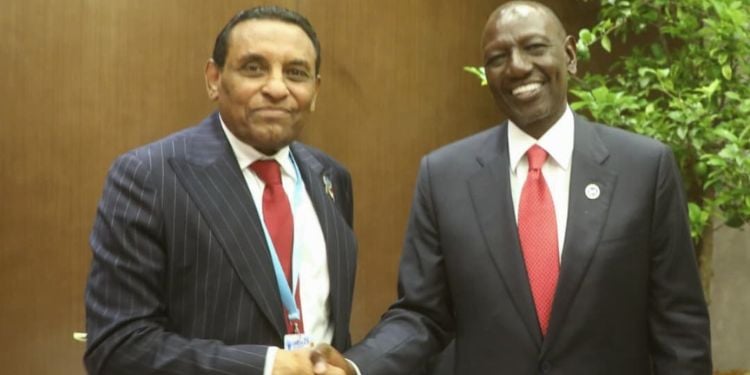
Kalonzo’s remarks come after President Ruto on Wednesday, November 11, announced that Sudan had agreed to lift the ban following diplomatic talks with Prime Minister Kamil Idris.
On Wednesday, November 11, Ruto said the breakthrough followed his meeting with Idris on the sidelines of the Common Market for Eastern and Southern Africa (COMESA) Heads of State and Government Summit in Harare, Zimbabwe.
The President welcomed the decision, saying it would reopen an important market for Kenyan tea exporters and restore opportunities for farmers and traders affected by the restrictions.
“Kenya welcomes and appreciates this decision, which reopens an important market for our tea, restores opportunities for our exporters and supports the livelihoods of our farmers and their families,” Ruto said.
He described the development as evidence of what dialogue and constructive diplomacy could achieve, expressing optimism about stronger trade relations between the two countries.
How Kalonzo got involved in the Sudan dispute
Kalonzo had been pursuing a separate initiative to have Sudan reconsider the restrictions before the announcement of the breakthrough.
On August 6, 2026, he met Sudan’s Ambassador to Kenya, Kamal Gubara, at the Sudanese Embassy in Nairobi, where he appealed for the market to the reopened.
During the meeting, Kalonzo emphasised Sudan’s pivotal role in purchasing approximately 35 million kilogrammes of Kenyan tea, valued at around Ksh.9 billion annually, and its position as one of Kenya’s top five tea export destinations.
He said that when the ban occurred, tea worth more than Ksh.3 billion was already in transit or awaiting shipment, including 207 forty-foot containers that were stranded at the Port of Mombasa.
“To date, over 3.44 million kilogrammes of tea, valued at more than US$10.3 million, remains in warehouses in Mombasa after being specially blended and branded for the Sudanese market,” he stated.
“These teas cannot easily be redirected to other markets, leading to substantial losses for exporters, depressing auction prices, and ultimately reducing the earnings of Kenyan tea farmers.”
He noted that restoring access to the Sudanese market would help protect livelihoods, support thousands of tea farmers, and preserve the bilateral ties between Sudan and Kenya.
“I remain hopeful that our discussions will contribute to a positive resolution that benefits both Kenya and Sudan.”
Also Read: South Sudan Clarifies Rules for Kenyans Engaging in Small-Scale Businesses
Why Sudan banned Kenyan tea
Sudan imposed the restrictions in March 2025 after Nairobi hosted meetings involving the Rapid Support Forces (RSF), a paramilitary group fighting the Sudanese army.
The meetings included the signing of a charter by the RSF and allied groups outlining plans to establish a parallel government in Sudan.
Khartoum protested Kenya’s involvement, accusing Nairobi of interfering in its internal affairs before suspending imports from Kenya.
The decision disrupted trade between the two countries, cutting off an important destination for Kenyan black tea.
Before the ban, Sudan was among Kenya’s major tea export markets, purchasing approximately 35 million kilogrammes annually.
Sudan formally lifted the restriction through Ministerial Order No. 25 of 2026, signed by Industry and Trade Minister Mahasin Ali Yaqoub on November 8.
The decision followed approval by Sudan’s Sovereignty Council on November 2 and a Cabinet communication issued on November 5.
According to the Tea Board of Kenya, tea exports to Sudan declined from 20 million kilogrammes to 8.7 million kilogrammes during the restriction, while export earnings dropped from KSh4.5 billion to KSh1.93 billion.
Follow our WhatsApp Channel and X Account for real-time news updates, and subscribe to our YouTube Channel for in-depth interviews