
Universities are set to resume classes from Monday after university lecturers signed a Ksh20 billion return-to-work deal with the government, ending a nationwide strike that had paralysed learning in 35 public universities and disrupted studies for hundreds of thousands of students.
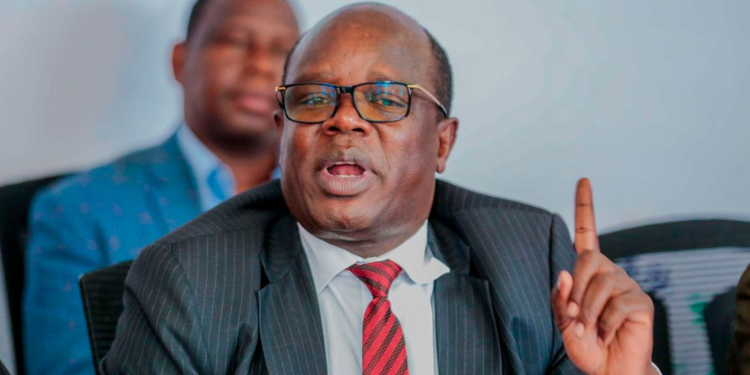
The breakthrough followed negotiations between university unions and the government, with Universities Academic Staff Union (UASU) Secretary-General Constantine Wasonga saying the two sides agreed on a figure they negotiated rather than imposed on workers.
“Today we have agreed on a figure we have negotiated with the government. Not a figure imposed on the union,” said Dr Wasonga.
The agreement covers salaries and allowances under the 2025-2029 Collective Bargaining Agreement (CBA) and marks a sharp increase from earlier government offers the unions rejected as inadequate.
“We have a deal worth Ksh20 billion for the 2025-2029 CBA from Ksh3.1 billion, Ksh9.76 billion and Ksh11.95 billion. The Ksh20 billion is for basic salary and allowances,” Dr Wasonga said in a message to lecturers.
The deal was negotiated with the involvement of Education Cabinet Secretary Julius Ogamba and followed a series of meetings aimed at ending the industrial action that had paralysed learning in public universities.
Major Shift in Negotiations
The Ksh20 billion package represents a significant turnaround in talks that had exposed deep divisions between the government and university staff unions over the cost of the new CBA.
Also, the latest figure is about Ksh8.04 billion higher than the government’s October 26 counteroffer of Ksh11.96 billion, representing an increase of about 67.2 per cent.
Also Read: Ruto Announces Bayern Munich, Ajax Clash as First Match at Raila Odinga International Stadium
The breakthrough came just days after unions rejected the government’s revised proposal, arguing that it failed to adequately address concerns over remuneration and working conditions.
Earlier, the dispute had largely centred on the financial gap between the two sides, with unions initially seeking Ksh98 billion for the four-year agreement while the government tabled successive offers of Ksh9.76 billion, Ksh11.95 billion and Ksh11.96 billion.
The October 26 offer of Ksh11,958,504,776 had also drawn criticism from union leaders, who questioned why it was slightly lower than an earlier proposal of about Ksh12 billion presented earlier in the month.
Under proposals tabled through the Inter-Public Universities Consultative Forum (IPUCCF), employers offered cumulative salary adjustments of between 8.25 per cent and 12.56 per cent over four years, which unions rejected as inadequate amid the rising cost of living.
What University Lecturers Wanted
The dispute centred on demands for significant salary and allowance increases across all academic grades.
UASU pushed for salary increments ranging from 36 per cent to 68 per cent, depending on staff rank, along with a 57 per cent increase in house allowances.
Also Read: Times Tower: The 38-Storey Landmark with Hidden Vaults Beneath KRA Headquarters
The union’s proposal would have seen the maximum monthly basic salary of a professor rise from Ksh345,816 to Ksh580,144 by the final year of the agreement, while the maximum salary of a senior university lecturer would increase from Ksh238,221 to Ksh399,644.
University lecturers also sought enhanced benefits, including commuter allowances of up to Ksh60,000 per month for eligible grades, a professorial allowance of Ksh80,000, annual book allowances of Ksh65,000 to Ksh90,000, and annual leave allowances of Ksh50,000 to Ksh70,000.
Although the final agreement falls short of the unions’ initial demands, it clears the way for the resumption of learning in public universities and ends a dispute that had paralysed higher education institutions across the country.
According to Dr Wasonga, technical teams from both sides are expected to meet to document the agreement before implementation begins.
Follow our WhatsApp Channel and X Account for real-time news updates and our YouTube Channel for in-depth interviews.