

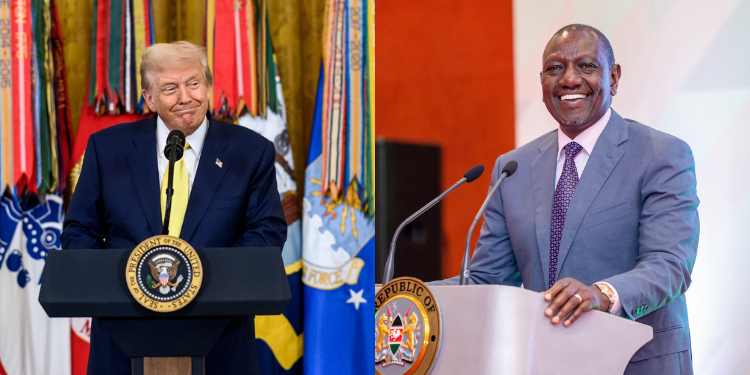
The United States has defended health data sharing under its USD 2.5 billion cooperation framework with Kenya, saying the information involved is anonymized and used to guide disease surveillance and public-health interventions rather than identify individual patients.
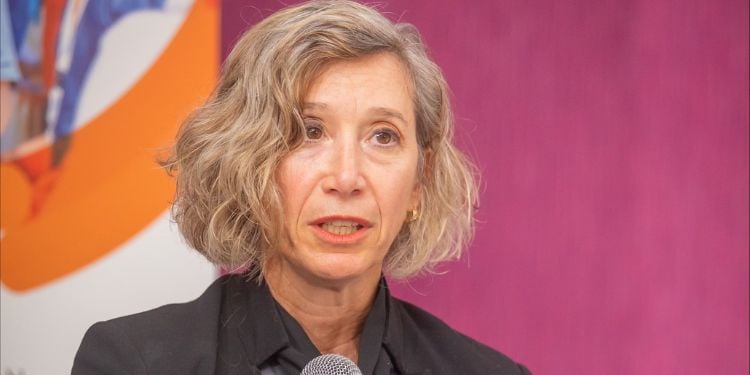
In an interview on November 25, Carla Benini, Acting Chargé d’Affaires at the US Embassy in Nairobi, said the arrangement does not change how health data was handled before the framework was signed.
She said data collected under the partnership is stripped of personal identifiers, allowing health experts to monitor how diseases are evolving and direct resources where they are most needed.
“Yeah, no, I know that’s been a topic of conversation around a lot of these frameworks, both here and in other African countries. I think it’s important to note that there’s nothing that’s being done differently than before the framework.
And what happens is there is data that’s collected that is completely removed from an individual. It has literally nothing to do with me, Carla Benini, or someone else. It’s all masked,” she said.
US Sheds Light on America’s Access to Kenya’s Health Data
She added that the objective is to understand disease patterns in Kenya so interventions can be targeted correctly.
When asked whether anonymised population health information could be misused in ways including targeting communities based on disease trends, Benini questioned how such information could be weaponised.
She said understanding the spread and evolution of diseases is important for developing effective public health responses.
Also Read: Kenya Becomes First Country to Sign ‘America First’ Global Health Deals
Such population-level information, she said, is essential for responding to shifting health needs, including the introduction of new medicines.
She cited lenacapavir, a long-acting HIV prevention and treatment option, as an example of an intervention that could help reduce HIV transmission by making it easier for people living with HIV to remain on treatment.
Under the framework, shared health data can help authorities track disease burdens, identify emerging outbreaks, assess treatment gaps, and measure the impact of programmes in areas including HIV/AIDS, tuberculosis, malaria, maternal and child health, polio eradication and disease surveillance.
Also Read: US Beats China in Fight for Kenya’s Mrima Hill as Govt Finally Awards Tenders
What Happens to Kenya After 5 Years?
Carla Benini said the five-year, $2.5 billion health cooperation agreement was designed to help Kenya build strong health systems and structures that would enable it to sustain services after the deal expires.
Under the deal, the United States would contribute $1.6 billion, with its investment expected to be higher in the initial years before gradually declining as Kenya increases its own contribution to $850 million.
Benini said the agreement reflected the US administration’s shift towards a trade-not-aid approach, with the goal of ensuring Kenya could finance and manage its health programmes independently after the five-year period.
“At the end of those five years, Kenya is going to be standing on its own two feet. I don’t think Kenya will be flailing,” Benini said.
According to the framework, the Kenyan government has committed to increasing domestic health expenditure by $850 million over five years, gradually taking on greater financial responsibility as US funding declines.
Follow our WhatsApp Channel and X Account for real-time news updates and our YouTube Channel for in-depth interviews.