


A growing number of companies listed on the Nairobi Securities Exchange (NSE) have issued profit warnings this year, signaling a challenging operating environment across multiple sectors.
The profit warnings, which indicate that a company’s earnings will fall by at least 25 percent compared to the previous financial year, have become increasingly common as businesses grapple with high inflation, currency instability, and low consumer demand.
Among the firms that have cautioned investors are Standard Chartered Bank Kenya, Kenya Airways, Umeme Limited, Centum Investments, Kapchorua Tea Kenya, Shri Krishana Overseas, TPS Eastern Africa, WPP Scangroup, and Williamson Tea Kenya.
Reasons for Profit Warnings Per Company
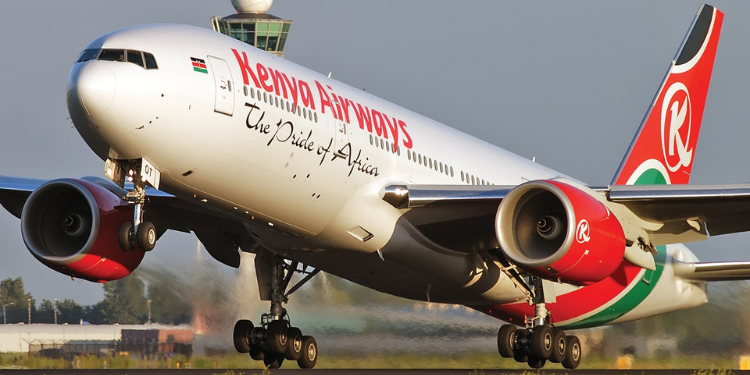
Kenya Airways
For Kenya Airways (KQ), global jet fuel prices have remained unstable throughout 2025, significantly inflating the airline’s cost base.
Fuel accounts for nearly 40 percent of Kenya Airways’ operating expenses, and price fluctuations have reduced margins despite improved passenger numbers.
The weakening Kenyan shilling against the U.S dollar has contributed to KQ’s financial strain, as most of the airline’s expenses—including aircraft leases, maintenance, and fuel—are dollar-denominated, making operations more expensive and increasing forex losses.
Furthermore, KQ continues to carry a heavy debt load, with ongoing restructuring efforts to reduce liabilities.
However, interest obligations and lease payments have remained high, and low-cost carriers, international airlines, and price-sensitive markets have limited the airline’s ability to pass on higher costs to passengers.
Standard Chartered Bank Kenya
Standard Chartered Bank Kenya has faced increased credit risk amid rising borrowing costs for businesses and households.
Elevated interest rates have led to an increase in loan defaults, forcing banks to allocate more provisions for bad debts.
While interest rates have risen, lending activity has slowed significantly. This has reduced net interest income, a core revenue stream for the bank.
Also Read: Full List of National Schools in Kenya for Grade 10 Students
The weakening Kenyan shilling has increased StanChart Kenya’s operational costs and impacted foreign currency transactions, as inflation has raised expenses and reduced profit margins.
Umeme Limited
For Umeme Limited, the Uganda Electricity Transmission Company Limited (UETCL) has faced delays in settling payments to Umeme, straining cash flows and limiting the company’s ability to fund network upgrades.
High inflation and currency instability in Uganda have affected the company, as the economic slowdown and lower industrial activity have reduced electricity consumption.
The depreciation of the Ugandan shilling against the U.S. dollar has also increased the cost of imported equipment to the country.
Centum Investments
Centum’s real estate projects, including large-scale developments in Nairobi and coastal regions, have faced slow uptake.
Furthermore, several businesses within Centum’s private equity portfolio have reported weaker earnings due to inflationary pressures and reduced consumer spending.
Rising interest rates have also increased borrowing costs for Centum and its subsidiaries, squeezing margins and limiting expansion plans.
Kapchorua Tea Kenya and Williamson Tea Kenya
Kapchorua Tea Kenya and Williamson Tea Kenya issued a profit warning, as international tea prices have remained very low throughout 2025 due to oversupply in major producing countries and subdued demand in key markets such as Pakistan and Egypt, significantly reducing export revenues for Kenyan producers.
Energy and labor costs have also increased, driven by inflation and higher fuel prices.
Unpredictable weather patterns in Kenya have disrupted tea production, reducing output and quality.
Also, the weakening Kenyan shilling has increased the cost of imported inputs and machinery, while export earnings have not fully compensated for the higher operational expenses.
Shri Krishana Overseas
Economic slowdowns in Asia and Europe have reduced demand for key export commodities, leading to lower order volumes and pricing pressure, which have affected Shri Krishana’s revenue.
The Kenyan shilling’s depreciation against major currencies has also increased the cost of imported raw materials and logistics.
Furthermore, global freight rates have remained elevated due to supply chain disruptions and geopolitical tensions.
TPS Eastern Africa (Serena Hotels)
TPS Eastern Africa, the hospitality group behind the Serena Hotels brand, has issued a profit warning for 2025 due to low international arrivals, which have not returned to pre-2020 levels.
Inflationary pressures have driven up costs for energy, food, and labor, especially in properties located in remote safari destinations, where logistics costs are higher.
Also Read: KRA Publishes List of 78 Countries Where Kenyans Must File Taxes
The weakening Kenyan shilling has raised the cost of imported goods and services, while foreign-exchange gains from international visitors have not fully offset these costs.
WPP Scangroup
For WPP Scangroup, corporates across Kenya and the region have cut marketing budgets amid economic uncertainty and high operating costs.
The rapid migration of advertising spend to digital channels has disrupted traditional revenue streams, and the company has undertaken restructuring initiatives to streamline operations and align with market trends.
However, these measures have incurred one-off costs, further impacting profitability.
Inflation and currency volatility have increased operational expenses, while subdued consumer spending has reduced demand for marketing campaigns.
Follow our WhatsApp Channel and X Account for real-time news updates.



this is great Wiltord although there are some that I do not agree with