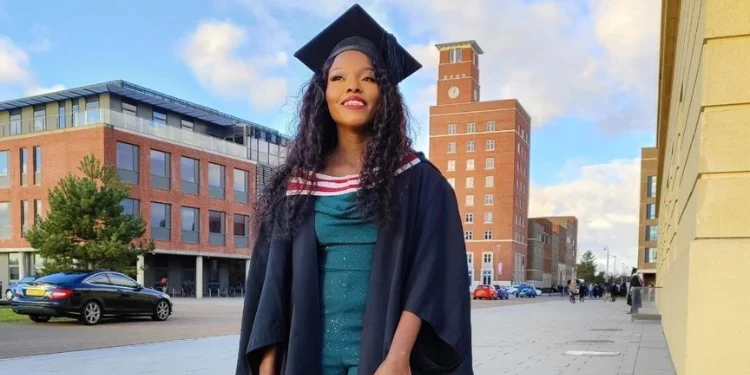
When 27-year-old Sharon Chepchirchir left Litein in Kericho County for the United Kingdom to pursue a master’s degree, she expected to advance her career—not help refugees reclaim their stories through photography.
Chepchirchir, a former arts teacher at Litein Day and Chelilis Secondary Schools, moved to Swansea in 2022 to study a Master’s in Communication, Media Practice, and Public Relations. Teaching, she says, was inspired by her parents, both educators. But during her postgraduate studies, she discovered a new passion for visual storytelling.
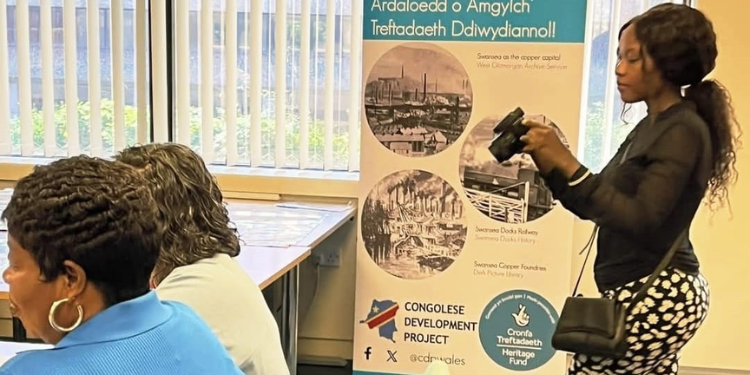
That interest led her to volunteer with the Congolese Development Project (CDP), a Swansea-based organisation supporting refugees and asylum seekers. There, she noticed one gap: the people most photographed in humanitarian settings rarely get to tell their own stories.
“I wondered what would happen if they could hold the camera,” she says.
How Chepchirchir designed Photography 101: Snap & Edit
The result was Photography 101: Snap & Edit, a workshop she designed to teach visual storytelling, camera handling, composition, ethics, editing, and project development. Participants use smartphones or basic cameras to eliminate barriers created by expensive equipment.
In sessions bringing together speakers of Lingala, Swahili, Arabic, French, and English, photography becomes a shared language. The programme blends technical skills with narrative-building, helping participants decide what story they want to tell and how to tell it with dignity and consent.
Also Read: The Billionaires of Kenya: Catherine Nyogesa, Founder And C.E.O Texas Cancer Centre
Chepchirchir recalls a young refugee who shifted from photographing flowers to documenting his family and daily life.
Another participant, during a final showcase, proudly said, “Before, I was just a refugee. Now, I am also a photographer.”
Beyond skills, the workshops restore confidence and agency. Some participants have used their photographs in asylum interviews, while others document cultural traditions to preserve Wales’ heritage.
Unexpected talents have emerged—an intuitive portrait photographer and another participant creating what Chepchirchir calls a “community heritage archive.”
Global recognition
She says the workshops prove that “talent isn’t rare, opportunity is.” Chepchirchir now works with organisations including Women for Resources and Kenyan Diaspora Media UK, gaining recognition as an emerging community leader.
She says working with refugees has reshaped her understanding of resilience, adding that it is about building something new with what’s left.
“These communities have taught me that people still choose joy, still choose to create,” she added.
Also Read: Story of Chief Inspector Margaret Ong’ale, Police Officer Pursuing a Second PhD
From a rural classroom in Kericho to community halls in Wales, she believes she never stopped teaching.
“I just changed the classroom,” she says. “Instead of desks, we have cameras. Instead of exams, we have stories,” she said.
Her dream is to expand the workshops across the UK—and eventually take them to Kenya’s refugee communities.
“Everyone deserves a chance to tell their story. All I’m doing is handing them the camera,” she added.
This article has been written by Peter Mutai ([email protected])
Follow our WhatsApp Channel and X Account for real-time news updates.