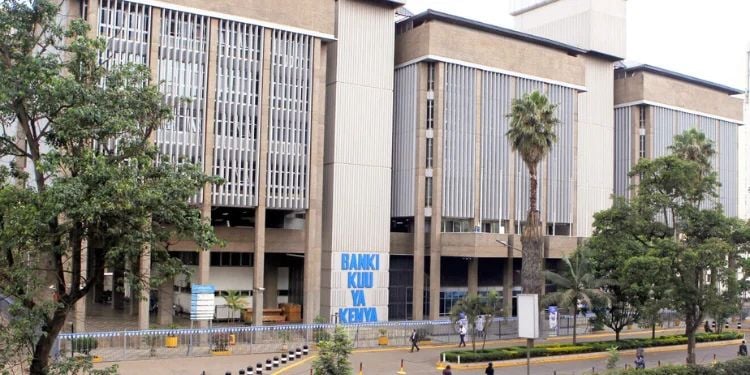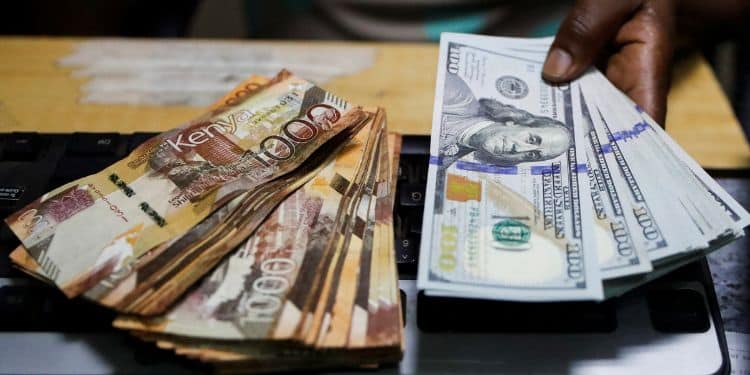
Kenya’s foreign exchange reserves stood at USD 14.93 billion in the week ending October 1, 2026, even as the Kenya shilling remained relatively stable, according to the Central Bank of Kenya (CBK).
CBK’s Weekly Bulletin released on October 2 shows that the country’s usable foreign exchange reserves on October 1 were equivalent to 6.1 months of import cover.
“The foreign exchange reserves remained adequate at USD 14,930 million (6.1 months of import cover) as of October 1. This meets CBK’s statutory requirement to endeavor to maintain at least 4 months of import cover,” CBK reported.
However, the reserves fell to USD15.042 billion on September 24, a weekly decline of about USD112 million.
Kenya Shilling Against the Dollar, Pound and Euro
The shilling recorded relatively small movements against major international currencies during the week.
Against the US dollar, the exchange rate moved from KSh129.48 per dollar on September 24 to KSh129.71 on October 1, while against the British pound, the rate increased from KSh171.73 on September 24 to KSh172.28 on October 1.
In contrast, against the euro, the kenya shilling rate fell from KSh147.62 to KSh147.30 during the week from September 24 to October 1.
The shilling also weakened slightly against the Japanese yen, with 100 Japanese yen rising from KSh81.87 on September 24 to KSh82.65 on October 1.
Also Read: Kenya Shilling Under Pressure as Dollar Gains Momentum
Shilling’s Performance Against Regional Currencies
Against the Ugandan shilling, the exchange rate stood at 30.14 Ugandan shillings per Kenyan shilling on both September 24 and October 1.
The Tanzanian shilling exchange rate declined from 20.46 to 20.35 Tanzanian shillings per Kenya shilling.
Against the Rwandan franc, the rate moved from 11.37 to 11.36, while the Burundi Franc rate fell from 23.13 to 23.10.
Interbank Trading Falls as Banks Hold KSh22.1 Billion in Excess Reserves
Trading between commercial banks declined during the week ending October 1, 2026, with the average number of interbank transactions falling from 27 to 14, according to the Central Bank of Kenya (CBK).
The average value traded also dropped from KSh14.5 billion to KSh9.5 billion during the week.
Daily interbank activity stood at 12 transactions worth KSh7.65 billion on September 25 before rising to 17 transactions valued at KSh8.95 billion on September 28.
On September 29, banks conducted 19 transactions worth KSh14.2 billion. Trading then fell to 12 transactions worth KSh12.4 billion on September 30 and nine transactions valued at KSh4.3 billion on October 1.
Commercial banks maintained an average of KSh22.1 billion in excess reserves above the 3.25 percent cash reserve requirement.
Additionally, the Kenya Shilling Overnight Interbank Average (KESONIA) remained at 8.75 percent, while CBK continued its open market operations.
Treasury Bill Demand Reaches KSh47.7 Billion
Demand for Treasury bills remained high during the week ending October 1, 2026.
At the October 1 Treasury bill auction, investors submitted bids worth KSh47.7 billion against KSh28 billion offered by the government, for an auction performance of 170.4 percent.
The 91-day Treasury bill attracted KSh17.98 billion in bids, while the 182-day bill received KSh19.15 billion and the 364-day bill attracted KSh10.59 billion.
According to CBK, the rates stood at 8.769 percent for the 91-day Treasury bill, 8.886 percent for the 182-day bill, and 9.040 percent for the 364-day bill.
Also Read: Dollar Fails to Shake Kenya Shilling Despite Rising US Interest Rates
Dollar Index Rises as Oil and Gold Prices Fall
The US Dollar Index rose by 0.80 percent during the week ending October 1, according to the Central Bank of Kenya.
International commodity prices fell during the same period, as Murban crude oil fell from USD97.36 per barrel on September 24 to USD95.76 per barrel on October 1.
Spot gold also declined, falling from USD 4,277.98 per ounce to USD 4,177.76 over the week.
“Murban crude oil prices declined to USD 95.76 per barrel on October 1, from USD 97.36 per barrel on September 24, reflecting easing supply concerns despite persistent Middle East tensions. Spot gold prices declined to USD 4,177.76 per ounce from USD 4,277.98 per ounce in the previous week, CBK indicates.
At the same time, Germany’s inflation rose to 3.3 percent in September from 2.9 percent, while the US economy grew at an annualized rate of 2.2 percent in the second quarter of 2026, up from an earlier estimate of 1.5 percent.
Follow our WhatsApp Channel and X Account for real-time news updates.