Tuesday, June 2, 2026
  • News
    • Latest News
    • Breaking News
    • Fact Check
    • Investigations
    • Explainers
  • Politics
    • Global Politics
    • Elections
    • Government & Policy
    • Diplomacy
    • Conflicts & Security
    • Political Analysis
  • Business
    • Global Economy
    • Markets
    • Technology
    • Startups
    • Energy
    • Finance
  • World News
    • Americas
    • Asia
    • Asia Pacific
    • Africa
    • Europe
    • Middle East
  • Africa
    • Central Africa
    • East Africa
    • West Africa
    • Southern Africa
  • Health
    • Global Health
    • Public Health
    • Health Policy
    • Medical Research
    • Diseases & Conditions
    • Mental Health
    • Nutrition
    • Climate & Health
    • Health Explainers
  • Sports
    • Athletics
    • Basketball
    • Boxing
    • Cricket
    • Football
    • Formula 1
    • Golf
    • Rugby
  • Weather
    • Climate Business
    • Climate Change
    • Climate Solutions
    • Living Green
  • Culture
    • Arts
    • Film & TV
    • Food
    • Music
    • Lifestyle
    • Travel
  • Opinion
    • Editorials
    • Letters
  • Behind The Brand
REGISTER
LOGIN
No Result
View All Result
The Kenya Times
  • News
    • Latest News
    • Breaking News
    • Fact Check
    • Investigations
    • Explainers
  • Politics
    • Global Politics
    • Elections
    • Government & Policy
    • Diplomacy
    • Conflicts & Security
    • Political Analysis
  • Business
    • Global Economy
    • Markets
    • Technology
    • Startups
    • Energy
    • Finance
  • World News
    • Americas
    • Asia
    • Asia Pacific
    • Africa
    • Europe
    • Middle East
  • Africa
    • Central Africa
    • East Africa
    • West Africa
    • Southern Africa
  • Health
    • Global Health
    • Public Health
    • Health Policy
    • Medical Research
    • Diseases & Conditions
    • Mental Health
    • Nutrition
    • Climate & Health
    • Health Explainers
  • Sports
    • Athletics
    • Basketball
    • Boxing
    • Cricket
    • Football
    • Formula 1
    • Golf
    • Rugby
  • Weather
    • Climate Business
    • Climate Change
    • Climate Solutions
    • Living Green
  • Culture
    • Arts
    • Film & TV
    • Food
    • Music
    • Lifestyle
    • Travel
  • Opinion
    • Editorials
    • Letters
  • Behind The Brand
  • News
    • Latest News
    • Breaking News
    • Fact Check
    • Investigations
    • Explainers
  • Politics
    • Global Politics
    • Elections
    • Government & Policy
    • Diplomacy
    • Conflicts & Security
    • Political Analysis
  • Business
    • Global Economy
    • Markets
    • Technology
    • Startups
    • Energy
    • Finance
  • World News
    • Americas
    • Asia
    • Asia Pacific
    • Africa
    • Europe
    • Middle East
  • Africa
    • Central Africa
    • East Africa
    • West Africa
    • Southern Africa
  • Health
    • Global Health
    • Public Health
    • Health Policy
    • Medical Research
    • Diseases & Conditions
    • Mental Health
    • Nutrition
    • Climate & Health
    • Health Explainers
  • Sports
    • Athletics
    • Basketball
    • Boxing
    • Cricket
    • Football
    • Formula 1
    • Golf
    • Rugby
  • Weather
    • Climate Business
    • Climate Change
    • Climate Solutions
    • Living Green
  • Culture
    • Arts
    • Film & TV
    • Food
    • Music
    • Lifestyle
    • Travel
  • Opinion
    • Editorials
    • Letters
  • Behind The Brand
No Result
View All Result
The Kenya Times ~ Trending, Breaking News and Videos
No Result
View All Result
ADVERTISEMENT

African Lessons to Solve the Israeli-Palestinian Conflict

Peter OngerabyPeter Ongera
September 30, 2024
Reading Time: 9 mins read
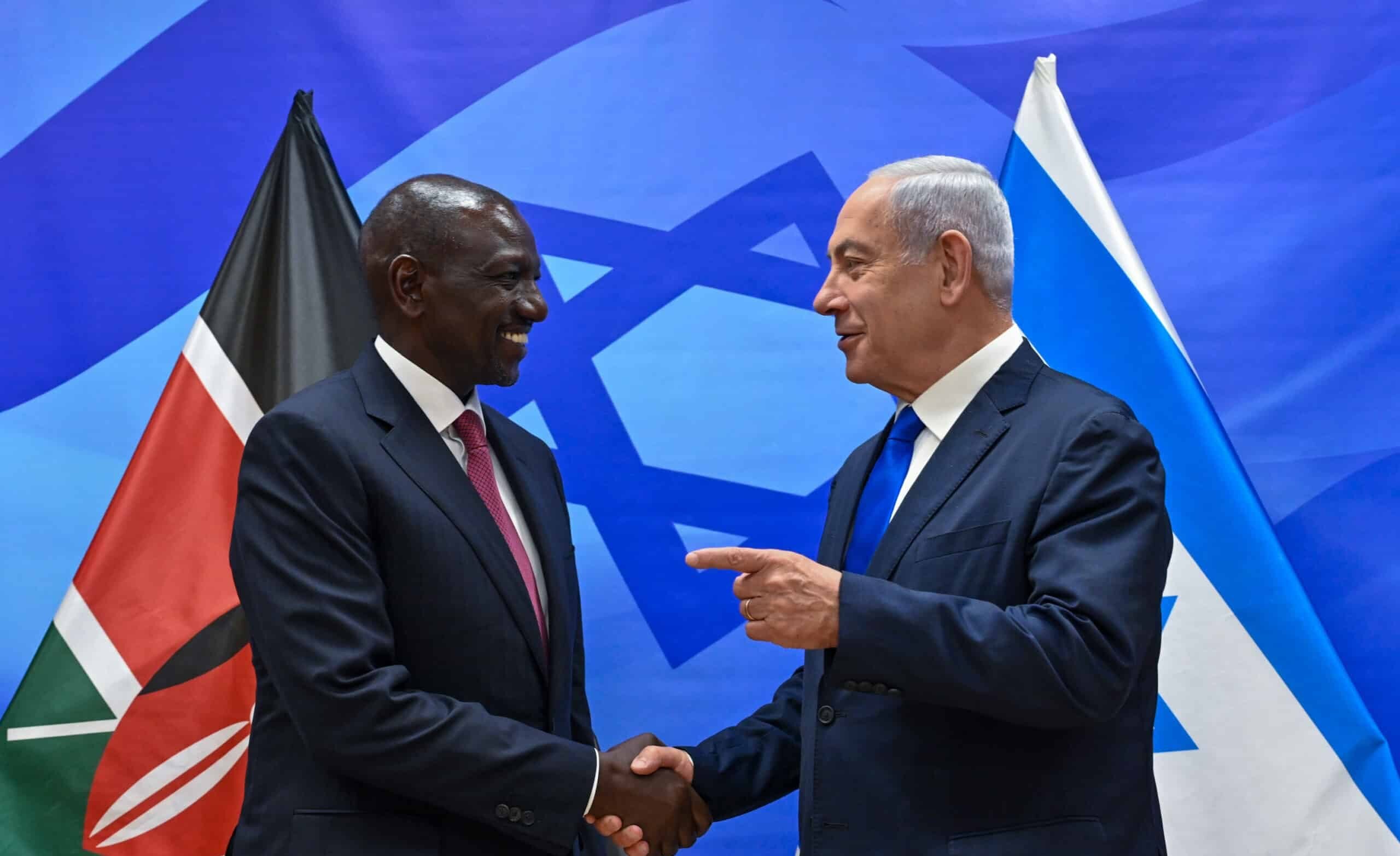
Kenya’s President William Ruto And Israeli Prime Minister Benjamin Netanyahu. Photo/Israeli Pm Press.

Kenya’s President William Ruto and Israeli Prime Minister Benjamin Netanyahu. PHOTO/Israeli PM Press.

FacebookTwitterLinkedInRedditWhatsApp
Advertisement

As the world continues to grapple with ongoing global conflicts, the wars in Ukraine and Israel-Palestine serve as stark reminders of violence, corruption, oppression, and the dehumanization that have plagued our societies.

Amid escalating violence between Hamas and Israel, diplomatic solutions appear more urgent than ever, with global attention increasingly focused on the need for lasting peace in the Middle East.

Recent developments, particularly the revelation by Local Call, a partner site of +972 Magazine, have added fuel to this volatile situation.

The Israeli Ministry of Intelligence has proposed forcibly transferring Gaza’s 2.2 million Palestinian residents to Egypt’s Sinai Peninsula—an idea that has sparked international outrage.

While Hamas’s brutal attacks on Israeli civilians on October 7, 2023, have been widely condemned, Israel’s military campaign in Gaza is drawing criticism for its increasingly indiscriminate nature.

Furthermore, the deprivation of electricity, water, fuel, and food, alongside the blocking of almost all humanitarian efforts, may be judged as collective punishment under international law.

ADVERTISEMENT
President Willian Ruto In A Meeting With Us Secretary Of State Anthony Blinken. Photo/Pcs.
President Willian Ruto in a meeting with US Secretary of State Anthony Blinken. PHOTO/PCS.

International Community Pressure on Israel and Palestine 

The pressing need for a humanitarian ceasefire and the release of hostages, as advocated by the international community, must be accompanied by renewed diplomatic efforts to end this multigenerational conflict.

Human rights groups, too, mourn the tragic loss of innocent civilians and demand the respect of international humanitarian law.

As Mahatma Gandhi once said, “An eye for an eye only ends up making the whole world blind.”

In this case, every act of retaliation pushes both Israelis and Palestinians further into a cycle of violence and trauma, obscuring the path to peace.


Also Read: Kenya, US & Egypt Declare New Stance on Israel-Hamas War


While the international consensus still points to a two-state solution as the most viable way forward, there is growing recognition that inaction has allowed this proposal to wither over time.

ADVERTISEMENT

A Palestinian state in Gaza and the West Bank, along with Israel swapping territories for peace and dividing Jerusalem under joint control, may remain the foundation for peace, but only if the global community takes meaningful action.

Recent reports from organizations like the Open Society Foundations highlight the importance of supporting civil society in Israel and Palestine.

These efforts, aimed at documenting human rights violations and advocating for equality, must be supported on a larger scale.

Achieving peace in the region requires more than diplomatic words—it requires committed action and policies that reflect the aspirations of both Israelis and Palestinians to live in freedom and security.

The Case for a One-State Solution

For some observers, however, the two-state solution may no longer be viable. Political analysts like Cyprian Nyamwamu argue that after decades of failed negotiations, the time has come to consider a one-state solution.

Drawing from his 34 years of experience in international affairs, Nyamwamu proposes a strategic foresight approach that seeks to unify Israel and Palestine under a single federal state.

His vision includes a constitutional framework where the presidency and premiership are shared between Palestinians and Israelis, creating a system of governance that fosters coexistence and equity.

Nyamwamu’s proposal calls for a unified military, police force, and federal arrangement, similar to that seen in Tanzania and Zanzibar.

This model, successfully implemented after years of political tensions, offers a useful case study for resolving deep-seated conflicts.

After gaining independence, Tanzania and Zanzibar were separate entities, with Zanzibar retaining its own government under the federal framework.

While maintaining autonomy over key issues like culture and local governance, the islands of Zanzibar and mainland Tanzania unified to ensure greater national stability and security.

This model of federalism could be a blueprint for Israel and Palestine. The federal arrangement would allow for autonomy in regions like Gaza and the West Bank, while unifying military and national governance structures under a shared constitution.

Under such an agreement, Jerusalem would become a shared city, governed by two mayors appointed by the president and prime minister of the unified state.

Lessons from Tanzania and Zanzibar

The Tanzania-Zanzibar case demonstrates that federalism can accommodate both autonomy and unity.

In 1964, following political upheavals and violence, Tanzania and Zanzibar merged to form a single nation while allowing for Zanzibar’s semi-autonomous government.

What’s more, the union provided a structure that preserved local governance in Zanzibar while maintaining national integrity. By sharing key functions such as foreign affairs, defense, and economic policy, the union brought stability to both regions, ending years of tension.

Nyamwamu envisions a similar approach for Israel and Palestine, one that allows both communities to retain cultural and political identities while cooperating on national governance and security.

The key to this approach lies in shared power—ensuring that both Israelis and Palestinians have a stake in the future governance of their land.

For Nyamwamu, a one-state solution that embraces federalism and mutual respect for autonomy could bring an end to a conflict that has festered for generations.

Additional Case Studies from Around the World

Other conflict-prone regions across the globe have also explored similar governance arrangements to resolve deeply entrenched disputes, offering valuable lessons for the Israeli-Palestinian conflict.

Northern Ireland’s Good Friday Agreement (1998): One of the most widely cited examples of conflict resolution, the Good Friday Agreement in Northern Ireland ended decades of violence known as “The Troubles.”

The agreement established power-sharing between the mainly Protestant unionists (who wanted to remain part of the United Kingdom) and the mostly Catholic nationalists (who sought to join the Republic of Ireland).

By creating a devolved government with both communities represented, this agreement provided a model for accommodating deeply divided political identities.

The Israeli-Palestinian conflict could benefit from similar power-sharing structures, ensuring that both communities have a stake in governance and security.

South Africa’s Peaceful Transition to Democracy (1994): Another successful case of conflict resolution is South Africa’s transition from apartheid to democracy.

The negotiations leading to the end of apartheid involved compromises between the African National Congress (ANC) and the white minority government.

Power-sharing and transitional arrangements like the Truth and Reconciliation Commission helped South Africa avoid a civil war and build a unified nation.

Israel and Palestine, like South Africa, could look to transitional justice mechanisms to address historical grievances while fostering national unity.

Bosnia and Herzegovina’s Dayton Accords (1995): After years of ethnic conflict in the former Yugoslavia, the Dayton Peace Accords created a federalized state of Bosnia and Herzegovina.

The country was divided into two autonomous entities: the Federation of Bosnia and Herzegovina (mainly Bosniaks and Croats) and Republika Srpska (mainly Serbs).

This arrangement allowed for local autonomy while preserving the territorial integrity of the country.

Despite ongoing political challenges, the Bosnian model could offer insights into how Israel and Palestine might manage cultural and political differences through federalism.

Conflicts in Lebanon and Sudan 

Lebanon’s Confessional System: Lebanon’s complex political system is based on power-sharing among the country’s various religious groups, particularly Christians, Sunni Muslims, and Shia Muslims.

This “confessional” system, which allocates political offices by religious affiliation, has allowed Lebanon to navigate its diverse sectarian landscape.

While not without its flaws, Lebanon’s model illustrates the possibility of shared governance even among communities with deeply rooted historical tensions.

Sudan and South Sudan’s Comprehensive Peace Agreement (2005): Although South Sudan eventually became independent in 2011, the 2005 Comprehensive Peace Agreement (CPA) between Sudan’s government and the Sudan People’s Liberation Movement (SPLM) marked a significant step toward peace after decades of civil war.


Also Read: UN Adds Israel to List of Countries Violating Children’ Rights in Armed Conflict


The CPA provided for power-sharing, wealth distribution, and a referendum for South Sudanese independence. This agreement could serve as a precedent for negotiated solutions to territorial disputes, particularly where self-determination is a core issue.

Unified Israel-Palestine state

For many observers, the idea of a unified Israel-Palestine state may seem far-fetched, but it is increasingly clear that fresh approaches to peace must be considered.

The two-state solution remains a valid goal, but it must be reinvigorated with genuine diplomatic effort and international will.

For example, the Tanzania-Zanzibar model provides a practical framework for how federalism can offer both autonomy and national unity, a model that could potentially bring Israelis and Palestinians together.

Likewise, power-sharing arrangements, as seen in Northern Ireland and Bosnia, provide additional models for managing cultural and political divisions.

Role of International Community

The international community must continue to work toward a peaceful resolution to the Israeli-Palestinian conflict—one that respects human rights, ensures security, and fosters economic prosperity for all.

Whether through a two-state or one-state solution, the ultimate goal remains the same: peace, justice, and dignity for both Israelis and Palestinians.

As the international community faces mounting global challenges, the Israeli-Palestinian conflict stands out as a longstanding source of regional instability.

Lessons from global case studies, from Northern Ireland to South Africa and Bosnia, offer hope that even the most entrenched conflicts can find resolution through federalism, power-sharing, and mutual respect.

Whether through the two-state solution or a reimagined one-state framework, the world must act swiftly to support peace in the Middle East before the violence spirals further out of control.

Follow our WhatsApp Channel for real-time news updates:

https://whatsapp.com/channel/0029VaB3k54HltYFiQ1f2i2C
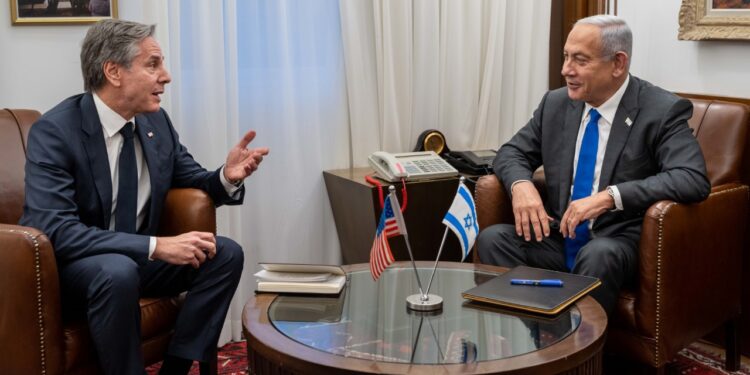
Us Secretary Of State Antony Blinken With Israeli Pm Benjamin Netanyahu In Jerusalem On Jan 30, 2023· Photo/Secretary Of State Office.
US Secretary of State Antony Blinken with Israeli PM Benjamin Netanyahu in Jerusalem on Jan 30, 2023· PHOTO/Secretary of State Office.
Tags: Benjamin NetanyahuGaza WarHezbollahIsrael-Palestine WarLebanonWest Bank
Peter Ongera

Peter Ongera

Peter Ongera is an award-winning investigative journalist whose fearless reporting has exposed corruption, human rights violations, and illicit financial flows across Kenya and the African continent. With over a decade of experience, Peter has become a trusted voice on issues of governance, electoral integrity, and democratic accountability. His deeply researched stories have been featured by respected platforms including the Thomson Reuters Foundation, Internews, Africa Check, Lida Network, Hivos, and Context. Trained in digital forensics, open-source intelligence (OSINT), and fact-checking, Peter combines cutting-edge verification techniques with a passion for evidence-based storytelling. He has also mentored emerging journalists across the globe, equipping them to hold power to account. Through his work, Peter champions a journalism that not only informs but drives systemic reform; empowering communities to demand transparency, justice, and lasting change. You can reach him at [email protected].

Related Posts

Mudavadi Urges Africa To End Aid Dependency, Embrace Trade And Investment

Mudavadi Asks Africa to Stop Depending on Aid

June 2, 2026
Kenha Advertises Mau Summit–Eldoret Road Tender After Securing Funding

KeNHA Advances Plans for Mau Summit-Eldoret Road Upgrade After Securing Funding

June 2, 2026
The Atheists In Kenya Society Has Called On President William Ruto’s Government To Include Atheism In The National School Curriculum, A Move That Has Raised Debate In Kenya’s Education Sector.

Pressure on Ruto to Allow Atheism in All Schools Countrywide

June 2, 2026
Here Are The 6 Things That Make Certain Sports A Lot More Popular

Here Are The 6 Things That Make Certain Sports a Lot More Popular

June 2, 2026
ADVERTISEMENT

The Kenya Times Facebook

LATEST ARTICLES

  • Mudavadi Asks Africa to Stop Depending on Aid
  • KeNHA Advances Plans for Mau Summit-Eldoret Road Upgrade After Securing Funding
  • Sasini PLC Appoints New Company Secretary
  • Pressure on Ruto to Allow Atheism in All Schools Countrywide
  • Here Are The 6 Things That Make Certain Sports a Lot More Popular
  • Emotional Utumishi Girls Survivor Recounts Horrific Night That Killed Classmates, Calls for Justice
  • Ruto Recalls How Leaders Warned Him Against Appointing Francis Ogolla
  • Trump Nominates Diplomat Henry Wooster as US Ambassador to Kenya
  • High Court Orders Govt to Disclose All Agreements and Approvals on Ebola Facility
  • Opinion | How Kenya Failed the Girls of Utumishi Academy
  • Lenana School Suspends Learning After Student Unrest
  • Maurice Ogeta Finally Reveals Raila’s Last Moments and How He Died 
  • Ruto Explains Why He Allowed US to Have Ebola Quarantine at Laikipia Air Base
  • Opinion | The Mother Who Hates Her Own Children: Kenya’s Moral Collapse
  • Bolt Sets the Record Straight on Reports of Shutting Down in Kenya
ADVERTISEMENT

Company

About Us

Our Authors

Our Experts

Social Media

Policies

Privacy Policy

House Rules

Standards and Policies

Terms and Conditions

Subscription

My Account

Contact Us

Contact Us

Join Our Team

Advertise With Us

© Copyright 2026 | The Kenya Times | All Rights Reserved

Welcome Back!

Sign In with Facebook
Sign In with Google
Sign In with Linked In
OR

Login to your account below

Forgotten Password? Sign Up

Create New Account!

Sign Up with Facebook
Sign Up with Google
Sign Up with Linked In
OR

Fill the forms below to register

All fields are required. Log In

Retrieve your password

Please enter your username or email address to reset your password.

Log In
Your Privacy and Cookies
We use cookies on our website to give you the most relevant experience by remembering your preferences and repeat visits. By clicking “Accept”, you consent to the use of ALL the cookies.
Do not sell my personal information.
Cookie settingsACCEPT
Privacy & Cookies Policy

Privacy Overview

This website uses cookies to improve your experience while you navigate through the website. Out of these cookies, the cookies that are categorized as necessary are stored on your browser as they are essential for the working of basic functionalities of the website. We also use third-party cookies that help us analyze and understand how you use this website. These cookies will be stored in your browser only with your consent. You also have the option to opt-out of these cookies. But opting out of some of these cookies may have an effect on your browsing experience.
Necessary
Always Enabled
Necessary cookies are absolutely essential for the website to function properly. This category only includes cookies that ensures basic functionalities and security features of the website. These cookies do not store any personal information.
Functional
Functional cookies help to perform certain functionalities like sharing the content of the website on social media platforms, collect feedbacks, and other third-party features.
Performance
Performance cookies are used to understand and analyze the key performance indexes of the website which helps in delivering a better user experience for the visitors.
Analytics
Analytical cookies are used to understand how visitors interact with the website. These cookies help provide information on metrics the number of visitors, bounce rate, traffic source, etc.
Advertisement
Advertisement cookies are used to provide visitors with relevant ads and marketing campaigns. These cookies track visitors across websites and collect information to provide customized ads.
Others
Other uncategorized cookies are those that are being analyzed and have not been classified into a category as yet.
SAVE & ACCEPT
LOGIN | REGISTER
  • Login
  • Sign Up
  • Cart
No Result
View All Result
  • News
    • Latest News
    • Breaking News
    • Investigations
    • Explainers
    • Fact Check
  • Politics
    • Global Politics
    • Conflicts & Security
    • Elections
    • Diplomacy
    • Government & Policy
    • Political Analysis
  • Business
    • Global Economy
    • Markets
    • Technology
    • Startups
    • Energy
    • Finance
  • World News
    • Americas
    • Asia
    • Asia Pacific
    • Africa
    • Europe
    • Middle East
  • Africa
    • East Africa
    • West Africa
    • Southern Africa
    • Central Africa
  • Health
    • Global Health
    • Public Health
    • Health Policy
    • Medical Research
    • Diseases & Conditions
    • Mental Health
    • Nutrition
    • Climate & Health
    • Health Explainers
  • Sports
    • Athletics
    • Basketball
    • Boxing
    • Cricket
    • Football
    • Formula 1
    • Golf
    • Rugby
  • Weather
    • Climate Business
    • Climate Change
    • Climate Solutions
    • Living Green
  • Culture
    • Arts
    • Film & TV
    • Food
    • Lifestyle
    • Music
    • Travel
  • Opinion
    • Editorials
    • Letters
  • Behind The Brand
  • Contact Us

Not enough quota to unlock this post
Unlock left : 0
Are you sure want to cancel subscription?