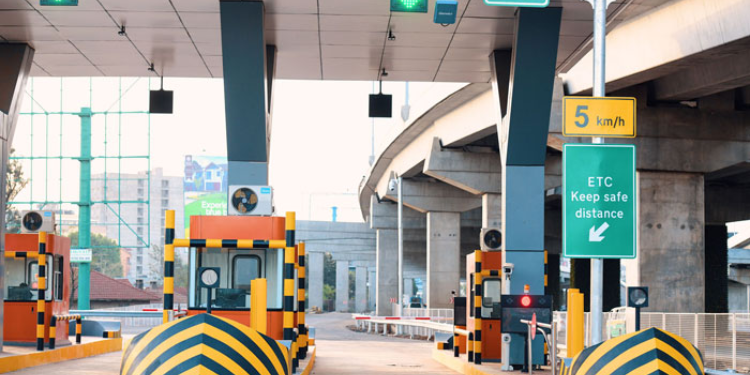

Motorists using the Nairobi Expressway paid nearly Ksh3.9 billion in toll charges in the first six months of 2026, boosting revenue for the highway’s Chinese operator by 7.3 per cent compared to the same period last year.
New financial disclosures by China Communications Construction Company (CCCC), the parent company of China Road and Bridge Corporation (CRBC), show the Nairobi Expressway generated RMB204 million in operating revenue in the six months ending June 30, 2026, up from RMB190 million in a similar period in 2025.
The increase means the road earned about Ksh3.9 billion during the period, compared to roughly Ksh3.6 billion a year earlier.
The figures provide one of the clearest glimpses into the financial performance of the Nairobi Expressway, one of Kenya’s biggest public-private partnership infrastructure projects and among the most visible transport investments in the country.
The 27-kilometre highway was built by CRBC above sections of Mombasa Road and Uhuru Highway and serves thousands of motorists seeking to avoid traffic congestion between Mlolongo and Westlands.
Growing returns from Nairobi Expressway
The latest filing places the Nairobi Expressway among CCCC’s major revenue-generating concession projects across the world.
According to the report, the project had accumulated investment worth RMB4.681 billion by the end of June this year.
Also Read: Motorists Face 12-Day Closure of Westlands Exit on Nairobi Expressway
The company also disclosed that the concession period remains 27 years, with 4.1 years already completed.
Under the arrangement signed with the Kenyan government, the operator is expected to recover its investment through toll collections before eventually handing over the asset to the State.
The revenue growth suggests continued demand for the expressway despite periodic public debate over toll charges and the cost of using the road.
The filings show that while Nairobi Expressway revenue grew during the review period, the company did not disclose traffic volumes, operating expenses or profits generated specifically by the Kenyan project.
However, the report indicates that motorists continue to rely on the highway as a faster alternative to the heavily congested ground-level road network linking the airport area, the central business district (CBD) and the city’s western suburbs.
The increase also comes as the expressway continues to cement its role as a critical transport corridor for business travellers, commercial operators and daily commuters moving across Nairobi.
Part of a Global Concession Portfolio
CCCC reported that its entire portfolio of operating concession projects generated about Ksh74.8 billion in revenue during the first six months of 2026.
The Nairobi Expressway contributed approximately KSh3.9 billion of that amount.
Also Read: Kenya Sends Another Message to Foreigners Doing Business After Ruto’s Order
The same report showed that the concession portfolio recorded a net loss of about Ksh18.4 billion during the period, although the company did not provide a breakdown of losses by project.
In the previous year’s filing, the company reported total concession-project revenue of about Ksh79.7 billion, with the Nairobi Expressway contributing about Ksh3.6 billion.
The Nairobi Expressway is operated by Moja Expressway Company, a CRBC subsidiary established specifically to manage the project under the concession agreement.
Since opening to motorists, the road has transformed travel times along one of Nairobi’s busiest transport corridors and has become a key test case for Kenya’s public-private partnership model in large infrastructure projects.
The latest disclosures indicate that the highway continues to generate growing revenues for its operator, with earnings increasing year on year as more motorists turn to the toll road for faster movement across the capital.
Despite growing revenues, the Nairobi Expressway faces several challenges.
Motorists continue to complain about toll charges, especially after periodic tariff reviews.
The operator also faces the long task of recovering its multibillion-shilling investment under a 27-year concession agreement.
In addition, the project’s profitability remains unclear because filings disclose revenue but not the road’s operating costs or profits.
Follow our WhatsApp Channel and X Account for real-time news updates.