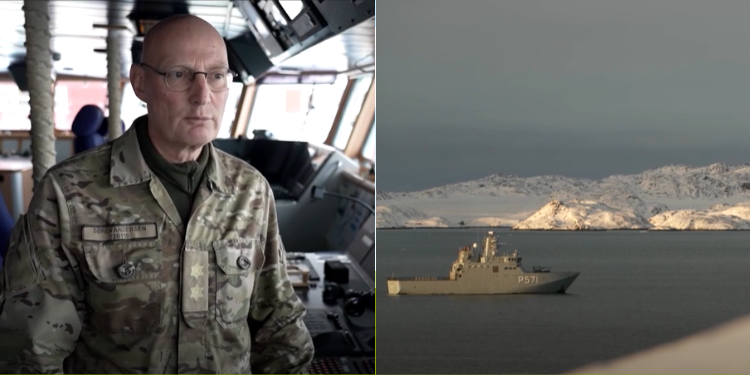
Denmark has moved to clarify the purpose of its military buildup in Greenland, insisting the deployment is aimed at monitoring potential Russian activity in the Arctic, but not preparing for any threat from the United States.
Speaking on Friday, January 16, Major General Søren Andersen, head of Denmark’s Joint Arctic Command in Greenland, said Copenhagen does not view Washington as a security risk and sees no scenario in which one NATO member would attack another.
He further said that his mandate is to defend Greenland if it were ever threatened, adding that such a response would involve Danish forces and, if necessary, cooperation within the NATO alliance.
“I don’t see a NATO ally attacking another NATO ally. But of course, if we have Russia attacking Greenland, it is my task to defend it. And I would do that both with Danish troops, but of course within the alliance as well.”
According to Andersen, Denmark’s strategic focus is instead on Russia, particularly once the war in Ukraine ends. He said Copenhagen expects Moscow to redeploy military resources used in Ukraine to other regions, including the Arctic, leading to heightened activity in the coming years.
“It’s our expectation that Russia will use all the resources they have used in Ukraine. They will use them in other theatres, and that is also in the Arctic. So, we will actually expect an increase in Russian activities in the upcoming year. We don’t see an immediate threat to the kingdom of Denmark, and that’s included Greenland,” he added.
Denmark says Russia is the focus amid rising Arctic tensions
The commander also noted that there are currently no Russian or Chinese vessels operating near Greenland, despite their presence elsewhere in the Arctic Ocean.
Also Read: EU Warns United States Military Takeover of Greenland Would Mean End of NATO
His remarks come amid growing geopolitical tension over Greenland, a self-governing territory within the Danish realm that has become a focal point of strategic rivalry due to its Arctic location and proximity to key military routes.
Earlier this week, Russia rejected claims by NATO countries that Moscow or Beijing poses a threat to Greenland, calling such assertions a “myth” designed to fuel hysteria and justify what it described as dangerous militarisation of the Arctic.
In a statement issued on Thursday, January 15, through its embassy in Belgium, Russia accused NATO of escalating confrontation in the region under what it called a fictitious pretext of countering Russian and Chinese influence. Moscow said it was closely monitoring developments around Greenland and urged that the Arctic remain peaceful and stable.
Russia has in recent years reopened and modernised several military bases across its Arctic territory, a move Western officials say reflects its long-term strategic ambitions in the region.
Trump’s Greenland push
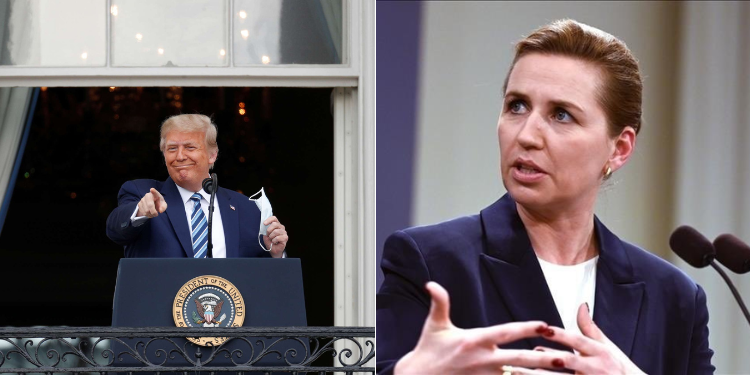
The renewed focus on Greenland also follows increasingly assertive remarks by U.S. President Donald Trump, who has argued that the United States should take control of Greenland for national security reasons. Trump has said Denmark is not adequately equipped to defend the territory, a claim Copenhagen has repeatedly rejected.
The President went further on Friday, threatening to impose tariffs on countries that oppose his push to acquire Greenland, saying the territory is critical to U.S. security and to the missile defence system his administration wants to build.
Also Read: 10 Rare Minerals Donald Trump Is Targeting in Greenland
Denmark and Greenland responded earlier this week by announcing plans for an expanded military presence in and around Greenland in cooperation with NATO allies.
Several European countries, including France, Germany, Norway, and Sweden, have since deployed troops to the territory in a show of support for Copenhagen and Nuuk.
Danish Foreign Minister Lars Lokke Rasmussen held talks at the White House this week, describing discussions with the Trump administration as frank but constructive, while acknowledging that fundamental disagreements remain over Greenland’s future.
Despite the political pressure, Danish officials have stressed that their military moves are defensive and alliance-based, aimed at preserving stability in the Arctic rather than escalating tensions among NATO partners.
Follow our WhatsApp Channel and X Account for real-time news updates.