

Kenya has 1,391 driving schools, but 19 of them reported having no motor vehicle for training, according to the 2026 Mapping and Census of TVET Institutions released by the Kenya National Bureau of Statistics (KNBS).
The findings show that 1.4 per cent of the driving schools enumerated during the census had no training vehicles, raising questions about the resources available for practical driving instruction.
The report also found that 74 per cent of the institutions had two vehicles or fewer, meaning most driving schools operated with small training fleets.
Of the 1,391 institutions, 86 were public driving schools while 1,305 were privately owned.
Two public institutions reported having no training vehicle, representing 2.3 per cent of public driving schools.
17 private institutions, or 1.3 per cent, also reported having none.
The census did not identify the individual schools without vehicles, but its county breakdown showed that Kiambu recorded the highest number at six, followed by Nairobi City, Kirinyaga and Trans Nzoia, which each had two.
Mombasa, Nyandarua, Nyeri, Elgeyo-Marakwet, Laikipia, Bungoma and Migori each had one driving school reporting no training vehicle.
Number of Vehicles Owned by Driving Schools
The census found that 471 driving schools, representing 33.9 per cent of the national total, had one training vehicle.
Another 538 institutions, or 38.7 per cent, had two vehicles.
Also Read: Ruto Directs Treasury to Allocate Ksh100M to Defence University
A further 197 schools had three vehicles, 82 had four, while 36 had five.
Only 48 institutions, representing 3.5 per cent, reported having more than five training vehicles.
Private schools accounted for most of the institutions with small fleets.
Of the 1,305 private driving schools, 438 had one vehicle and 514 had two.
Among public institutions, 33 had one vehicle while 24 had two.
The county figures showed differences in the number of vehicles available to driving schools.
Nairobi City had the most institutions, at 325, followed by Kiambu with 240 and Nakuru with 105.
Nairobi had 103 schools with one vehicle and 151 with two.
Kiambu had 83 with one vehicle and 89 with two, while Nakuru recorded 38 with one and 36 with two.
Shortage of Teaching Equipment
The KNBS census also assessed the teaching and learning equipment available in driving schools.
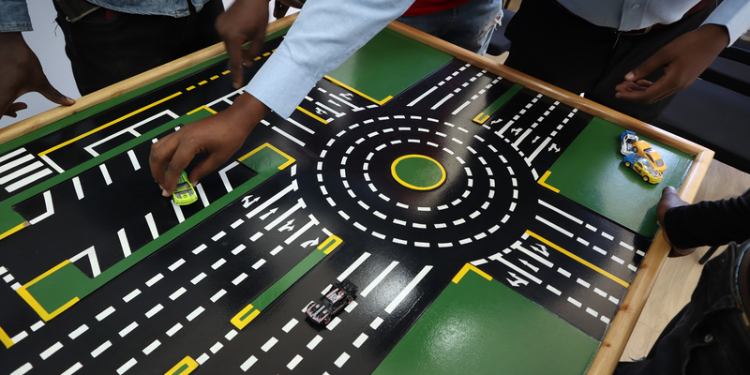
Model town boards were the most widely available equipment, reported by 1,370 institutions, representing 98.5 per cent.
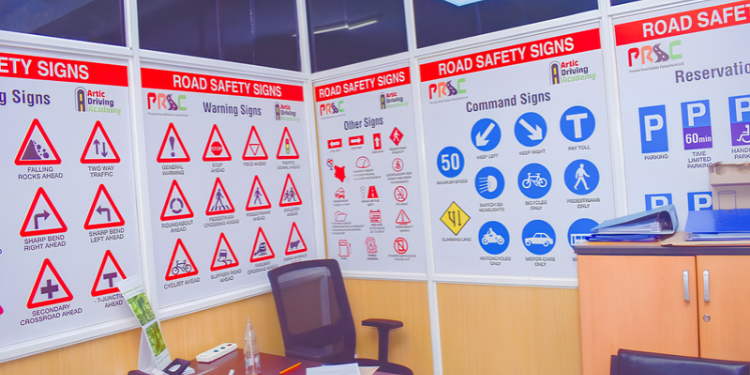
Road sign posters were available in 1,367 schools, or 98.3 per cent, while 1,344 institutions, representing 96.6 per cent, had charts.
Driving manuals were recorded in 83 institutions.
However, the report’s national percentage for manuals does not align with the public and private breakdown in its table, which lists all 83 under public schools.
The figure therefore requires clarification from KNBS.
Simulators and projectors were the least available equipment.
Only 355 driving schools, representing 25.5 per cent, had simulators, while 349, or 25.1 per cent, had projectors.
The availability of some equipment differed between public and private institutions.
Thirty-one public driving schools had simulators, representing 36 per cent, compared with 324 private institutions, or 24.8 per cent.
Also Read: CJ Koome Addresses Trolling of Judges
Projectors were available in 50 public driving schools, representing 58.1 per cent, and 299 private institutions, or 22.9 per cent.
Few Driving Schools Have Vehicles for Learners with Disabilities
The census further found that only 88 of the 1,391 driving schools had motor vehicles adapted for learners with disabilities.
This represented 6.3 per cent of all institutions, leaving 1,303 schools, or 93.7 per cent, without such vehicles.
The gap was recorded in both public and private institutions.
Only four of the 86 public driving schools had adapted vehicles, representing 4.7 per cent.
Among private institutions, 84 of the 1,305 schools had adapted vehicles, or 6.4 per cent.
Nairobi City recorded the highest number of driving schools with adapted vehicles at 24, followed by Kiambu with nine and Kisumu with eight.
Mombasa and Kisii each had four.
The report also identified 23 counties with no driving schools reporting vehicles adapted for learners with disabilities.
Follow our WhatsApp Channel and X Account for real-time news updates and our YouTube Channel for in-depth interviews.