Wednesday, June 24, 2026
  • News
    • Latest News
    • Breaking News
    • Fact Check
    • Investigations
    • Explainers
  • Politics
    • Global Politics
    • Elections
    • Government & Policy
    • Diplomacy
    • Conflicts & Security
    • Political Analysis
  • Business
    • Global Economy
    • Markets
    • Technology
    • Startups
    • Energy
    • Finance
  • World News
    • Americas
    • Asia
    • Asia Pacific
    • Africa
    • Europe
    • Middle East
  • Africa
    • Central Africa
    • East Africa
    • West Africa
    • Southern Africa
  • Health
    • Global Health
    • Public Health
    • Health Policy
    • Medical Research
    • Diseases & Conditions
    • Mental Health
    • Nutrition
    • Climate & Health
    • Health Explainers
  • Sports
    • World Cup 2026
    • Athletics
    • Basketball
    • Boxing
    • Cricket
    • Football
    • Formula 1
    • Golf
    • Rugby
  • Weather
    • Climate Business
    • Climate Change
    • Climate Solutions
    • Living Green
  • Culture
    • Arts
    • Film & TV
    • Food
    • Music
    • Lifestyle
    • Travel
  • Opinion
    • Editorials
    • Letters
  • Behind The Brand
REGISTER
LOGIN
No Result
View All Result
The Kenya Times
  • News
    • Latest News
    • Breaking News
    • Fact Check
    • Investigations
    • Explainers
  • Politics
    • Global Politics
    • Elections
    • Government & Policy
    • Diplomacy
    • Conflicts & Security
    • Political Analysis
  • Business
    • Global Economy
    • Markets
    • Technology
    • Startups
    • Energy
    • Finance
  • World News
    • Americas
    • Asia
    • Asia Pacific
    • Africa
    • Europe
    • Middle East
  • Africa
    • Central Africa
    • East Africa
    • West Africa
    • Southern Africa
  • Health
    • Global Health
    • Public Health
    • Health Policy
    • Medical Research
    • Diseases & Conditions
    • Mental Health
    • Nutrition
    • Climate & Health
    • Health Explainers
  • Sports
    • World Cup 2026
    • Athletics
    • Basketball
    • Boxing
    • Cricket
    • Football
    • Formula 1
    • Golf
    • Rugby
  • Weather
    • Climate Business
    • Climate Change
    • Climate Solutions
    • Living Green
  • Culture
    • Arts
    • Film & TV
    • Food
    • Music
    • Lifestyle
    • Travel
  • Opinion
    • Editorials
    • Letters
  • Behind The Brand
  • News
    • Latest News
    • Breaking News
    • Fact Check
    • Investigations
    • Explainers
  • Politics
    • Global Politics
    • Elections
    • Government & Policy
    • Diplomacy
    • Conflicts & Security
    • Political Analysis
  • Business
    • Global Economy
    • Markets
    • Technology
    • Startups
    • Energy
    • Finance
  • World News
    • Americas
    • Asia
    • Asia Pacific
    • Africa
    • Europe
    • Middle East
  • Africa
    • Central Africa
    • East Africa
    • West Africa
    • Southern Africa
  • Health
    • Global Health
    • Public Health
    • Health Policy
    • Medical Research
    • Diseases & Conditions
    • Mental Health
    • Nutrition
    • Climate & Health
    • Health Explainers
  • Sports
    • World Cup 2026
    • Athletics
    • Basketball
    • Boxing
    • Cricket
    • Football
    • Formula 1
    • Golf
    • Rugby
  • Weather
    • Climate Business
    • Climate Change
    • Climate Solutions
    • Living Green
  • Culture
    • Arts
    • Film & TV
    • Food
    • Music
    • Lifestyle
    • Travel
  • Opinion
    • Editorials
    • Letters
  • Behind The Brand
No Result
View All Result
The Kenya Times ~ Trending, Breaking News and Videos
No Result
View All Result
ADVERTISEMENT

Iran Emerged Weakened and Vulnerable After War With Israel − and That Could Mean Trouble for Country’s Ethnic Minorities

The ConversationbyThe Conversation
June 29, 2025
Reading Time: 11 mins read
Netanyahu Rejects Pause In Gaza War Without Hostage Release - Vows Full Gaza Takeover As Ceasefire Talks Stall

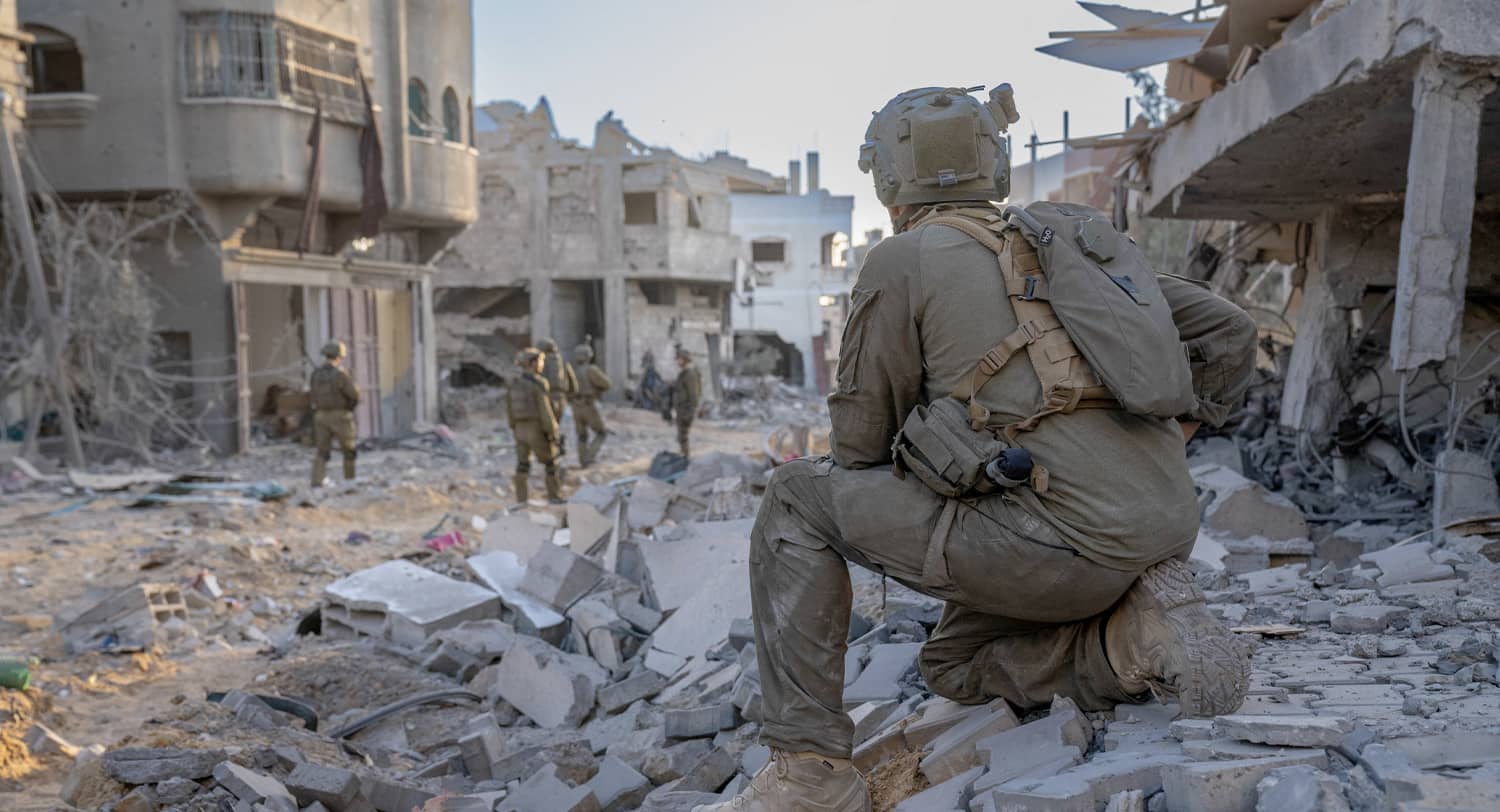
Israeli soldiers operate inside the Gaza Strip, November 2023. Photo credit: Israeli Defense Forces/Handout via REUTERS.

FacebookTwitterLinkedInRedditWhatsApp
Advertisement

The 12-day confrontation between Iran and Israel in June 2025 may not have escalated into a full-scale regional war, but it marks a potentially critical turning point in Iran’s internal political landscape.

Though the Islamic Republic has entered into direct conflict with a foreign adversary before, it has never done so while so militarily weakened, internally fractured and increasingly alienated from its own population.

And unlike the Iran-Iraq war of the 1980s, when national unity coalesced around the defense of Iranian sovereignty, this time the government appeared to fight without significant public support. While accurate polling from within Iran is hard to come by, the lack of pro-government rallies, the low approval numbers for the government ahead of the war and the government’s subsequent crackdown since tell their own stories.

As a researcher of different ethnic groups within the country, I know that many Iranians – especially those from historically marginalized communities – viewed the conflict with Israel not as a defense of the nation but as a reckless consequence of the government’s ideological adventurism and regional proxy campaigns. It puts the Islamic Republic in its most vulnerable position since its establishment after the Iranian Revolution in 1979.

Hard and soft power diminished

It is worth taking a snapshot of just how diminished the Iranian government is following the recent series of blows.

Its soft power – once built on revolutionary legitimacy, Shiite ideological influence and anti-Western propaganda – has eroded dramatically.

For decades, the Islamic Republic relied on a powerful narrative: that it was the only government bold enough to confront the United States and Israel, defend Muslim causes globally and serve as the spiritual leader of the Islamic world. This image, projected through state media, proxy militias and religious rhetoric, helped the government justify its foreign interventions and massive military spending, particularly on nuclear development and regional militias.

But that narrative no longer resonates the way it once did. The leaders of Iran can no longer claim to inspire unity at home or fear abroad. Even among Shiite populations in Lebanon, Iraq and Yemen, support during the Israel-Iran confrontation was muted. Inside Iran, meanwhile, propaganda portraying Israel as the existential enemy has lost its grip, especially among the youth, who increasingly identify with human rights movements rather than government slogans.

It is also clear that Iran’s hard power is getting weaker. The loss of senior commanders and the destruction of important military infrastructure have shown that the government’s intelligence and security systems are severely compromised.

Even before Israel’s attack, a number of reports showed that Iran’s military was in its weakest state in decades. The real surprise in the recent war came not from the scale of the damage by Israeli and U.S. bombs but from how deeply Israel had penetrated the upper echelons of the Iranian military and intelligence sectors. The recent conflict amounted to a security as well as a military failure.

Externally defeated, internally adrift

As its power across the region appears diminished, so too is the Iranian government’s grip loosening internally. A 2024 survey by Iran’s Ministry of Culture revealed “discontent” among the population, with over 90% of Iranians “dissatisfied” with the country’s current position. Elections in November 2024 saw a turnout of under 40%, further underscoring Iranians’ discontent with the political process.


Also Read: Iran’s Supreme Leader Khamenei Declares Victory, Says US Suffered a Heavy Blow


And reporting from inside Iran suggests many Iranians blame government policies for the war with Israel. “I place the blame on this country’s decision-makers,” one resident of Rasht told Reuters, “their policies have brought war and destruction upon us.”

The government has responded with a tactic it has used before: repression. According to government-aligned media, over 700 people were arrested during and immediately after the conflict, accused of collaborating with the Mossad, the Israeli intelligence agency.

As in past crackdowns, ethnic minority regions – particularly Kurdish areas – have been targeted.

One day after the ceasefire with Israel, the government executed three Kurdish cross-border laborers who rely on smuggling goods to survive in Iran’s underdeveloped Kurdish provinces.

These executions, which were done without a trial or legal counsel, fit a pattern of how the government uses ethnic scapegoating to stay in power. And it echoes a historic pattern: When the government feels threatened, it strikes the Kurds first.

A historical pattern of repression

Kurds are estimated to number 10-12 million in Iran, composing roughly 12% to 15% of the country’s total population – making them the third-largest ethnic group after Persians and Azeris. Iran also includes significant Baluch and Arab minorities.

When the Islamic Republic was established in 1979, many ethnic groups supported the revolution. They hoped for a more inclusive and democratic Iran than what preceded it – the brutal autocracy of the shah that had frequently targeted minorities.

Those hopes were quickly dashed. By rejecting pluralism and promoting a unifying ideology centered on Shiite Islam and Persian identity, Ayatollah Ruhollah Khomeini marginalized non-Persian and non-Shiite groups.

Other ethnic groups were viewed with suspicion, while Shiite Azerbaijanis were mainly co-opted into the system.

Khomeini declared jihad against Kurdish resistance groups, labeling them infidels, separatists and agents of Israel and the United States.

Armed with advanced weaponry inherited from the last Pahlavi shah, the government launched a military campaign in Kurdistan province. Many Kurdish villages and towns were destroyed, and approximately 50,000 Iranian Kurds were killed between 1979 and 1988.

The region was turned into a militarized zone – a status that continues today.

Campaign against Kurds

After the Iran-Iraq war ended in August 1988, the government – economically strained and militarily weakened – feared a domestic uprising.


Also Read: Why Trump Wants Netanyahu Trial Dropped


But instead of embracing political reform, it responded with one of the most brutal crackdowns in Iran’s history. Khomeini issued a fatwa, or religious edict, ordering the execution of political prisoners, including large numbers of Kurdish dissidents.

Between late July and September 1988, thousands of political prisoners were executed – many without trial or any legal process. At least 5,000 people were killed and buried in unmarked mass graves, according to Amnesty International.

Khomeini labeled them “mohareb,” or “warriors against God,” and criticized the Revolutionary Courts for not sentencing them to death sooner. This mass execution campaign signaled the government’s resolve to eliminate all dissent, regardless of legal precedent or human rights norms.

In the years that followed, the government systematically assassinated prominent Kurdish leaders and other opposition leaders, both in Iran and overseas.

This targeted elimination of Kurdish leadership, combined with the mass executions of political prisoners, was a deliberate strategy to decapitate any organized opposition before it could challenge the government’s survival.

A new crisis, the same strategy

The Islamic Republic appears to be using the same playbook now, but under far more fragile conditions.

Given the precarious state of the government, it is fair to ask why there are not more protests now, especially in ethnic minority regions. For many, the answer is fear over what happens next.

Many Kurds have learned from previous uprisings – particularly the 2022 “Women, Life, Freedom” movement – that when they lead protests, they face the harshest crackdown. Over 56% of those killed and persecuted in the subsequent crackdown were Kurds.

Meanwhile, the overall opposition remains fractured and leaderless, both along ethnic lines and in terms of goals. The main opposition groups have traditionally been reluctant to acknowledge ethnic rights, let alone include them in any vision for a future Iran. Rather, they insist on “territorial integrity” as a precondition for any dialogue, echoing the Islamic Republic’s rhetoric.

This is a key legacy of the Islamic Republic: Its propaganda has not only shaped domestic opinion but also influenced the opposition, dividing Iranians at home and abroad. And it has long mobilized the dominant ethnic group against minorities, especially Kurds, by portraying them as internal enemies.The Conversation

Shukriya Bradost, Ph.D. Student of Planning, Governance and Globalization, Virginia Tech

This article is republished from The Conversation under a Creative Commons license. Read the original article.

Follow our WhatsApp Channel and X Account for real-time news updates.
Iran Spokespersons Vows To Continue “Unstoppable” Nuclear Industry
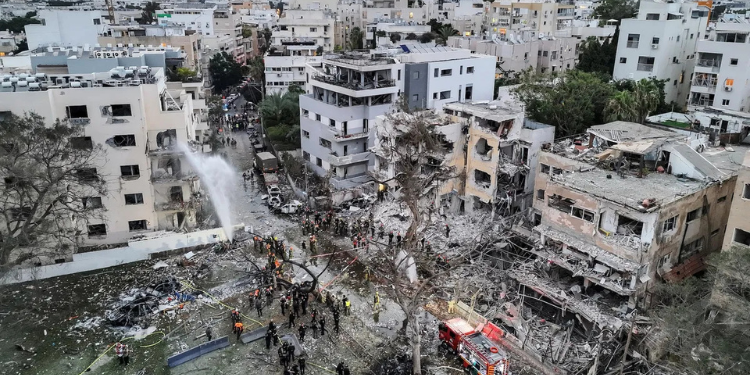
Rescue operations begin after a bomb attack by Israel on Iran. PHOTO/CNN
Tags: IranIsrael
The Conversation

The Conversation

The Conversation is an independent news organization that publishes evidence-based articles written by experts to help readers understand diverse topics. We cover a wide range of areas including arts, culture, education, health, politics, science, and more¹. Their content is characterized by in-depth analysis, research, news, and ideas from leading academics and researchers. The Conversation aims to provide academic rigor with journalistic flair.

Related Posts

Top 10 Street Food Dominating Kenya In 2026

Top 10 Street Food Dominating Kenya in 2026

June 23, 2026
A Collage Photo Of A Road Sign Indicating A Closed Road And A Section Of Mombasa Road. Photo/Kenha-X

Section of Mombasa Road to Be Closed for One Week

June 23, 2026
Utumishi Girls

DPP Approves Murder Charges Against Utumishi Girls Academy Arson Case

June 23, 2026
Interior Cabinet Secretary Kipchumba Murkomen. Photo/Murkomen X

Govt to Increase Salaries for Select Officers in Fresh Reforms

June 23, 2026

Comments 1

  1. Joseph Nganga says:
    12 months ago

    Very much satisfied

ADVERTISEMENT

The Kenya Times Facebook

LATEST NEWS

  • Judge Hands Antifa Leader 100 Years for Terror Attack on ICE Facility
  • Trump’s Social Security Tax Cuts Face Scrutiny Over $168 Billion Revenue Loss
  • FDA Recalls Popular Blood Pressure Drug Nationwide: Tablets May Not Dissolve in Your Body
  • Republicans Go Against Trump in Rare Senate Rebuke Over Iran Military Action
  • Iran Rejects Trump’s Claim of Nuclear Inspection Deal as U.S. Talks Face Early Dispute
  • Trump on Experimental Obesity Drug? White House Forced to Respond After Viral Report
  • Top 10 Street Food Dominating Kenya in 2026
  • Section of Mombasa Road to Be Closed for One Week
  • Inside Trump’s Heated Clash With Netanyahu: ‘All the Jews Are Sick of You’ New Book Claims
  • DPP Approves Murder Charges Against Utumishi Girls Academy Arson Case
  • KRA Explains How Kenyans Can Declare Business Expenses Not Supported by eTIMS
  • Govt to Increase Salaries for Select Officers in Fresh Reforms
  • Trump DOJ Withdraws Subpoenas Targeting Washington Post, Wall Street Journal Reporters
  • NYOTA to Pay Selected Youths Ksh3,000 Each: Who Qualifies
  • Timothy Ouma: Kenyan Who Won the Polish League and Is Set for Champions League Football
ADVERTISEMENT

Company

About Us

Our Authors

Our Experts

Social Media

Policies

Privacy Policy

House Rules

Standards and Policies

Terms and Conditions

Subscription

My Account

Contact Us

Contact Us

Join Our Team

Advertise With Us

© Copyright 2026 | The Kenya Times | All Rights Reserved

Welcome Back!

Sign In with Facebook
Sign In with Google
Sign In with Linked In
OR

Login to your account below

Forgotten Password? Sign Up

Create New Account!

Sign Up with Facebook
Sign Up with Google
Sign Up with Linked In
OR

Fill the forms below to register

All fields are required. Log In

Retrieve your password

Please enter your username or email address to reset your password.

Log In
Your Privacy and Cookies
We use cookies on our website to give you the most relevant experience by remembering your preferences and repeat visits. By clicking “Accept”, you consent to the use of ALL the cookies.
Do not sell my personal information.
Cookie settingsACCEPT
Privacy & Cookies Policy

Privacy Overview

This website uses cookies to improve your experience while you navigate through the website. Out of these cookies, the cookies that are categorized as necessary are stored on your browser as they are essential for the working of basic functionalities of the website. We also use third-party cookies that help us analyze and understand how you use this website. These cookies will be stored in your browser only with your consent. You also have the option to opt-out of these cookies. But opting out of some of these cookies may have an effect on your browsing experience.
Necessary
Always Enabled
Necessary cookies are absolutely essential for the website to function properly. This category only includes cookies that ensures basic functionalities and security features of the website. These cookies do not store any personal information.
Functional
Functional cookies help to perform certain functionalities like sharing the content of the website on social media platforms, collect feedbacks, and other third-party features.
Performance
Performance cookies are used to understand and analyze the key performance indexes of the website which helps in delivering a better user experience for the visitors.
Analytics
Analytical cookies are used to understand how visitors interact with the website. These cookies help provide information on metrics the number of visitors, bounce rate, traffic source, etc.
Advertisement
Advertisement cookies are used to provide visitors with relevant ads and marketing campaigns. These cookies track visitors across websites and collect information to provide customized ads.
Others
Other uncategorized cookies are those that are being analyzed and have not been classified into a category as yet.
SAVE & ACCEPT
LOGIN | REGISTER
  • Login
  • Sign Up
  • Cart
No Result
View All Result
  • News
    • Latest News
    • Breaking News
    • Investigations
    • Explainers
    • Fact Check
  • Politics
    • Global Politics
    • Conflicts & Security
    • Elections
    • Diplomacy
    • Government & Policy
    • Political Analysis
  • Business
    • Global Economy
    • Markets
    • Technology
    • Startups
    • Energy
    • Finance
  • World News
    • Americas
    • Asia
    • Asia Pacific
    • Africa
    • Europe
    • Middle East
  • Africa
    • East Africa
    • West Africa
    • Southern Africa
    • Central Africa
  • Health
    • Global Health
    • Public Health
    • Health Policy
    • Medical Research
    • Diseases & Conditions
    • Mental Health
    • Nutrition
    • Climate & Health
    • Health Explainers
  • Sports
    • World Cup 2026
    • Athletics
    • Basketball
    • Boxing
    • Cricket
    • Football
    • Formula 1
    • Golf
    • Rugby
  • Weather
    • Climate Business
    • Climate Change
    • Climate Solutions
    • Living Green
  • Culture
    • Arts
    • Film & TV
    • Food
    • Lifestyle
    • Music
    • Travel
  • Opinion
    • Editorials
    • Letters
  • Behind The Brand
  • Contact Us

Not enough quota to unlock this post
Unlock left : 0
Are you sure want to cancel subscription?