


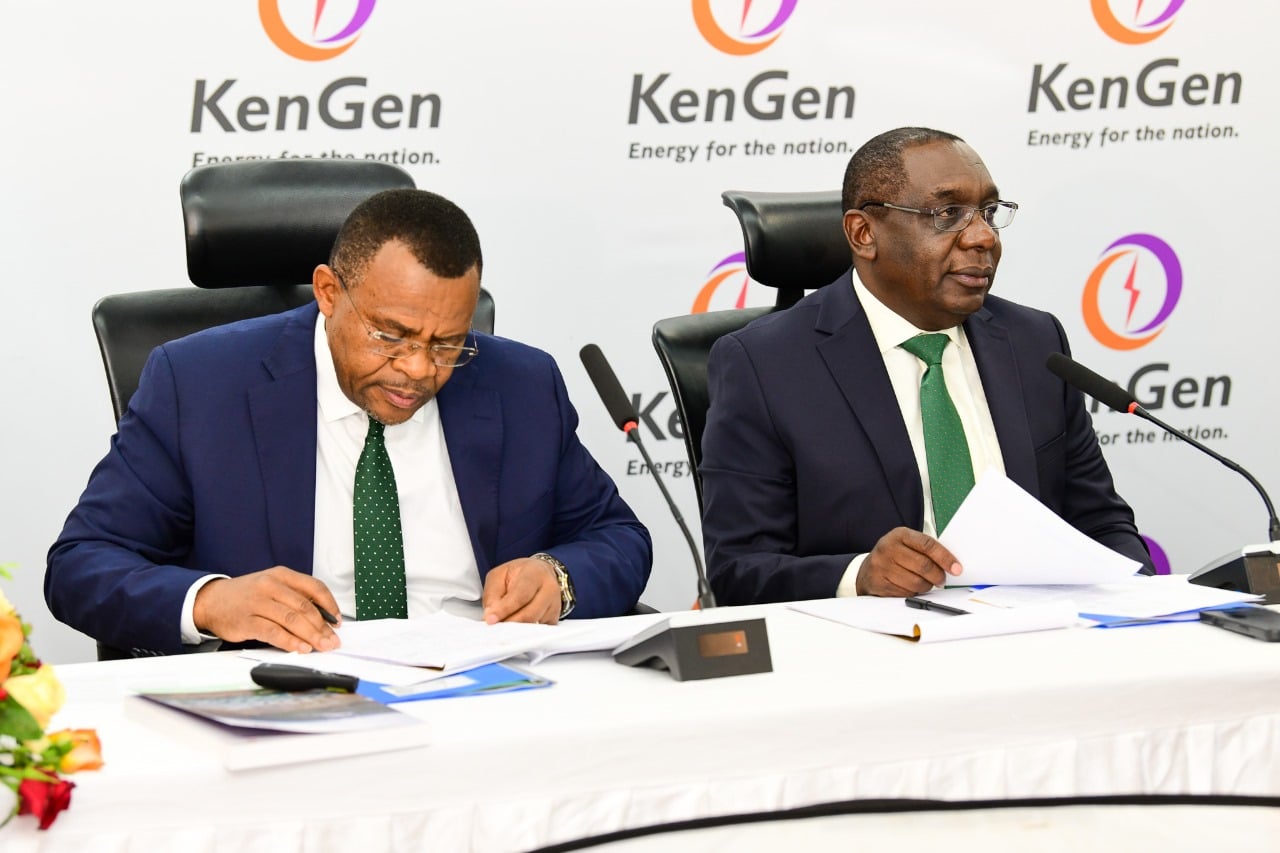
While Kenya’s nuclear power relay team started running decades ago, the most recent handover happened this week as Nuclear Power and Energy Agency (NuPEA) signed the Memoranda of Understanding with the Kenya Electricity Generating Company (KenGen). Second only to joining the International Atomic Energy Agency (IAEA) two years after Independence, the designation of the latter as Kenya’s Owner-Operator is arguably the most consequential action Kenya has taken in its nuclear journey.
Guided by the signed MOU, NuPEA will continue to exercise the mandate it inherited from the Kenya Nuclear Electricity Board (KNEB) as a Promoter. At the same time, KenGen joins as an Owner-Operator to complete the tripartite arrangement, with the Kenya Nuclear Regulatory Authority (KNRA) as the Regulator. This functional separation is a necessity for the successful planning, construction, operations, and eventual decommissioning of a nuclear power project.
The identification of an Owner-Operator essentially answers the primary question “Who is the client?” Though technical and legal labyrinths remain to be navigated, KenGen’s entry reassures potential partners who have in the past been spooked by talk of demoting NuPEA, the pivot from Kilifi inland, and the recent departure of The Late Former Prime Minister Raila Odinga; the nuclear relay is still on. It also adds considerable pith and substance to the Least Cost Power Development Plan (LCPDP) goal of nuclear sources contributing a tenth of our mix by 2043.
The challenge ahead, however, cannot be overstated.
Adapt to local situations
Contrary to the message conveyed by the United Arab Emirates (UAE) using the nuclear equivalent of a “Math Contest” in 2009 to select its vendor, nuclear reactors are not solar PV panels sold off the shelf. Similarities in how the 440 nuclear plants are operating, with few hitches, also mask the stark differences in how nuclear power technologies must adapt to local conditions so that nuclear reactors can be successfully delivered on time and within budget. Reactor parts and even technical advice are subject to stiff restrictions, so potential international partners will require proof of everything from proper procurement systems to reliable documentation culture.
Also Read: Load Shedding Debate: It Is Energy Poverty That Kills, Not Coal or Nuclear Plants
The CANDU Owners Group, for example, is a collaboration focused on the nuclear technology that gives it its name. At the same time, the French prefer a fully integrated state-owned giant like EDF. KenGen resembles Korea’s’ utility-led model, leveraging its established reputation in hydro and geothermal as proof of operational competence in nuclear.
However, Korean nuclear law has its origins in the Confucianism, which has imbued East Asia for millennia. Kenya on the other hand largely inherited its legal framework from British Settler Colonialism, barely a century old. Kenya can choose a Korean vendor, but its nuclear law cannot be copied and pasted from Korea. The circumstances leading up to the dispute between Westinghouse and Korea’s KEPCO over Korea’s APR 1400 design give a hint of the minefield that awaits to be traversed.
Long before the first concrete is poured into the reactor pit, KenGen will need to show it has the muscle to lift loads like appraising the many nuclear reactor technologies available, tracing complex nuclear supply chains that span the entire globe, and ultimately “owning” the technology it ends up choosing.
While compliance with 10 CFR Part 810 overnight or requirements to state our position under the Convention on Supplementary Compensation loom over us like dark clouds, the challenges come with silver linings. The project will need alignment with bespoke quality assurance, legal and financial flexibilities to extract maximum utility from the different financing options China, Russia, and South Korea bring to the table as vendors.
Also Read: Former PS Joins KenGen Board and Two Others
The specialized skills the “nuclear capable” human capital KenGen will need for such are as crucial as the “nuclear capable” transport corridor we need to deliver the projects components from our ports to the inland site. These skills are not exclusive to nuclear.
KenGen’s entry doesn’t complete The Silicon Savanah’s” decades’ long nuclear relay. It just identifies the athlete who can run the next leg. With a regulator, a project promoter, and now an Owner-Operator, the squad looks like a winning team.Top of Form
The writer is also a Director and nuclear engineer at the Nuclear Power and Energy Agency (NuPEA).
Follow our WhatsApp Channel and X Account for real-time news updates.



![Tsc Jss Teacher Qualifications 2026: Kcse Grades, Degrees And Subjects Required [Full List]](https://cdn.thekenyatimes.com/2026/07/Stakeholders-TSC-X-2026-06-09-36.png "Tsc Addresses Circular On Deployment Of Degree And Diploma Teachers To Junior School")