
County liquor licensing boards have demanded the withdrawal of a proposed alcohol control Bill sponsored by Kimani Ichung’wah, arguing that it threatens devolution and seeks to transfer powers constitutionally reserved for county governments.
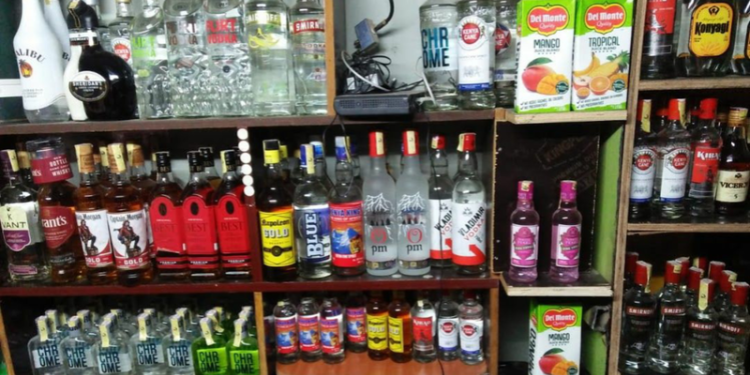
The proposed law seeks to raise the legal drinking age from 18 to 21 years, restrict online alcohol sales and advertising, introduce a Ksh2 levy on every litre of alcohol manufactured or imported and ban alcohol sales in several public spaces.
The Caucus of Liquor Licensing and Control Boards of Kenya, which brings together licensing boards from all 47 counties, said the proposed Alcoholic Drinks and Drugs Control Laws (Amendment) Bill, 2026 amounts to an attempt to centralise a devolved function and undermine the Constitution.
Counties Cite Constitutional Mandate
In a statement issued on November 9, the caucus said liquor licensing is a constitutional function expressly assigned to county governments under Part 2, Paragraph 4(c) of the Fourth Schedule of the Constitution and cannot be reclaimed through ordinary legislation.
The boards argued that while Parliament has legislative authority under Article 94, that power remains subject to constitutional provisions governing the distribution of functions between the national and county governments.
Also Read: Court Gives Directions on Case Seeking to Stop Cabinet Salaries
They further expressed concern over proposals to establish national-level committees and regulatory structures for alcohol control without involving county governments and their respective liquor licensing boards.
“The Constitution cannot be amended through the back door of ordinary legislation,” said Caucus National Chairman Julius Owino Ndeke, who called for the withdrawal of the Bill and fresh consultations involving the Senate, the Council of Governors and county liquor licensing boards.
The county officials maintained that they support stronger national coordination in combating illicit alcohol and alcohol abuse, but insisted such efforts must respect devolution and constitutional boundaries.
Their opposition emerged as the alcohol industry also resisted the proposed legislation.
The Alcoholic Beverages Association of Kenya (ABAK), representing leading manufacturers and distributors, warned that the Bill could cost jobs, reduce government revenue, hurt legitimate businesses and drive consumers towards illicit alcohol.
ABAK said the legislation would impose additional compliance requirements on legal manufacturers while doing little to address the growing challenge of illicit alcohol, which it noted already accounts for a significant share of the market.
Industry Warns of Economic Impact
According to ABAK, preliminary industry modelling indicates that increasing the legal drinking age from 18 to 21 years could place about Ksh3.3 billion in annual retail and hospitality revenue at risk, affect Ksh1.8 billion in government tax revenue and threaten nearly 9,000 jobs.
Also Read:
The association also said the proposed Ksh2-per-litre solatium levy would impose an additional annual burden of about Ksh1.3 billion on legitimate manufacturers, widening the price gap between regulated products and cheaper illicit alternatives.
ABAK further argued that restrictions on supermarket, restaurant and online alcohol sales could negatively affect Kenya’s tourism industry and the country’s growing e-commerce sector.
The association questioned proposals to limit alcohol transportation to between 6 a.m. and 6 p.m., saying they would disrupt supply chains and conflict with the government’s ambition of building a 24-hour economy.
The debate over online alcohol sales has also reached the courts.
On November 9, the High Court in Nairobi certified a constitutional petition challenging the regulation of online alcohol sales as urgent and granted interim conservatory orders.
Justice David Mburu ordered that alcoholic drinks may be sold only through e-commerce platforms where operators hold the required licences and authorisations, maintain restricted alcohol sections, and implement robust age-verification measures before access, purchase, and delivery.
The court also temporarily barred digital advertisements and promotional links that allow users to bypass age-verification safeguards when purchasing alcohol online.
The case will be mentioned on November 18 for compliance and further directions.
Follow our WhatsApp Channel and X Account for real-time news updates and our YouTube Channel for in-depth interviews.