Widows across Kenya continue to endure entrenched abuses, including disinheritance, forced evictions, cultural violence, and economic marginalization, despite a legal framework meant to protect them.
Reports from Western Kenya show that widowhood still exposes women to severe vulnerabilities, often beginning immediately after burial ceremonies.
Many routinely lose their homes and land to in‑laws who use cultural norms to overthrow constitutional guarantees.
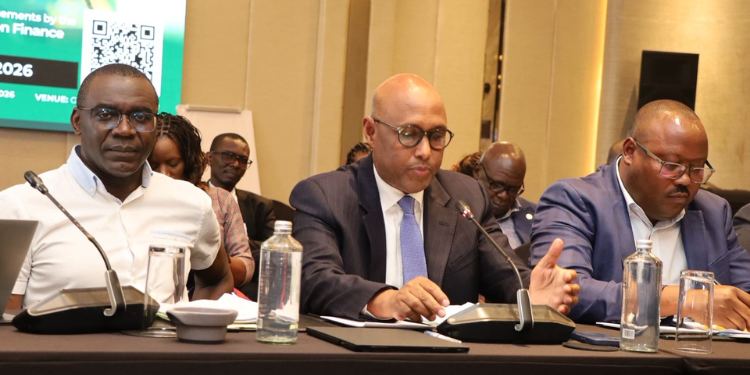
PS Raymond Omollo Shields Widows
PS Raymond Omollo’s campaign to safeguard the rights and dignity of widows in Kenya has become one of the most visible government interventions addressing long‑standing injustices faced by women after the death of their spouses.
Through the Widow Empowerment Initiative under the State Department for Internal Security and National Administration, PS Omollo has positioned the government at the front line of combating disinheritance, forced evictions, and violent cultural practices that continue to undermine widows in Kenya.
Since 2023, the initiative has focused on community sensitization, financial empowerment through table banking, and the construction of new homes for vulnerable widows across Nyanza, offering not only physical security but also a restoration of dignity that many had lost for years.
In Nyanza counties such as Kisumu, Migori, Homa Bay, and Siaya, the initiative has delivered exemplary results.
Widows who once lived in fear now occupy homes built under the program, each structure symbolizing safety and recognition from the state.
Also Read: PS Raymond Omollo Tops List of Best-Performing Principal Secretaries in 2025 (FULL LIST)
PS Omollo’s approach emphasizes awareness, recognizing that national laws mean little if widows remain uninformed or intimidated by community pressures.
Chiefs and local administrators are therefore central to the program, guiding families on legal obligations while countering harmful customs.
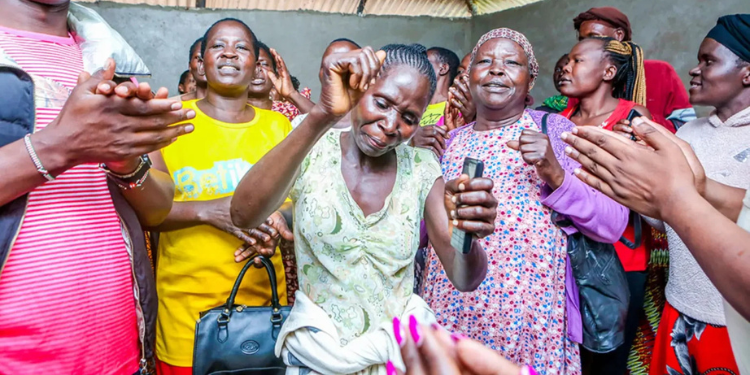
Widows Express Joy
The urgency of the intervention is evident in the experiences of widows like Grace Abuom of Seme.
After her husband’s death in 1998, she faced escalating verbal abuse, threats to her life, and pressure from in‑laws who viewed her as an outsider.
She fled her matrimonial home with her five children, living in insecurity for nearly two decades. Today, Grace lives under a new roof provided through the program, a structure that restores her sense of belonging.
For her, the home represents more than shelter, but a validation after years of isolation.
“All I can say to PS Omollo is a big thankyou.He has brought me a full set of coaches, a bed, a table, bedcovers, bedsheet, and even a mattress which is now in my bedroom. When I sleep nowadays, I rest my head on a pillow, thanks to Omollo,” Grace Abuom said during an interview at her homestead.
Similarly, in Kolua, 85‑year‑old Meresa Apollo endured a second wave of suffering after surviving the 2020 floods.
Upon returning, she found her in‑laws fighting to expel her from her own land.
Her new home under the program provides a level of stability she had not experienced since before the floods.
“I had nowhere to go, even after the court ordered us to divide my late husband’s land accordingly. If it was not for PS Omollo and his team, I do not think I would still be alive. I do not know how to thank him for these good deeds,” Meresa explained.
Also Read: Govt Terminates Diploma in Early Childhood Education, Orders Immediate Suspension of Admissions
Tough Times for Kenyan Widows
In western Kenya, thousands of widows continue to lose homes, land, and livelihoods to cultural practices that disregard constitutional guarantees.
Reports from Siaya, Kisii, and surrounding regions detail widows facing intimidation, lawsuits, and violence when they refuse harmful practices such as sexual cleansing or wife inheritance.
Many lack legal representation or awareness of their rights, making them vulnerable to dispossession even where the law is clear.
Kenya’s Constitution, the Law of Succession Act, and the Matrimonial Property Act all protect widows’ rights to property, land, and life interest, yet these provisions often remain inaccessible in rural communities where customary norms dominate.
Follow our WhatsApp Channel and X Account for real-time news updates.