


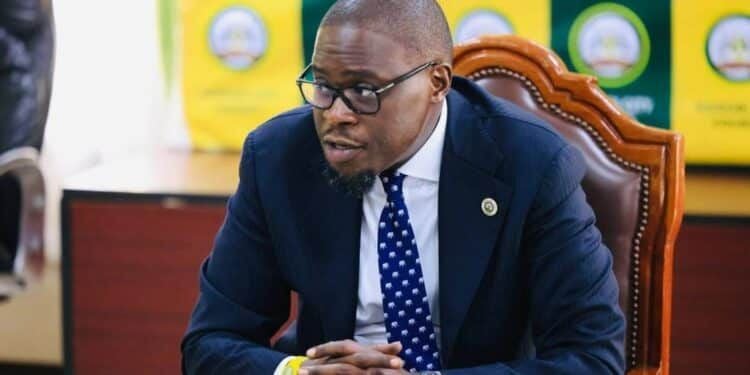
Nairobi Governor Johnson Sakaja has acknowledged that city residents have every right to hold his administration accountable for the capital’s persistent traffic congestion.
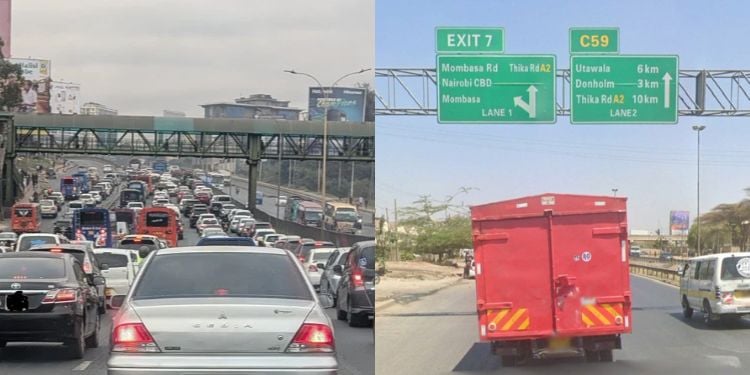
Speaking in an interview dubbed Nairobi Baraza, Sakaja singled out traffic as the one major problem where Nairobi residents have little responsibility and said his administration must take full responsibility for finding a lasting solution.
“I think the citizen is right to be angry about anything but also to see their role in it and to see what needs to be done. “I think the one that they can properly, because they have no role, is traffic,” Sakaja said.
Sakaja Says Nairobi Residents Have Every Right to Blame Him for Traffic
The governor argued that Nairobi’s congestion is largely a result of inadequate infrastructure and the failure over the years to establish an efficient mass public transport system.
He said the city cannot solve its traffic problems simply by constructing more roads, noting that expanded roads can encourage more people to acquire private vehicles, eventually creating further congestion.
“Traffic requires infrastructural investment that has never been done over the years. The more roads you build, the more people buy cars. We did Thika Road, and everyone moved there,” he said.
Sakaja cited Thika Road as an example, saying the expansion initially improved movement but eventually attracted more motorists and became heavily congested.
Also Read:How Nairobi’s Rail Network Will Move From CBD Underground Tunnels to Elevated Sections in Muthurwa
Underground Rail Plan
Sakaja said his administration is pursuing a mass rapid transit system that will include an underground railway as part of efforts to address Nairobi’s long-standing transport crisis.
The proposed Nairobi Metropolitan Mass Rapid Transit System is intended to integrate rail, commuter rail, Bus Rapid Transit and non-motorized transport into a wider public transport network. The county has already approved the development of two metro lines, including an underground line.
The governor said the project aims to transform Nairobi into a “20-minute city”, where residents can access essential services in less time.
According to Sakaja, plans for an integrated mass transit system in Nairobi have existed for decades but were never implemented.
He pointed to the 1948 Nairobi master plan, a 1972 urban study and the 2014 Nairobi Integrated Urban Development Master Plan as previous efforts that proposed major improvements to the city’s transport system.
Sakaja said his administration had moved the current proposal forward by completing pre-evaluation and taking the plan through the Cabinet process.
“We have the financing structure. We’ve designed the steps towards it,” he said.
The proposed underground metro has also been presented as a way of reducing dependence on private vehicles by giving Nairobi residents a reliable alternative for daily commuting.
Sakaja said wealthy people in other cities often use public transport despite being able to afford private cars because their systems are reliable, punctual and convenient.
Also Read: Nairobi Set for Major Overhaul as KURA Announces Tender for Smart Traffic Systems, Bridges and CCTVs
Traffic singled out from other Nairobi problems.
Sakaja distinguished traffic from other problems facing Nairobi, including garbage collection and drainage.
He argued that residents have a role to play in keeping the city clean, particularly by avoiding illegal dumping.
The governor said county workers had been deployed to improve waste management and drainage, while thousands of young people have also been recruited to help clean the city.
Traffic, however, was different, he said, because individual residents cannot solve the underlying infrastructure problem.
“We lose so many hours in traffic,” Sakaja said, adding that congestion requires major investment in mass transit.
He said the proposed transport system would provide a long-term solution rather than relying solely on road expansion.
Follow our WhatsApp Channel and X Account for real-time news updates.


Alot of positives from our Governor but sticking sore thumb is garbage. It is appalling.
The so called Green Army is only 30 percent effective. Please improve on this Mr. Governor.