Mogadishu, Somalia – Somalia’s President has told his nation that the United Arab Emirates has spent years working to weaken and divide the country, in the most detailed public account yet of a diplomatic rupture that now places Somalia alongside Sudan and Algeria among African states that have broken with the wealthy Gulf nation.
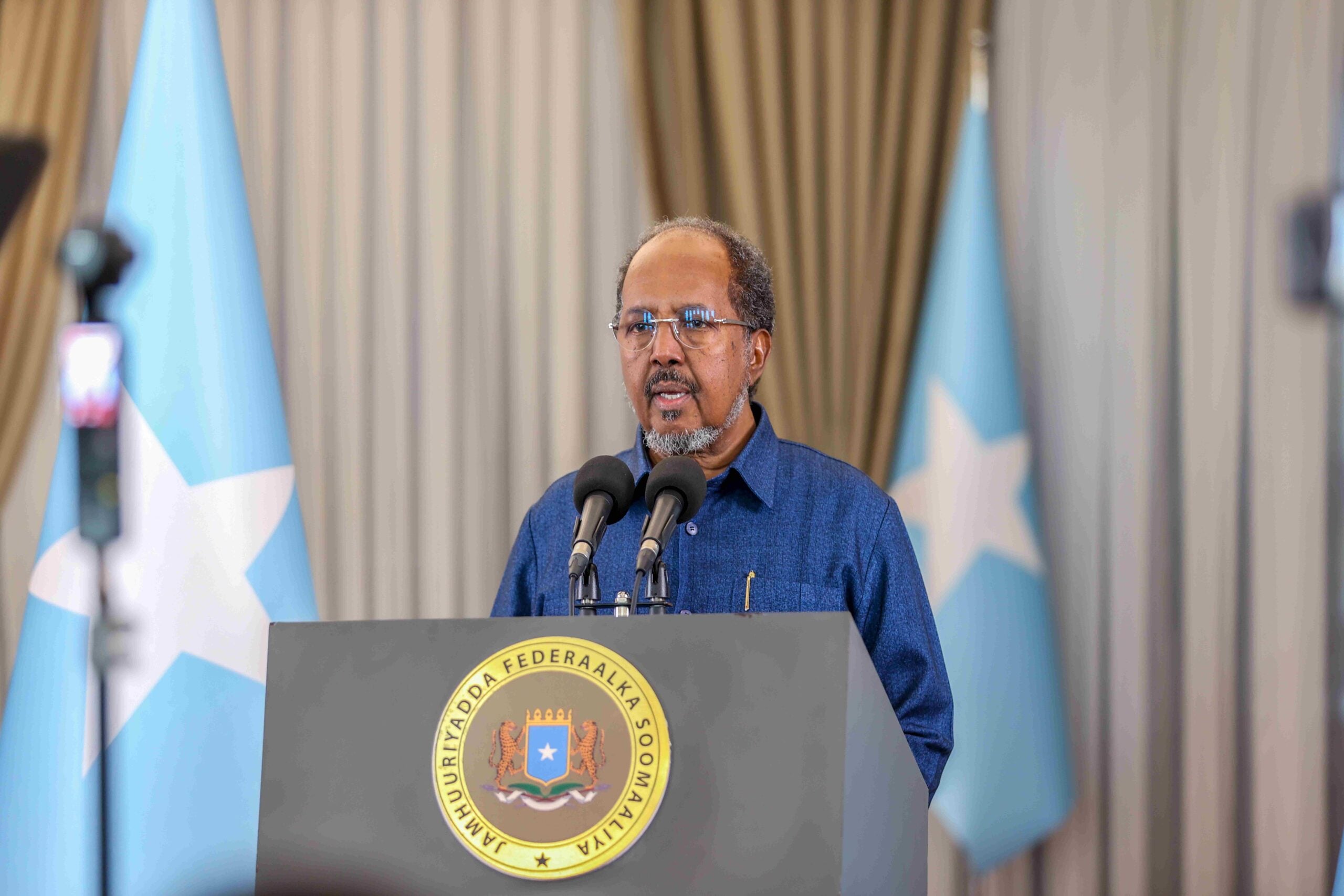
In a televised address on Tuesday night, President Hassan Sheikh Mohamud said Abu Dhabi had pursued policies that undermined the authority of Somalia’s central government, deepened political division and built security structures outside the control of the Somali state. Somalia, he said, will not accept foreign interference that undermines its unity and sovereignty.
Somalia, a country of some 19 million people on the Horn of Africa, has the longest coastline on the African mainland and sits beside one of the world’s busiest shipping routes, linking the Indian Ocean to the Red Sea and the Suez Canal. After the collapse of its government in 1991, it endured three decades of conflict, and it is still fighting the armed group Al-Shabaab. In recent years, it has rebuilt its institutions, secured debt relief and seen a United Nations arms embargo lifted.
That coastline, and the ports along it, lie at the centre of the dispute. The President said the UAE signed agreements over three Somali ports, Berbera, Bosaso and Kismayo, directly with regional administrations inside Somalia, bypassing the national government. He said Somalia’s ports are national assets, and agreements affecting the country’s sovereignty and security must go through the Federal Government and the Constitution.
He said the UAE had also helped to establish military bases and forces that do not answer to Somalia’s national command, weakening the country’s army while it fights Al-Shabaab, and had given political and financial support to some regional administrations in ways that fuelled disputes with the national government.
Somalia’s Roots of the Diplomatic Rupture
The President went on to say that the UAE had played a role in Israel’s recognition of Somalia’s northern regions, known as Somaliland, which declared a breakaway in 1991 but which Somalia and the African Union regard as part of Somalia. He said that in January 2026 the UAE used Somali territory at Berbera to move a militia leader fleeing Yemen, without the Somali government’s consent.
Somali territory, he said, is not a road to be crossed unlawfully, a commodity to be bought, or a place to be entered at will.
On 12 January 2026, Somalia’s cabinet annulled all agreements with the UAE, covering security, defence and the economy, and closed Somali airspace to Emirati military and cargo aircraft. The President said the decision came after years of patient diplomacy and was a defence of sovereignty, not an act of hostility towards the Emirati people. Ten months later, he said, the causes of the dispute remain.
Also Read: Why Museveni and Suluhu Should Wake Up and Smell the Coffee
Earlier the same day, Somalia’s Minister of Justice and Constitutional Affairs, Hassan Moalim Mohamud, set out the legal case at a public forum at the Somali National University. He said the interference is driven by strategic ambitions to weaken a recovering state and gain unauthorised access to its coastline and waters, and that Somali political figures had openly acknowledged meeting in the UAE to coordinate efforts to bring down the government.
The Minister said peaceful political opposition is protected by Somalia’s Constitution, but that anyone who finances or assists Al-Shabaab will be prosecuted under the country’s counter-terrorism law, and that Somalia is working with Interpol to pursue suspects abroad.
Expanding Regional Tensions Across Africa
Somalia is the third African country in 18 months to break with the UAE. Sudan cut diplomatic relations in May 2025 and declared the UAE an aggressor state, saying it was arming the Rapid Support Forces, the paramilitary group fighting Sudan’s army in a war that has displaced millions. On 10 September 2026 Algeria severed ties completely, gave the Emirati ambassador 48 hours to leave and closed its airspace to UAE-registered aircraft, citing what it called provocative and hostile acts. Algeria’s President, Abdelmadjid Tebboune, had earlier spoken of a micro-state seeking to destabilise Libya, Mali and Sudan.
The UAE has denied interfering in the affairs of other states and has rejected the allegations made by Sudan. After Algeria’s decision, its foreign ministry said it hoped the break would be temporary.
In his address, President Mohamud pointed to Libya, Yemen and Sudan, where he said the UAE had played a role in conflict and division, and warned Somalis that their country could face the same fate if they do not protect their unity and their institutions. The greatest danger, he said, is not foreign interference alone but the internal division that gives outside powers their opening.
Also Read: Somalia Orders Immediate Surrender of Kenyan Passports Held by Ministers
The view from Mogadishu is that the pattern is the same wherever it appears: a fragile state with valuable ports, land, or minerals, and an outside power that deals with whoever controls the asset on the ground rather than the lawful government. For small and developing nations everywhere, including island states whose harbours and waters are their greatest resource, the question Somalia is raising is a familiar one: who decides what happens to a country’s strategic assets.
The President drew a distinction between the people of the UAE, where many thousands of Somalis live and work, and the policies of its government, and he did not close the door. Somalia, he said, is ready for a relationship based on equality, respect and full recognition of its territorial unity, and will defend its sovereignty by every means its laws and international law allow.
Somalia is one, he told the nation. It was one, and it will remain one.
About the author
Abdiqani Abdullahi wrote this article. He is an English News Editor and Senior Advisor on International Relations at Somalia’s National News Agency (SONNA). He has more than a decade of experience at the nexus of policy, governance, and media. His expertise spans strategic communication, digital transformation, and public diplomacy, including leading cybersecurity and transparency reforms under the DFID-supported Open Government Initiative. Previously, he worked on integrating AI and digital tools into newsroom operations, strengthening media ethics and crisis communication. With a strong background in international relations and journalism, he is passionate about the media’s role in shaping national narratives, promoting accountability, and highlighting innovation across the Horn of Africa.
Follow our WhatsApp Channel and X Account for real-time news updates, and subscribe to our YouTube Channel for in-depth interviews.