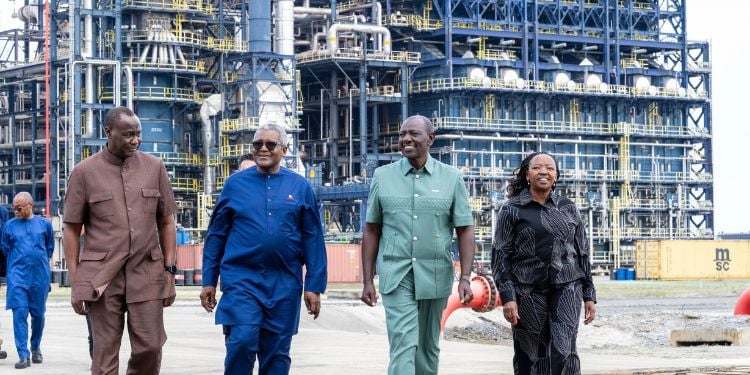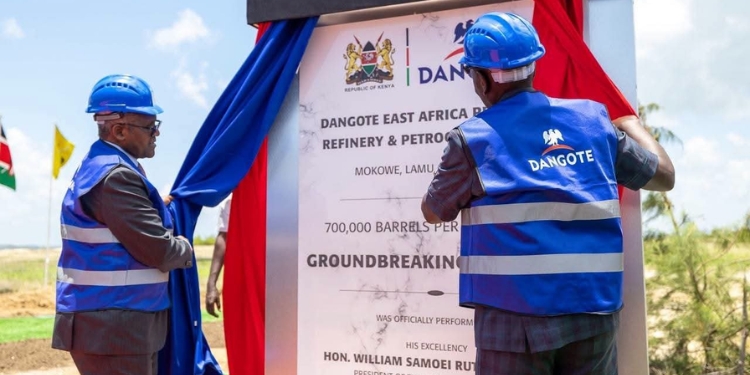
The High Court in Malindi has declined to extend orders blocking activities on land set aside for Nigerian billionaire Aliko Dangote’s planned Lamu oil refinery, allowing the project to proceed.
In a ruling on October 14, Justice Jane Onyango declined to issue fresh orders, finding that the petitioners failed to serve Dangote and the other respondents as directed by the court.
The case was filed by 133 farmers and other occupants of land in the Hindi, Manda and Magogoni areas of Lamu County. The applicants claim they have occupied and cultivated the disputed land for years and were excluded from the acquisition, compensation, and resettlement process.
The proposed refinery is expected to process 700,000 barrels of oil per day, with the project estimated to cost KSh2.2 trillion.
Why the Court Declined to Extend the Orders Blocking Dangote Refinery
The dispute centres on LR No. 13061, the parcel the petition identifies as the land affected by the planned development.
On September 25, Justice Onyango directed the parties to maintain the prevailing status quo until October 14, when the court was scheduled to hear the application.
However, during Wednesday’s proceedings, the judge declined to issue further interim orders, citing the applicants’ failure to comply with directions requiring them to serve the respondents.
Also Read: Dangote Refinery Revises IPO Dates After Deadline Extension
“You did not serve the respondents as per the October 1, 2026, directions. Serve him and all parties within 14 days before the hearing. Leave is granted to amend the petition within seven days,” Justice Onyango said.
The court also found that the applicants had cited the wrong parcel of land and allowed them seven days to amend their petition to reflect the correct property.
The decision does not determine the underlying dispute over land ownership, compensation or environmental compliance. The petitioners have been given an opportunity to correct their filing and serve the parties before the matter proceeds.
What the Residents Want
A group of the 133 residents moved to court on September 23 seeking orders to stop the refinery project from proceeding on land they occupy. They wanted the court to block the groundbreaking ceremony and suspend all activities related to the development pending the hearing and determination of their case.
The applicants also sought orders preventing land clearing, excavation, fencing, and construction work until the court fully hears their claims. They argue that decision-makers should consider their long-term occupation and cultivation of the land when determining recognition of their interests, compensation, and possible resettlement.
The case names the national government, the Lamu Port-South Sudan-Ethiopia Transport (LAPSSET) Corridor Development Authority, the National Land Commission, and Dangote Industries, among others.
In orders issued on September 25, the court directed the respondents to file their responses within 14 days and instructed all parties to maintain the prevailing status quo on the disputed parcel of land until October 14.
While the order required preservation of the status quo on the specified land, it did not expressly bar the September 30 groundbreaking ceremony pending the scheduled court appearance.
Also Read: Dangote Issues Stark Warning Over Africa’s Hungry and Aggressive Youth
Government Says Most of the Land Is Public Property
Lands Cabinet Secretary Alice Wahome has maintained that the largest portion of the land earmarked for the project is public land legally owned by the government.
Wahome said the presence of people living on parts of the site did not, by itself, establish that the land was privately owned.
The dispute nevertheless raises questions about how the interests of people who occupy and cultivate public land should be addressed during large-scale development projects, particularly where residents say they were excluded from compensation and resettlement arrangements, though the court is yet to make a final determination on the applicants’ claims.
The refinery’s groundbreaking ceremony was held on September 30, as plans for the major industrial project advanced, and the case will next be mentioned on November 24, as the parties continue addressing the dispute over the land earmarked for the refinery.
Follow our WhatsApp Channel and X Account for real-time news updates.