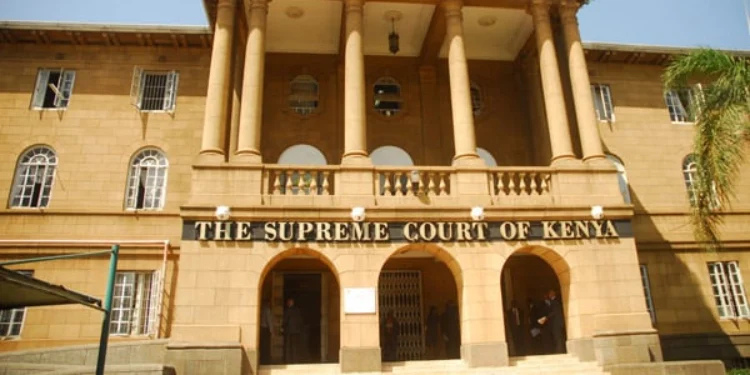
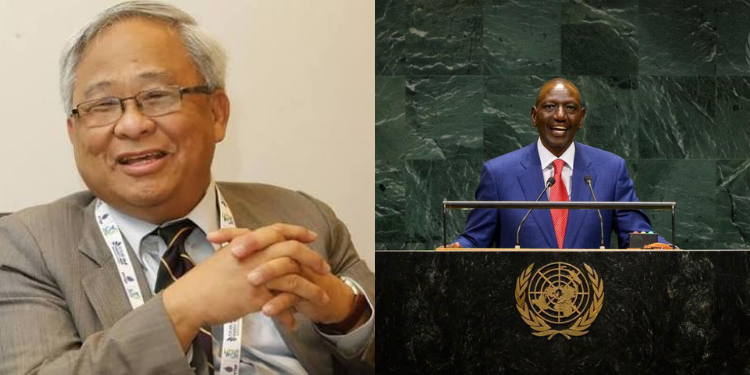
Former Cabinet Secretary Raphael Tuju and his co-applicants have secured a fresh development in their long-running legal dispute with the East African Development Bank (EADB) after the Supreme Court lifted orders barring five of its judges from handling the case.
In a ruling delivered on Friday, September 25, 2026, the Supreme Court lifted orders that had barred five judges from taking part in the case, allowing the stalled appeal to move forward.
The judges said the withdrawal of a complaint the applicants had lodged before the Judicial Service Commission (JSC) had fundamentally changed the circumstances that led to their recusal.
“That the complaints have subsequently and unequivocally been withdrawn, and in exercise of the Court’s inherent powers, we find no justification to perpetuate the recusal beyond this point,” the judges stated.
Supreme Court Says 2024 Decision Was Not Wrong
The Supreme Court, however, made clear that lifting the recusal orders did not mean its October 2024 decision had been erroneous.
The judges said their 2024 decision was proper based on the circumstances at the time, but the applicants’ subsequent withdrawal of the applicants’ complaint before the JSC changed the circumstances that led to the recusal.
Also Read: Court Delivers Fresh Verdict on Affordable Housing
“We emphasize, however, that this cessation of circumstances that gave rise to the recusal of Judges per se does not alter the validity of the ruling of 11th October 2024. It was the correct and proper decision to make in the circumstances at the time,” said the judges.
The court therefore exercised its inherent powers to vacate the recusal orders going forward rather than reopening or reconsidering the merits of its earlier ruling.
The court also clarified that the application did not determine the allegations raised by the applicants concerning evidence in the wider dispute.
Appeal Can Now Proceed
With the recusal orders vacated, the four surviving judges who had originally stepped aside can now participate in the pending appeal.
Justice Mohammed Khadar Ibrahim, who was among the judges recused in 2024, has since died. The Supreme Court noted that Justice Mohammed Abdulahi Warsame has replaced him in the proceedings.
The court consequently directed that the pending appeal may now be listed for hearing in the normal manner.
The Supreme Court also said litigants retain the constitutional right to lodge genuine complaints against judicial officers. However, the judges expressed concern about allegations serious enough to prompt the recusal of five of the court’s seven judges.
The judges further noted that the applicants withdrew their complaints without explanation, retraction, or expression of regret, adding that an apology could not be compelled.
Why Supreme Court Judges Had Recused Themselves
The dispute over the composition of the bench dates to a complaint the applicants lodged with the JSC against the five judges constituted to hear their appeal.
The judges were Deputy Chief Justice Philomena Mwilu, Justice Mohammed Khadar Ibrahim, Justice Smokin Wanjala, Justice Njoki Ndung’u and Justice William Ouko.
Also Read: Fresh Twist as Tuju Issues Stern Warning to Buyers of His Multi-Million-Shilling Properties
In their complaint, the applicants alleged that the judges were biased and inclined towards a predetermined outcome. They argued that they had lost confidence in the court’s ability to fairly determine their appeal and wanted the JSC complaint dealt with before the Supreme Court proceeded with the case.
The Supreme Court subsequently recused the five judges on October 11, 2024.
The judges explained that, given the complaint against them, it would not serve the interests of justice for them to continue participating in the proceedings while the allegations remained unresolved. The court also acknowledged the exceptional consequences of the decision given the Supreme Court’s quorum requirements.
Tuju Withdraws JSC Complaint
The circumstances later changed after the applicants withdrew their complaint against the judges.
According to the Supreme Court, the applicants informed the court through a letter dated May 11, 2026, that they had unreservedly withdrawn the complaint from the JSC.
The withdrawal became central to their subsequent application seeking to lift the recusal orders.
The Supreme Court found that the withdrawal represented a material change in the circumstances that had led the judges to step aside in 2024.
The court noted that the original recusal was directly linked to the pending JSC complaint, and with the complaint withdrawn, the court found no factual or objective basis to maintain the recusal.
Follow our WhatsApp Channel and X Account for real-time news updates.