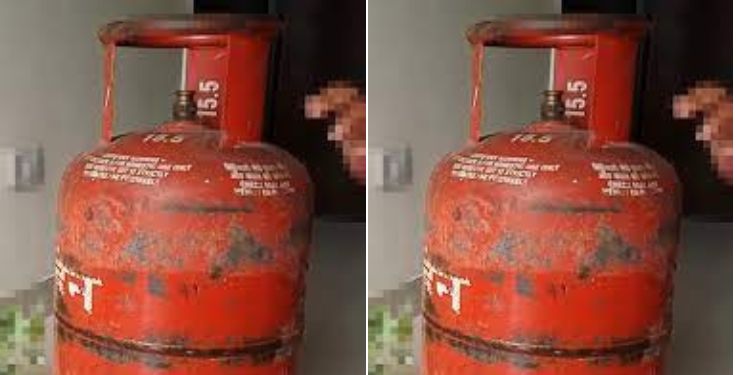
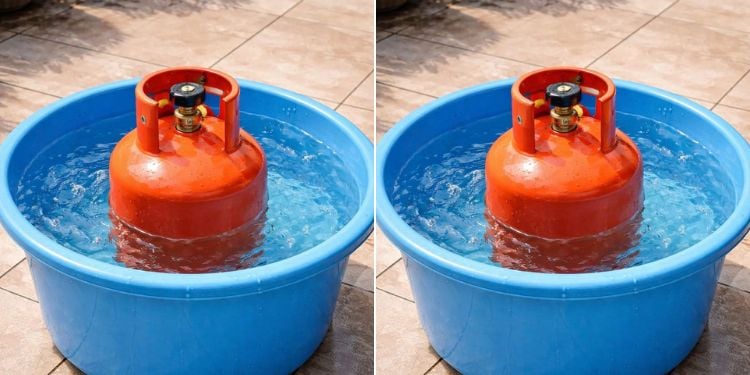
Households, especially in Kenya and Nigeria, commonly place gas cylinders in water while cooking.
This practice is believed to improve the flame and extend the use of the cylinder.
Experts warn that, while it might seem helpful, it can be dangerous and counterproductive.
According to proponents of this idea, placing gas cylinders in water while cooking increases gas flow and produces a stronger flame.
LPG (liquefied petroleum gas) relies on vaporization inside the cylinder. When a cylinder gets warm, the gas vaporizes more easily, producing a steady flame.
Risks of Placing Gas Cylinders in Water
But the people promoting this practice fail to realize that water exposure can damage the cylinder over time. Cylinders are made of steel and are usually painted to prevent corrosion. However, water can reach areas not fully covered by paint, especially the bottom and welded sections.
Also Read: EPRA Announces December 2025 Electricity Tariff Adjustments Affecting All Consumers
This exposure leads to rust formation, which gradually weakens the metal. Over time, corrosion can spread along the welds, making the cylinder more prone to cracks or failure. Repeated immersion accelerates this process, increasing the risk of leaks or even accidents. Cylinders of poor quality or insufficient paint are particularly vulnerable, and placing them in water only shortens their lifespan.
How This Practice Affects Cooking Efficiency
Placing a gas cylinder in water reduces the rate of gas evaporation, which means less gas vapor reaches the burner. This results in weaker heat output and longer cooking times.
Also Read: Who Owns KOKO Gas? The Faces Behind Changing How Kenya Cooks
For example, a cylinder not immersed in water may use 0.25 kg of gas to cook a meal for 30 minutes. The same cylinder, placed in water, may still use 0.25 kg of gas, but it will take 45-55 minutes to cook the same meal.
Experts recommend safe and practical alternatives, including:
- Store cylinders in a cool, shaded, well-ventilated area.
- Keep cylinders upright at all times.
- Regularly check for leaks using soapy water.
- Replace faulty regulators and hoses promptly.
- Refill cylinders on time rather than relying on temporary tricks.
While placing a gas cylinder in water may seem like a hack to improve the flame or extend cooking time, it is unsafe and largely ineffective.
The practice exposes cylinders to corrosion, reduces heat output, and prolongs cooking hours.
Follow our WhatsApp Channel and X Account for real-time news updates.