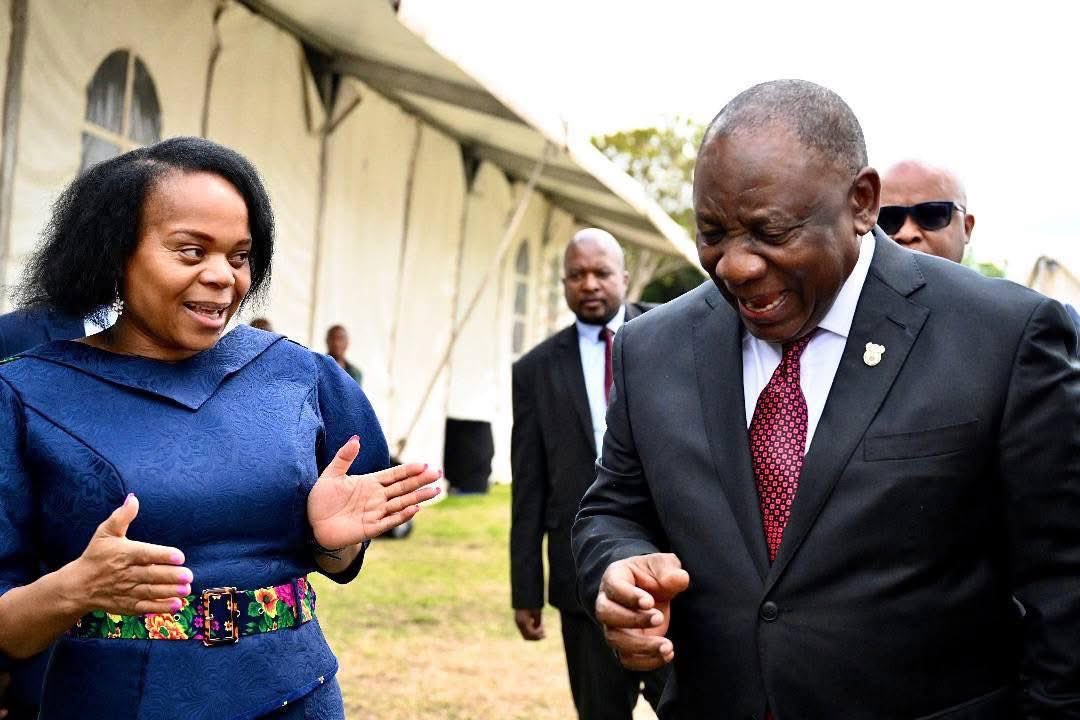
The Southern Africa region comprises Botswana, Lesotho, Mozambique, Namibia, South Africa, Swaziland, Zambia, Malawi, and Zimbabwe. Women’s issues remain a serious concern in Southern Africa. There are concerted efforts to address poverty, unemployment, discrimination, violence, and Patriarchal norms.
How Botswana empowers women
Botswana is dedicated to the goals of United Nations SDG 4 (“Quality Education”), including eradicating gender disparities and ensuring equal access to education at all levels for girls and women.
The country adopted a policy of free and compulsory schooling, which helped narrow gender gaps in primary education. Importantly, the Parliament of Botswana passed a bill in August 2017 to provide free sanitary pads to schoolgirls (public and private schools) so that menstruation is not a barrier to school attendance.
A report notes that Botswana signed the SADC Women in Science, Engineering and Technology Organization (WISETO) Charter in 2023 to promote the participation of women and girls in STEM fields.
For example, the Botswana University of Agriculture and Natural Resources (BUAN), in collaboration with UNESCO and other partners, hosted a “Postgraduate Female Research Fees Scholarship Awards” for women in science and research.
In June 2023, Botswana joined the Education Plus Initiative (in collaboration with UNAIDS) to advocate for gender-responsive reforms in policies, laws, and practice, specifically targeting adolescents and young women.
Major challenges include the continued underrepresentation of women in decision-making positions across government, local councils, and the private sector. Cultural norms often discourage women from pursuing political careers or leadership roles.
Education in Lesotho
In August 2022, the government of Lesotho, together with UNICEF, UNESCO, UNFPA, and UN Women, successfully launched the “Education Plus” initiative with a particular focus on adolescent girls and young women.
Its goals include promoting girls’ enrollment in secondary school, reducing child marriage and HIV infection, and promoting gender equality in education.
The government of Lesotho, in partnership with other stakeholders, has recognized that poor water, sanitation, and hygiene (WASH) infrastructure and menstrual health management (MHM) are major barriers to girls’ school attendance and completion.
Also Read: Women Empowerment in East Africa: Milestones and the Journey Ahead
Through the World Bank-supported “Basic Education Strengthening Project (BESP)”, the government has improved the quality of instruction and retention.
Also, the National Strategy for Science, Technology & Innovation (2017-2022) emphasized promoting STEM, including among girls.
While primary education enrollment is high, the major cause of girls dropping out of school is due to poverty, early marriage, or teenage pregnancy.
It is important to note that in rural areas, education for girls is often undervalued compared to that of boys.
Situation in Mozambique
In 2021, the World Bank, in partnership with the National Institute for Youth (under the Secretariat of State for Youth & Employment) and the Ministry of Education and Human Development, successfully launched a multi-sectoral initiative in 2016 (with support from UNFPA, UNESCO, UN Women, and UNICEF).
Its aim was to empower adolescent girls and young women with the provision of information on sexual and reproductive health rights, life-skills training, mentoring, and support to avoid early marriage or teenage pregnancy.
The government has prioritized an inclusive, efficient education system for women and girls over the last 5 years. Although primary school enrolment for girls has improved, the dropout rate caused by early marriage, pregnancy, poverty, or the need to help at home should be addressed.
In addition, literacy rates among women are lower than those among men. For example, women aged 15+ have lower literacy and fewer years of schooling on average.
This gap in education and skills limits women’s ability to access formal employment, higher-earning jobs, and full participation in society, which needs to be addressed.
How Namibia is empowering its women
The government of the Republic of Namibia provides free public primary and secondary (basic) education. More recently, it has announced that from 2026 onwards, higher education at state universities and technical/vocational colleges will be fully subsidized (tuition and registration fees removed) for all, with a particular focus on women’s education.
For women and girls, this is significant. It lowers the financial barrier to completing tertiary education, which often disproportionately affects them.
It represents a strong commitment to making education accessible at all levels. According to a recent report, the government has supported the establishment of a “makerspace” (Computer-Aided Manufacturing & Design) and other STEM interventions, aiming the reach large numbers of girls.
There is a policy allowing pregnant or learner-mothers to remain in school and to return to school, which supports girls who become pregnant to continue their education. Namibia has adopted gender mainstreaming across sectors, including education.
The Ministry of Gender Equality and Child Welfare emphasizes programs for women in business, women’s leadership, and supports education and empowerment more broadly. Women, particularly in rural areas, have limited access to formal employment and tend to work in low-paying or informal sectors. Access to credit, land, and entrepreneurship opportunities is often restricted.
Situation in South Africa
South Africa’s government, together with international partners and civil society, has introduced a strong set of initiatives focused on improving girls’ and women’s education to ensure access and completion, and to support leadership and STEM participation. These are promising, multifaceted, and successful initiatives.
However, sustained impact will depend on implementation, continuity, addressing deep-rooted social barriers, and linking schooling to employment and to women’s empowerment.
The government has acknowledged the need to create safe, inclusive schooling environments for girls so that they can remain in school and complete their education.
Although education levels have improved, girls in poor and rural communities still face barriers such as poverty, teenage pregnancy, and cultural attitudes that prioritize boys’ education.
Lack of access to vocational and technical training restricts women’s job opportunities. Many women in rural areas lack access to infrastructure, healthcare, education, and employment opportunities that needs to further address.
Swaziland’s approach
The Forum for African Women Educationalists Eswatini Chapter (FAWEESWA) offers high school scholarships for both girls and boys, including mentorship/counselling.
The Universal Access Service Fund (UASF) in Eswatini focuses on bridging the digital divide and explicitly targets women, youth, and people with disabilities for access to ICT.
Also, the government ensures the provision of free primary education with a particular focus on the orphans and vulnerable children.
According to a survey by Afrobarometer, Eswatini is close to gender equality in educational attainment.
Also Read: 6 Notable Women Leading Major Companies in Kenya
For example, 96% of the population says girls are rarely/never prevented from attending school because of family prioritizing boys.
The Eswatini government, in partnership with international agencies and civil society) has multiple streams of initiative with a particular focus on improving women’s and girls’ education, including digital inclusion, scholarships, and protections, and high‐level campaigns.
These successful initiatives indicate a strong commitment. Women have limited access to land ownership, financial credit, and employment opportunities in some areas. Women also work in low-paying informal sectors such as small-scale farming, market vending, or domestic work.
Zambia’s story
The Zambian government has committed to free primary and secondary education for all as part of its policy, which is a significant step towards women’s empowerment.
The government’s policy documents represent significant efforts to encourage girls who drop out due to pregnancy to return to school.
For example, the Girls’ Education and Women’s Empowerment and Livelihoods (GEWEL) Project, in association with the World Bank, was established to increase access to education for adolescent girls and to support livelihoods for vulnerable women. It comprised three main components: Supporting Women’s Livelihoods (SWL), Keeping Girls in School (KGS), and Institutional Strengthening & Systems Building (ISSB).
The government uses this model to further strengthen social protection systems and link education and economic empowerment for women. Women are also concentrated in the informal sector, which offers low income and no job security.
Traditional gender roles mostly limit women’s participation in decision-making or entrepreneurship. Practices such as child marriage and inheritance discrimination exist in some communities.
Malawi’s journey towards women’s empowerment
The Government of Malawi, through its Social Cash Transfer Programme (also called “Mtukula Pakhomo”), focuses on poor, labor-constrained households, particularly female-headed households.
In addition, the program is part of the Malawi National Social Protection Strategy (MNSPS) and is being further strengthened through the “Social Protection for Gender Empowerment and Resilience (SP-GEAR)”.
This initiative has a particular focus on women and girls’ empowerment at the district level from 2024-26. The Government has established the National Economic Empowerment Fund (NEEF) and a “Women Economic Empowerment Fund (WEEF)” window to support women-led business cooperatives, agricultural value chains, and micro entrepreneurship, which is a successful initiative.
The government has widely promoted Village Savings & Loans Groups (VSLGs), with over 61,000 groups and 1.85 million members reported, many of which are women-led and successful programs.
The Agriculture Sector Wide Approach Support Project II (ASWAP-SP II), implemented with the Malawi Government and supported by UN Women and other partners, has empowered thousands of women smallholder farmers.
For example, between Sept 2020 and June 2023, 67,694 women were engaged across ten value chains. Although women, especially in rural areas, are disproportionately affected by poverty due to limited access to education, resources, and employment opportunities that need to be addressed.
Zimbabwe’s efforts to promote women’s empowerment
The government announced plans (2025) to expand support for vulnerable girls in STEM (Science, Technology, Engineering, and Mathematics) fields, which also includes scholarships and financial assistance to increase female participation in the education sector.
UN Women report indicates that in 2020-22, the government, through the Ministry of Higher and Tertiary Education, Innovation, Science and Technology Development, has strengthened policies and tools such as science laboratory retooling.
The Leading Learning for Gender Equality (LL4GE) initiative, in collaboration with the British Council and the Ministry of Primary & Secondary Education, is supportive of the school leaders (over 1,500 across 12 districts) in developing gender‐sensitive policies, inclusive teaching, and improved school cultures that favor girls. The government is committed through the national education sector strategy to “Access, Quality, Equity and Inclusivity,” including for women and girls.
For example, NGO partners working with the government align their interventions with the Education Sector Strategic Program (ESSP).
Despite the legal reforms, implementation remains uneven as many schools lack facilities to support adolescent mothers. Infrastructure deficits hinder equal access.
Notably, in some rural districts, over 92% of schools lack basic amenities like electricity and proper sanitation, which disproportionately affects girls.
Women are also underrepresented in formal employment and often work in low-paying or informal sectors in some areas.
Lastly, limited access to credit, land, and financial resources hinders women’s entrepreneurship and economic independence.
The Way Forward
Women’s empowerment in Southern Africa requires strengthening education, economic inclusion, gender-responsive policies, and societal transformation. Governments, civil society, and the private sector should work together to ensure that women are not only beneficiaries but also active drivers of development, helping achieve the Sustainable Development Goals.
Follow our WhatsApp Channel and X Account for real-time news updates.