Wednesday, October 14, 2026
  • News
    • Latest News
    • Breaking News
    • Fact Check
    • Investigations
    • Explainers
  • Politics
    • Global Politics
    • Elections
    • Government & Policy
    • Diplomacy
    • Conflicts & Security
    • Political Analysis
  • Business
    • Global Economy
    • Markets
    • Technology
    • Startups
    • Energy
    • Finance
  • World News
    • Americas
    • Asia
    • Asia Pacific
    • Africa
    • Europe
    • Middle East
  • Africa
    • Central Africa
    • East Africa
    • West Africa
    • Southern Africa
  • Health
    • Global Health
    • Public Health
    • Health Policy
    • Medical Research
    • Diseases & Conditions
    • Mental Health
    • Nutrition
    • Climate & Health
    • Health Explainers
  • Sports
    • World Cup 2026
    • Athletics
    • Basketball
    • Boxing
    • Cricket
    • Football
    • Formula 1
    • Golf
    • Rugby
  • Weather
    • Climate Business
    • Climate Change
    • Climate Solutions
    • Living Green
  • Culture
    • Arts
    • Film & TV
    • Food and Recipes
    • Music
    • Lifestyle
    • People
    • Travel
  • Opinion
    • Editorials
    • Letters
  • Behind The Brand
REGISTER
LOGIN
No Result
View All Result
The Kenya Times
  • News
    • Latest News
    • Breaking News
    • Fact Check
    • Investigations
    • Explainers
  • Politics
    • Global Politics
    • Elections
    • Government & Policy
    • Diplomacy
    • Conflicts & Security
    • Political Analysis
  • Business
    • Global Economy
    • Markets
    • Technology
    • Startups
    • Energy
    • Finance
  • World News
    • Americas
    • Asia
    • Asia Pacific
    • Africa
    • Europe
    • Middle East
  • Africa
    • Central Africa
    • East Africa
    • West Africa
    • Southern Africa
  • Health
    • Global Health
    • Public Health
    • Health Policy
    • Medical Research
    • Diseases & Conditions
    • Mental Health
    • Nutrition
    • Climate & Health
    • Health Explainers
  • Sports
    • World Cup 2026
    • Athletics
    • Basketball
    • Boxing
    • Cricket
    • Football
    • Formula 1
    • Golf
    • Rugby
  • Weather
    • Climate Business
    • Climate Change
    • Climate Solutions
    • Living Green
  • Culture
    • Arts
    • Film & TV
    • Food and Recipes
    • Music
    • Lifestyle
    • People
    • Travel
  • Opinion
    • Editorials
    • Letters
  • Behind The Brand
  • News
    • Latest News
    • Breaking News
    • Fact Check
    • Investigations
    • Explainers
  • Politics
    • Global Politics
    • Elections
    • Government & Policy
    • Diplomacy
    • Conflicts & Security
    • Political Analysis
  • Business
    • Global Economy
    • Markets
    • Technology
    • Startups
    • Energy
    • Finance
  • World News
    • Americas
    • Asia
    • Asia Pacific
    • Africa
    • Europe
    • Middle East
  • Africa
    • Central Africa
    • East Africa
    • West Africa
    • Southern Africa
  • Health
    • Global Health
    • Public Health
    • Health Policy
    • Medical Research
    • Diseases & Conditions
    • Mental Health
    • Nutrition
    • Climate & Health
    • Health Explainers
  • Sports
    • World Cup 2026
    • Athletics
    • Basketball
    • Boxing
    • Cricket
    • Football
    • Formula 1
    • Golf
    • Rugby
  • Weather
    • Climate Business
    • Climate Change
    • Climate Solutions
    • Living Green
  • Culture
    • Arts
    • Film & TV
    • Food and Recipes
    • Music
    • Lifestyle
    • People
    • Travel
  • Opinion
    • Editorials
    • Letters
  • Behind The Brand
No Result
View All Result
The Kenya Times ~ Trending, Breaking News and Videos
No Result
View All Result
ADVERTISEMENT

Why Kenya Never Finishes a Presidential Election 

The Kenya Times - Opinion DeskbyThe Kenya Times - Opinion Desk
August 29, 2026
Reading Time: 6 mins read
Ruto, Cs Mbadi And Duale Announce Fresh State Board Appointments

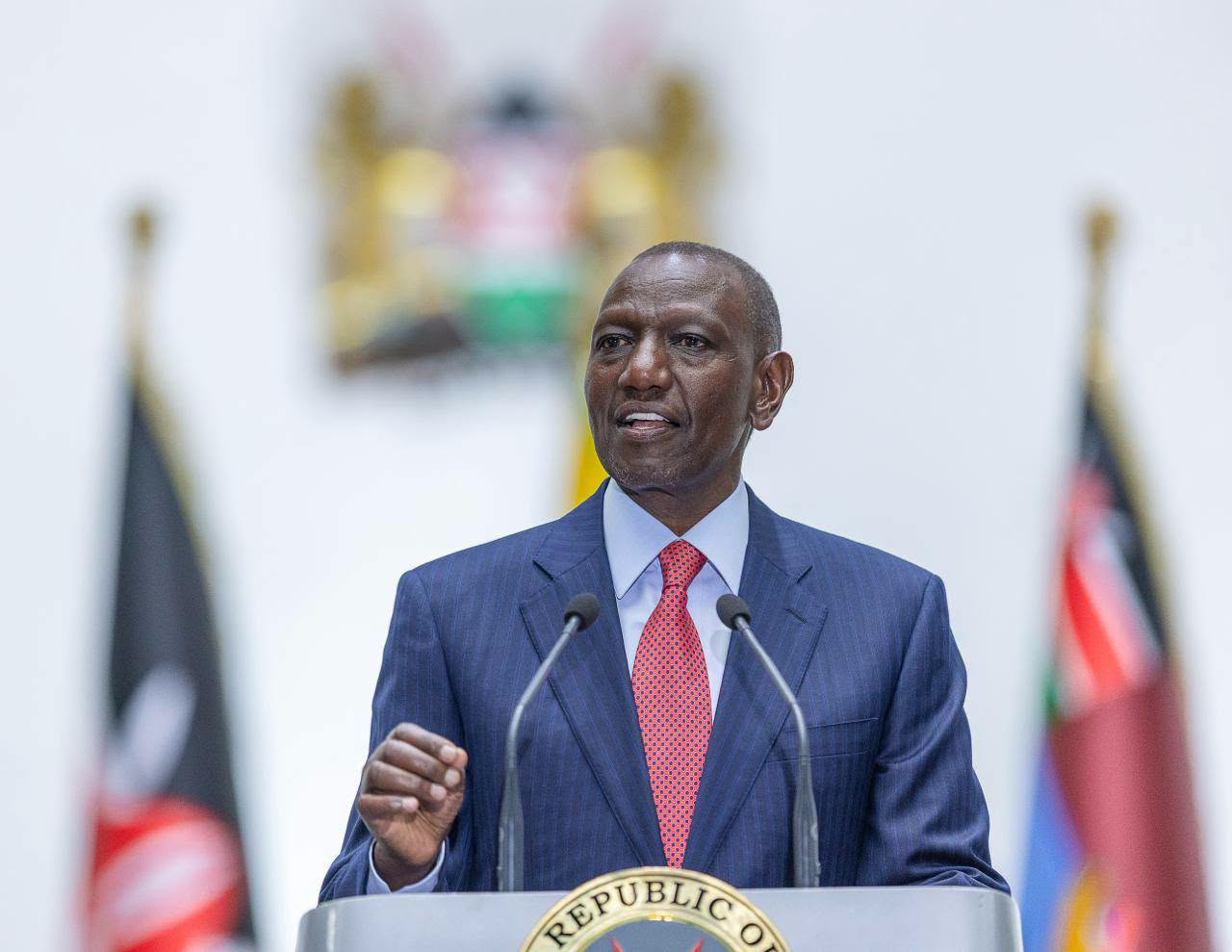
President William Ruto delivering Special National Address at State House on July 30, 2026. PHOTO/PCS.

FacebookTwitterLinkedInRedditWhatsApp
Advertisement

On 15 August 2022, Wafula Chebukati walked into the presidential tallying hall at Bomas of Kenya to declare William Ruto president-elect. Four of the seven IEBC commissioners were missing from his side.

At Serena Hotel, the four told the country they could not take ownership of the result because of what they called the “opaque nature” of its final phase. Chairs flew at Bomas as police formed a ring around Chebukati. Kenya received a winner, but not a shared account of how the referee had reached its decision. 

The Supreme Court later rejected the principal challenges to that result. It found no credible evidence that the transmission system had been infiltrated and no significant difference between portal forms, physical forms and copies held by party agents.

The Elections Observation Group’s parallel vote tabulation also placed the result within its statistical range. Legally and numerically, Ruto’s victory survived. 

But 2022 did not end the argument. It merely revealed the problem more cleanly: a presidential election may produce a lawful winner without producing a public agreement about why the result should be believed. 

Kenya Election History

Our country keeps treating this as one problem called public mistrust. Those two words normally places the voter’s suspicion somewhere between ignorance and bad manners, then prescribe civic education.

ADVERTISEMENT

Our election history contains three things that should never be mixed: proven institutional failure, questions the evidence does not settle, and allegations politicians preserve after the evidence goes against them. 

The distinction matters because Kenya has experienced all three. 

The 2007 election was not simply “disputed,” as polite summaries now put it. The Independent Review Commission chaired by Justice Johann Kriegler found a register that excluded nearly one-third of eligible voters while retaining about 1.2 million dead people.

It recorded widespread bribery, intimidation and ballot stuffing, followed by grossly defective collation, transmission and tallying. Its conclusion was brutal: the integrity of the process and credibility of the results had been so gravely impaired that the results were “irretrievably polluted.” 

That was not opposition rhetoric, it was an official inquiry saying the electoral record could not tell the country reliably who had won. When Kenyans carried doubt from 2007 into later elections, they were not inventing paranoia. The state had taught them, at terrible cost, that an electoral commission could announce certainty after destroying the means of establishing it. 

Then came 2013, with a new Constitution, a new commission and technology sold as protection against old human habits. Electronic voter identification and results transmission failed, and officials returned to manual procedures.

ADVERTISEMENT

Raila Odinga challenged the register, tallying and Uhuru Kenyatta’s crossing of the constitutional threshold. The Supreme Court dismissed the petition. Its timetable, treatment of late evidence and approach to scrutiny nevertheless became part of the argument about whether legal finality had produced adequate public proof. 


Also Read: 50%+1 Race: Counties That Could Decide Ruto’s 2027 Re-Election


Courts on Presidential Elections

In August 2017, the Supreme Court made the distinction impossible to ignore. By a majority, it annulled the presidential election, not because Raila Odinga had proved the exact number of votes stolen from him, but because IEBC had failed to conduct the election in accordance with the Constitution and electoral law.

The Court refused the tempting doctrine that arithmetic cures procedure. An election is not merely the number announced at the end; it includes the lawful and verifiable process through which that number is produced. 

That principle must not be stretched into a presumption that every administrative mistake proves deliberate manipulation. Suspicion becomes reasonable when errors form a pattern, resist explanation or prevent independent verification, but an isolated transmission delay or properly documented correction does not establish that votes were stolen.

Candidates preparing supporters to reject defeat often erase this distinction, converting procedural vigilance into a license for making claims that the available evidence cannot support. 

Courts can determine whether such claims have been proved, but they cannot carry the entire burden of establishing public confidence. A presidential petition must be filed within seven days of the declaration, and the Supreme Court must decide it within fourteen days. Lawyers work through boxes of forms, server claims, affidavits and hurried scrutiny while the country waits.

The resulting judgment establishes what has been proved to the required legal standard, but it cannot force citizens to trust an institution or permanently extinguish a politically profitable falsehood. 

Observers cannot carry public confidence burden either. A parallel vote tabulation is a powerful statistical check, but it is still a sample with a margin of error. It can show that an official national result is consistent with observed polling-station returns. It cannot certify every form, explain every administrative decision or prove that the contest before polling day was fair. To demand more from it is to turn a useful instrument into a religious object. 


Also Read: IEBC Gazettes Key Deadlines for Political Parties, Candidates, and Public Officers Ahead of 2027 Elections


IEBC Actions Ahead of 2027 Elections

IEBC therefore needs something more exact than another promise to conduct a “free, fair and credible election.” Before 2027, every recurring doubt should be placed in a public presidential election doubt register.

Each entry should identify the allegation, the available evidence, the relevant judicial or audit finding, the reform promised, what was actually implemented and what remains unresolved.

Claims disproved by scrutiny should be marked as such. Failures established by courts or official inquiries should not disappear beneath public-relations language. Questions that remain open should be named without pretending they prove fraud. 

Such a register would inconvenience every interested party. IEBC would have to acknowledge inherited weaknesses. Opposition leaders would lose the freedom to recycle rejected claims. Incumbents could no longer point to a court victory as proof that every part of the process was beyond criticism. Journalists would have to stop placing established fact and partisan allegation in the same paragraph merely because both sides said something. 

Kenya does not need universal agreement about its presidential winner. History has little evidence of democracy producing such a feat.

What is needed is a common discipline for deciding which doubts deserve investigation, which failures demand repair and which accusations deserve rejection. Without that discipline, the result announced in August 2027 may determine who enters State House, but the election will continue: in court filings, street anger and five years of competing memory. 

This article was written by George Nyongesa, a lecturer in philosophy and logic at the University of Nairobi and Chuka University.

Follow our WhatsApp Channel and X Account for real-time news updates.
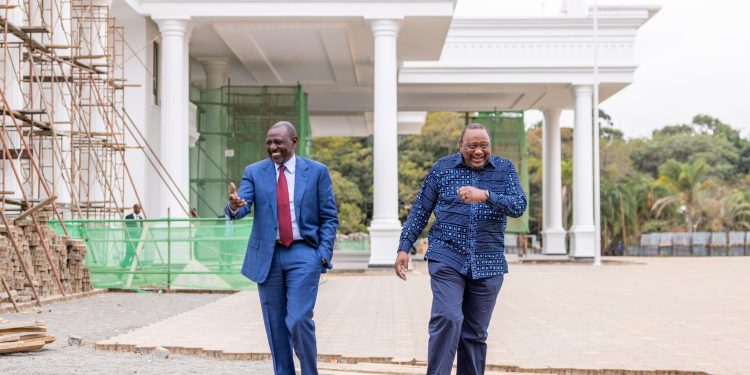
Kenya Has Experienced Disputes During Election Period With The Iebc And Members Of The Public Often Facing Disagreement On Presidential Outcome.
President William Ruto and his predecessor Uhuru Kenyatta at State House Nairobi. PHOTO/PCS.
Tags: 2027 Presidential ElectionKenya
The Kenya Times - Opinion Desk

The Kenya Times - Opinion Desk

The Kenya Times Opinion Desk publishes independent commentary and analysis from contributors and invited voices. Views expressed are those of the authors and do not represent the newsroom’s reporting or editorial positions.

Related Posts

Binge-Eating Among College Students With Abundant Junk Food, A Common Setting Linked To Binge-Eating Risks.

How Globalization and Food Insecurity Fuel Disordered Eating Behavior in Young Adults

October 14, 2026
From Knowledge To Impact: A New Era Of Kenya–Uk Science Diplomacy

From Knowledge Sharing to Innovation: A New Chapter in Kenya–UK Science Diplomacy

October 10, 2026
Kenyan Teaching And Teachers Received Awards For Outstanding Contributions On October 5, At The Kasarani Indoor Arena During National World Teachers’ Day.

What Would a Truly Professional Teaching Profession Look Like in Kenya?

October 7, 2026
Beyond Borders: Why Science Diplomacy Must Drive The Next Era Of Development

Why Science Diplomacy Must Drive the Next Era of Development

October 5, 2026

Leave a Reply Cancel reply

Your email address will not be published. Required fields are marked *

ADVERTISEMENT

The Kenya Times Facebook

LATEST NEWS

  • Bobby Ogolla: How Gor Mahia’s ‘Six Million Dollar Man’ Made His Name
  • Motorist Jumps Out of Car, Recovers iPhone 15 Pro Max After Police Chase
  • Fastest Routes to Get From JKIA to Nairobi CBD
  • UDA Secretary General Hassan Omar Summoned
  • Safaricom Issues Response After Customers Report Unusual Phone Activity
  • Kenyan MP Wins Global Award
  • Profile of Esther Arunga, Former KTN Anchor Who Dropped Husband’s Surname After 16 Years
  • How Mamlaka Hill Chapel Grew From 80 Worshippers Under Bishop Ng’ang’a Before His Dismissal
  • Why SRC Asked 2 Senior Judges to Step Aside From High-Profile Car Allowance Case
  • India Issues Kenya Travel Advisory Over New Entry Requirement
  • Can You Drop Your Ex-Husband’s Name After Divorce in Kenya? What the Law Says
  • Dangote’s Lamu Refinery: Beyond Political Praise, Where Is the Business Case?
  • DCI Extends Same-Day Police Clearance Certificates to Diplomats and Foreign Nationals
  • Gachagua Hints at Fuel Price Increase Ahead of EPRA Review
  • France Govt Announces Scholarships for Kenyans With KSh180K Monthly Allowance
ADVERTISEMENT

Company

About Us

Our Authors

Our Experts

Social Media

Policies

Privacy Policy

House Rules

Standards and Policies

Terms and Conditions

Subscription

My Account

Contact Us

Contact Us

Join Our Team

Advertise With Us

© Copyright 2026 | The Kenya Times | All Rights Reserved

Welcome Back!

Sign In with Facebook
Sign In with Google
Sign In with Linked In
OR

Login to your account below

Forgotten Password? Sign Up

Create New Account!

Sign Up with Facebook
Sign Up with Google
Sign Up with Linked In
OR

Fill the forms below to register

All fields are required. Log In

Retrieve your password

Please enter your username or email address to reset your password.

Log In
Your Privacy and Cookies
We use cookies on our website to give you the most relevant experience by remembering your preferences and repeat visits. By clicking “Accept”, you consent to the use of ALL the cookies.
Do not sell my personal information.
Cookie settingsACCEPT
Privacy & Cookies Policy

Privacy Overview

This website uses cookies to improve your experience while you navigate through the website. Out of these cookies, the cookies that are categorized as necessary are stored on your browser as they are essential for the working of basic functionalities of the website. We also use third-party cookies that help us analyze and understand how you use this website. These cookies will be stored in your browser only with your consent. You also have the option to opt-out of these cookies. But opting out of some of these cookies may have an effect on your browsing experience.
Necessary
Always Enabled
Necessary cookies are absolutely essential for the website to function properly. This category only includes cookies that ensures basic functionalities and security features of the website. These cookies do not store any personal information.
Functional
Functional cookies help to perform certain functionalities like sharing the content of the website on social media platforms, collect feedbacks, and other third-party features.
Performance
Performance cookies are used to understand and analyze the key performance indexes of the website which helps in delivering a better user experience for the visitors.
Analytics
Analytical cookies are used to understand how visitors interact with the website. These cookies help provide information on metrics the number of visitors, bounce rate, traffic source, etc.
Advertisement
Advertisement cookies are used to provide visitors with relevant ads and marketing campaigns. These cookies track visitors across websites and collect information to provide customized ads.
Others
Other uncategorized cookies are those that are being analyzed and have not been classified into a category as yet.
SAVE & ACCEPT
LOGIN | REGISTER
  • Login
  • Sign Up
  • Cart
No Result
View All Result
  • News
    • Latest News
    • Breaking News
    • Investigations
    • Explainers
    • Fact Check
  • Politics
    • Global Politics
    • Conflicts & Security
    • Elections
    • Diplomacy
    • Government & Policy
    • Political Analysis
  • Business
    • Global Economy
    • Markets
    • Technology
    • Startups
    • Energy
    • Finance
  • World News
    • Americas
    • Asia
    • Asia Pacific
    • Africa
    • Europe
    • Middle East
  • Africa
    • East Africa
    • West Africa
    • Southern Africa
    • Central Africa
  • Health
    • Global Health
    • Public Health
    • Health Policy
    • Medical Research
    • Diseases & Conditions
    • Mental Health
    • Nutrition
    • Climate & Health
    • Health Explainers
  • Sports
    • World Cup 2026
    • Athletics
    • Basketball
    • Boxing
    • Cricket
    • Football
    • Formula 1
    • Golf
    • Rugby
  • Weather
    • Climate Business
    • Climate Change
    • Climate Solutions
    • Living Green
  • Culture
    • Arts
    • Film & TV
    • Food and Recipes
    • Lifestyle
    • Music
    • People
    • Travel
  • Opinion
    • Editorials
    • Letters
  • Behind The Brand
  • Contact Us

Not enough quota to unlock this post
Unlock left : 0
Are you sure want to cancel subscription?