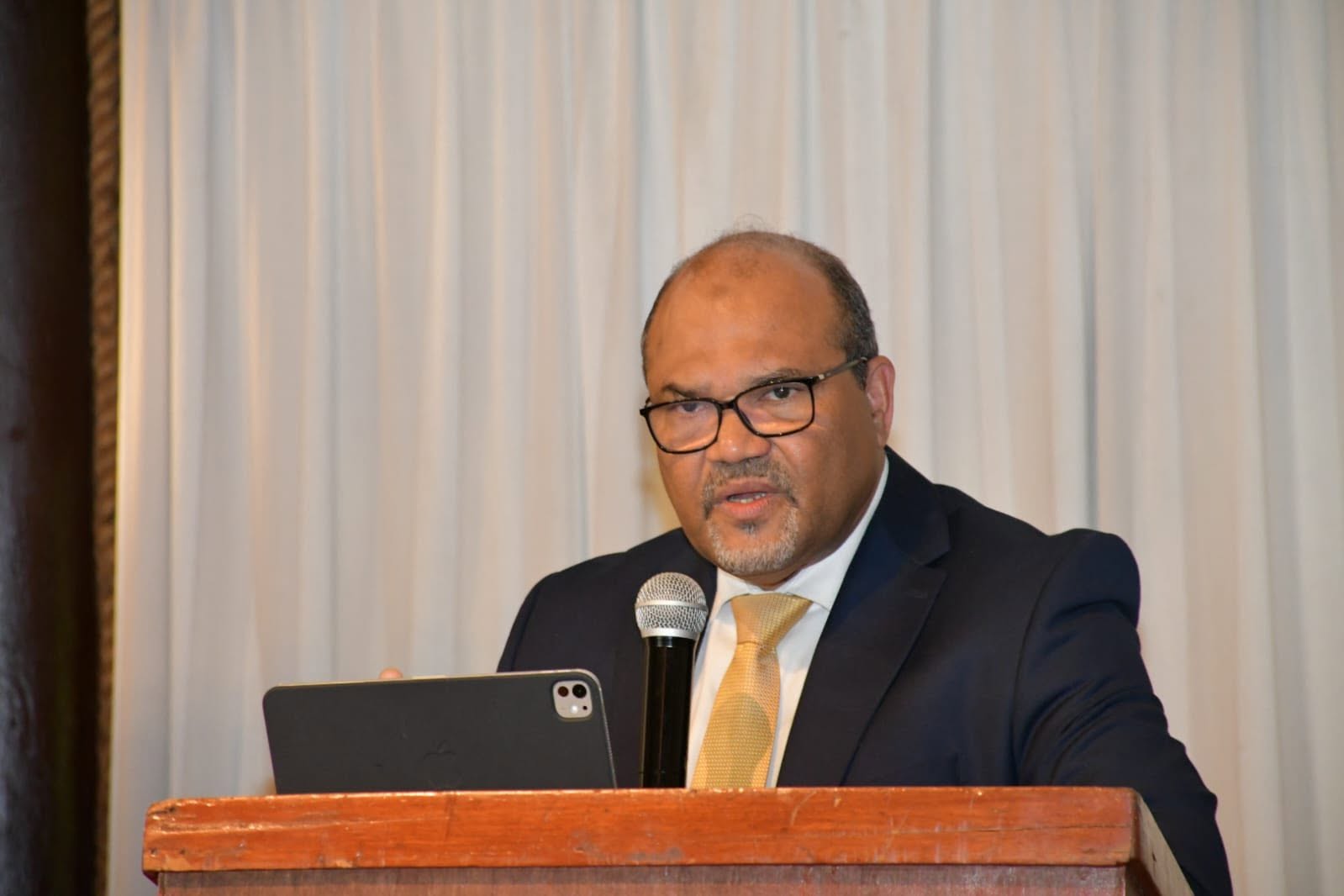
I participated in the inaugural Friends of Research International Ministerial Conference (FORUM26) in Munich, Germany, hosted by the Federal Ministry of Research, Technology and Space and attended by ministers and senior representatives from European and partner countries. The summit, held in late September, focused on the theme, “Beyond Borders, Beyond Boxes: Shaping the Future of Science and Innovation Together.”
My central message was simple: in an increasingly interconnected and uncertain world, science can no longer operate within national borders, institutional silos or disciplinary boxes. Climate change, food insecurity, public-health emergencies, biodiversity loss, water scarcity and energy transitions are global challenges. No country, however technologically advanced, can address them alone.
This is where science diplomacy becomes indispensable. Science diplomacy is not merely about scientists travelling or governments signing cooperation agreements. It is about using scientific knowledge, research partnerships and technological collaboration to build trust between nations, solve shared problems and advance human wellbeing.
Science diplomacy beyond the donor-recipient model
For Kenya and Africa in general, we require partnerships that move beyond the traditional donor-recipient relationship. We need stronger North-South and South-South cooperation founded on trust, equity, co-creation and mutual benefit. Developing countries must participate in global science as knowledge producers, innovators and equal partners—not simply as consumers of technologies developed elsewhere. Our partnerships must therefore prioritise joint research, capacity building, researcher mobility, shared infrastructure, technology transfer and joint investment.
We must acknowledge that Kenya has made significant progress in building its science, technology and innovation ecosystem with creation of the State Department of Science, Research and Innovation together with Konza City. Our universities, research institutions, innovation hubs, technology companies and start-ups are generating solutions in areas including digital finance, agriculture and health. Kenya also hosts several major regional and international research organisations, strengthening its position as an important scientific hub in Africa. What we now need is converting all these to jobs and expansion of wealth.
Also Read: Cabinet Approves Kenya Advanced Institute of Science as a Specialized Postgraduate Institution
As we move on the trajectory of Beyond 2030, we must place research and innovation even more firmly at the centre of global competitiveness, industrialisation and socioeconomic transformation. Sustainable investment in research and development is fundamental. Research financing should never be treated merely as expenditure; it is an investment in future productivity, resilience, jobs and competitiveness. With the planned allocation of 1% of GDP towards research, technology and innovation, we can easily leapfrog.
From research to jobs
We must also confront what is often called the “valley of death” in innovation—the difficult space between a promising research result and a commercially viable product. Too many discoveries remain in laboratories, journals and prototypes because researchers lack technology-transfer systems, industry partnerships, intellectual-property support and patient capital. My engagements in Munich indicated venture capitalists and private-sector investment will play a pivotal role in translating innovation to commercialisation.
The primary objective must be to build an uninterrupted pipeline from research to innovation, innovation to commercialisation, and commercialisation to societal impact. As the country continues to strengthen incubation, technology transfer, innovation hubs and intellectual-property support, more private-sector participation and investment will be required. Ultimately, research must improve lives, create enterprises and jobs, increase productivity and contribute to national prosperity. I am pleased that we have improved our Global Innovation Index ranking from 102 to 97, and our target is to reach position 50 within three years.
Another area that I emphasized was human capital, which is equally critical. Global scientific cooperation must expand opportunities for postgraduate training, doctoral and postdoctoral development, researcher exchanges and mobility. We need to also look at middle-level vocational training. Mobility should produce brain circulation rather than permanent brain drain. African researchers should be able to participate in leading laboratories globally while remaining connected to institutions and development challenges at home.
Emerging technologies make this imperative even greater. Artificial intelligence, biosciences and biotechnology, space science, advanced manufacturing, robotics, genomics and other frontier technologies are rapidly reshaping economies. AI can transform healthcare, agriculture, education and government services. Biotechnology can strengthen food systems, health and climate resilience, while space technologies can support agriculture, disaster management, climate monitoring, communications and natural-resource management. AI must be used ethically to drive prosperity, with regulations that support progress without hindering it. I plan to make this happen using a cluster approach, the Kenya Grand Challenge initiative, and research chairs.
Also Read: Boost for Konza City as KETRACO Delivers New State-of-the-Art Power Line
The bottom line is that technology must ultimately serve society; hence, science communication and science for society are essential. Scientists must communicate evidence in ways citizens, policymakers and communities can understand. Public trust in science strengthens when people see its connection to better health, safer food, resilient agriculture, quality employment, and improved livelihoods. In fact, we must over-communicate science to be heard.
The Munich discussions reaffirmed that the future of science will be collaborative. The defining question is no longer whether countries should cooperate, but how we create trusted, equitable partnerships that let knowledge, talent, and innovation move across borders while ensuring scientific progress benefits everyone.
Moving beyond 2030, we need more investment in knowledge, stronger scientific diplomacy, deeper partnerships, greater mobility of ideas and people, and a relentless focus on translating research into economic and social impact. President William Ruto is already championing reforms at the African Union and dividends are expected. I advocate placing technology and innovation at the centre of that agenda.
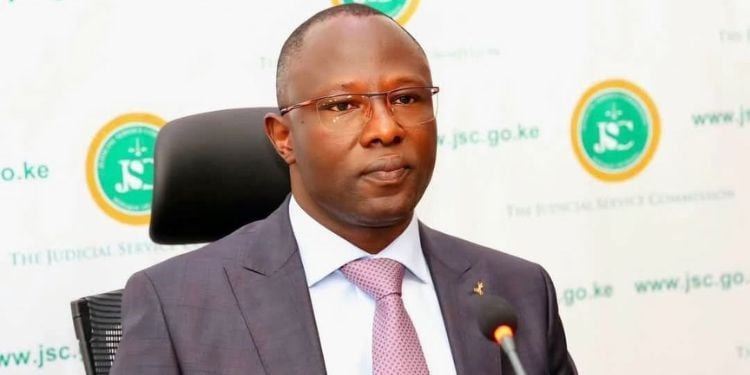
This article was written by Prof. Shaukat Abdulrazak, Principal Secretary, Science, Research and Innovation. Email: [email protected].
Follow our WhatsApp Channel and X Account for real-time news updates.