
The government is planning major changes to how it evaluates and rewards public servants, including linking salary progression and promotion to productivity and performance.
Under the proposed reforms, productivity indicators will account for at least 50 per cent of government performance contracts by June 2028, up from the current 3 per cent.
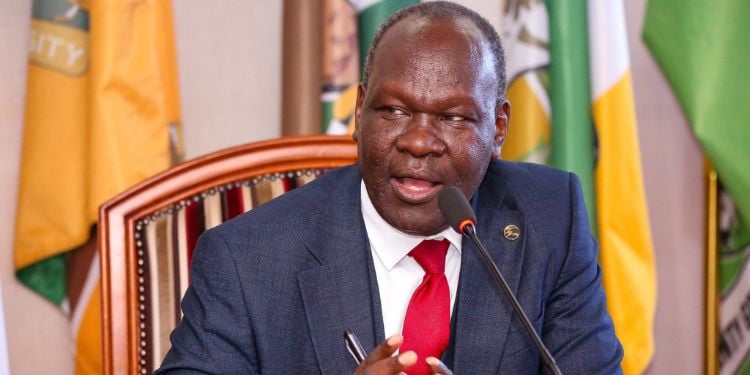
Salaries and Remuneration Commission (SRC) Chairperson Sammy Chepkwony outlined the proposed reforms, which seek to make productivity and performance central to how public institutions operate and reward employees.
Chepkwony said the government had resolved to overhaul the existing performance contracting framework and introduce a system that places greater emphasis on measurable productivity.
“Resolution number three is to transform performance contracting, that is, the system we have now, into performance and productivity contracting,” he said.
He explained that the government would re-engineer the existing framework and significantly increase the weighting assigned to productivity indicators.
“We have resolved that the government shall re-engineer the existing performance contracting framework and increase the weighting of productivity indicators. Right now, it is sitting at 3 per cent to at least 50 per cent by June 2028,” Chepkwony stated.
The objective is to institutionalise a productivity-driven public service, accelerate labour productivity growth, and improve service delivery outcomes.
The resolution also aims to strengthen fiscal sustainability, enhance citizen satisfaction, and support Kenya’s transformation into a globally competitive economy.
SRC Targets Changes to Salary Progression and Promotions
Beyond changing how government institutions are assessed, the SRC Chairperson said the proposed reforms would also affect how public servants receive salary increases and advance in their careers.
Chepkwony said the government had resolved to link compensation and career progression to productivity and performance, moving away from automatic salary increments.
“Resolution number two is that we link compensation and career progression to productivity and performance. This is something that has been missing in our structures,” he said.
He explained that public sector compensation systems would progressively move away from automatic salary progression, with career advancement increasingly tied to productivity and performance-based remuneration.
“We’ve resolved that all public sector compensation systems shall progressively transition from automatic salary progression, and also career progression should be tied to productivity and performance-based remuneration,” Chepkwony stated.
He added that the proposed system would introduce variable pay for ministries, departments and agencies at both national and county government levels.
The shift would mean productivity and performance would play a greater role in how public institutions reward employees, rather than relying primarily on automatic progression.
Also Read: SRC Suspends New Salary and Benefits for Select Govt Employees
Govt Targets 20% Annual Labour Productivity Growth
Chepkwony also outlined a separate productivity target, saying the government intended to increase annual labour productivity growth from the current 1.38 per cent to at least 20 per cent by the end of the 2026/2027 financial year.
“The implementation of the framework shall be leveraged on the increase of annual labour productivity growth from the current 1.38 per cent, that’s where we are at the moment, to at least 20 per cent by the end of the financial year 2026/2027,” he said.
The target places labour productivity growth at the centre of the proposed public service reforms, with the government seeking to improve the output generated from its workforce and available resources.
The broader objective is to institutionalise a productivity-driven public service, accelerate labour productivity growth and improve service delivery outcomes.
It also aims to strengthen fiscal sustainability, enhance citizen satisfaction and support Kenya’s transformation into a globally competitive economy.
Also Read: SRC Exposes How Parastatals Burden Kenyans with Huge Salaries and Allowances
SRC Holds Consultations With State Corporations and Principal Secretaries
The proposed reforms come as SRC steps up consultations with senior government officials and public institution leaders over a revised framework for recognising productivity and performance in the public service.
In updates shared on its X account, the Commission said it had engaged chairpersons of boards and commissions, chief executive officers and managing directors of state corporations and statutory bodies during a stakeholder session at Eka Hotel in Nairobi.
The discussions focused on the proposed approach to recognising productivity and performance across public institutions, with SRC seeking institutional input and consensus on the revised framework.
The Commission said the engagement was intended to promote a shared understanding of a system that links performance, accountability and rewards to improved service delivery and fiscal sustainability.
SRC also held a separate engagement with Principal Secretaries at the same venue to discuss the revised framework.
The meeting gave senior government leaders an opportunity to share their views on the proposed changes, which seek to establish a results-oriented public service culture and link institutional performance to measurable outcomes.
Follow our WhatsApp Channel and X Account for real-time news updates and subscribe to our YouTube Channel for in-depth interviews.