
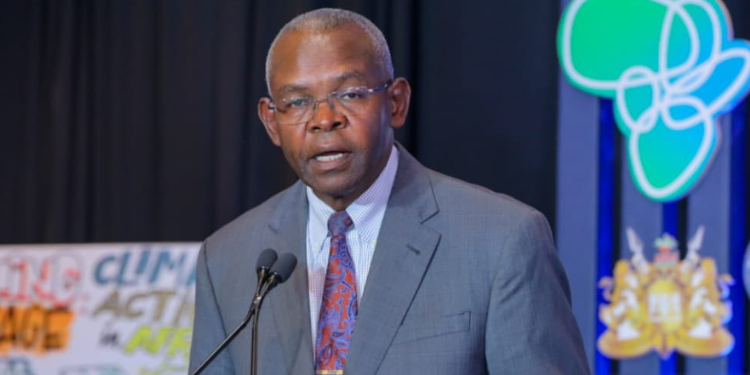
The Central Bank of Kenya (CBK) has proposed limiting county governments to one commercial bank account as part of changes to the management of public funds under proposed amendments to the Public Finance Management (PFM) Act.
Appearing before the committee, CBK Governor Kamau Thugge said the changes would improve government oversight of public funds, reduce the number of commercial bank accounts counties operate, and lower borrowing costs.
He explained that holding county deposits at the Central Bank, rather than spreading them across multiple commercial banks, would give the National Treasury better visibility into available public resources.
“We fully support this proposed amendment,” Thugge told the senators.
“By ensuring county deposits are held at the Central Bank rather than across multiple commercial banks, the National Treasury gains better visibility and avoids incurring unnecessary interest payments when idle resources are already available.”
Why CBK Wants Counties to Reduce Their Commercial Bank Accounts
The proposals seek to require county governments to obtain prior written approval from the National Treasury before opening or closing bank accounts. They also seek to consolidate county funds into a Treasury Single Account (TSA) held at the Central Bank.
According to the governor, the arrangement would also help the government avoid unnecessary interest payments when idle funds are already available within the public sector.
Thugge further recommended that counties retain only one imprest account in commercial banks, while maintaining their primary operational and project accounts at the CBK.
However, senators questioned whether the proposed changes would interfere with devolution by giving the National Treasury authority over county banking arrangements.
Kakamega Senator Boni Khalwale raised concerns over the constitutional independence of the two levels of government, questioning whether requiring national government approval for county bank accounts would undermine that arrangement.
“Management of public funds is a critical role of any government. If the national government will now be involved in authorizing bank accounts at the county level, does it not affect the constitutional provision that the two governments are independent?” Khalwale posed.
Committee Vice Chairperson Tabitha Mutinda also questioned whether the additional approval requirements would delay county operations and service delivery.
She cited existing delays in fund requisitions from the Office of the Controller of Budget and raised concerns about the potential impact on municipalities, water companies and public hospitals managing Facility Improvement Funds.
In response, Thugge said the approval process would largely be a one-off exercise, with county treasuries retaining control over their day-to-day financial operations.
He added that counties could consolidate their existing commercial bank accounts into one approved imprest account without seeking fresh authorization.
However, any county seeking to open additional accounts in the future would require approval from the National Treasury.
The governor also addressed concerns about the absence of physical CBK branches in some regions, including Wajir, saying digital banking channels had enabled all 47 counties to transact remotely.
CBK officials told the committee that 99 per cent of county transactions were already conducted digitally, allowing county governments to open accounts, initiate payments, and manage deposits electronically.
Also Read: CBK Ordered to Suspend New Lending Rules Affecting Kenyans
About the Proposal
The proposed amendments to Kenya’s Public Finance Management (PFM) Act seek to consolidate county government funds into a Treasury Single Account (TSA) held at the Central Bank of Kenya (CBK).
The changes would also require county governments to obtain prior written approval from the National Treasury before opening or closing bank accounts.
According to the proposed reforms, more than 1,400 commercial bank accounts operated by county governments are targeted, raising concerns about the management and oversight of public funds. The Senate is currently considering the amendments.
Under the Public Finance Management (Amendment) Bill, 2026, a county Treasury Single Account would serve as a centralised banking system through which county departments and entities process deposits and payments. The arrangement would cover transactions involving funds drawn from the County Revenue Fund.
The proposed changes would also remove the flexibility previously granted to county treasuries under Section 119(2) of the PFM Act to maintain accounts in other approved commercial banks.
Also Read: CBK Governor Explains Why Kenyan Shilling Has Stayed at KSh129 Against the Dollar for Over 2 Years
Additionally, county governments would need written authorization from the National Treasury before opening, operating, or closing bank accounts. This would give the Treasury greater oversight of county banking arrangements and the movement of public funds.
Under the proposed framework, county governments would be expected to channel their operational funds and revenues through the CBK, while retaining limited commercial banking arrangements for purposes such as imprest and petty cash operations.
The reforms aim to address concerns about the proliferation of commercial bank accounts, some of which the National Treasury and the Office of the Controller of Budget have flagged for non-compliance with existing financial regulations.
Centralizing county funds at the CBK would also enable the National Treasury and oversight institutions to monitor county cash balances, deposits and payments more efficiently. The arrangement is expected to improve real-time visibility of public funds and reduce reliance on delayed bank reconciliations.
Follow our WhatsApp Channel and X Account for real-time news updates and subscribe to our YouTube Channel for in-depth interviews.