
Churches could face fines of up to Ksh5 million for breaching Kenya’s data protection law when they livestream worshippers without obtaining the required consent, even where they have displayed notices informing congregants that filming is taking place.
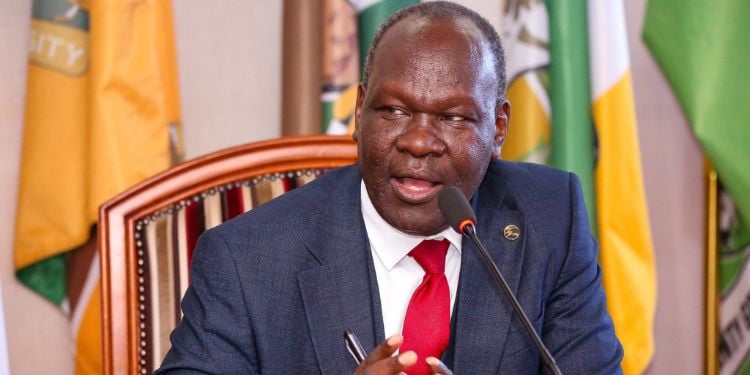
Outgoing Data Commissioner Immaculate Kassait addressed the issue during an interview published on November 18, 2026, when she was asked whether a church could livestream its services after placing a sign warning people that cameras were recording.
Kassait said a filming notice did not remove the need to obtain consent where the church was processing congregants’ personal data.
“You’re processing data so it’s important to just get consent,” she said.
Churches and Malls Under Scrutiny
Her response followed a separate question about shopping malls displaying notices that photography takes place on their premises. Kassait said such a notice was a privacy notice, not consent to use visitors’ images for marketing.
She distinguished between collecting images for security and using them for commercial purposes, saying a notice that photography is taking place does not automatically authorise the latter.
Also Read: SRC Announces Major Changes to How Govt Employees Will Be Promoted
Section 2 of the Data Protection Act defines consent as an express, unequivocal, free, specific and informed indication of a person’s wishes, given through a statement or clear affirmative action.
Section 25 requires personal data to be processed lawfully, fairly and transparently, for explicit and legitimate purposes, and only to the extent necessary for those purposes.
Section 29 further requires a data controller or processor, before collecting personal data, to inform the individual that information is being collected, explain the purpose, outline the person’s rights and provide details of relevant third parties and safeguards.
What the Data Protection Act Says About Consent and Fines
The law also sets out circumstances in which personal data may be processed without consent.
Under Section 30, these include processing that is necessary to perform a contract, comply with a legal obligation, protect vital interests, carry out a public-interest task, or pursue legitimate interests, provided the processing does not unjustifiably prejudice the individual’s rights and freedoms.
This means consent is not the only lawful basis for processing personal data.
However, a church relying on another legal basis would still have to meet the requirements of the Act and justify the processing for the stated purpose.
Section 32 places the burden on the data controller or processor to prove consent.
It also gives individuals the right to withdraw consent, subject to the Act’s provisions.
The Act provides for administrative penalties where the Data Commissioner establishes a contravention.
Also Read: Mbadi Gives Update Push to Slash Monthly Salary Deductions
Under Section 63, the maximum penalty is Ksh5 million or, for an undertaking, one per cent of its annual turnover in the preceding financial year, whichever is lower.
The Ksh5 million figure is therefore a maximum statutory penalty, not an automatic fine imposed on every church that livestreams a service or displays a filming notice.
The Data Protection Act does not specifically name churches or livestreamed worship services. Its provisions apply to the processing of personal data, including identifiable images captured and shared through digital platforms.
She also explained that consent must be informed and that organisations collecting personal information must tell people what information they are taking and how they will use it.
In the same interview, she said terms and conditions are not equivalent to consent, stressing that individuals must understand the purpose for which their personal information is being processed.
Follow our WhatsApp Channel and X Account for real-time news updates and our YouTube Channel for in-depth interviews.