As the year draws to a close, the geopolitical landscape of the Middle East has witnessed unexpected developments, presenting significant challenges for regional states, including Pakistan’s political and military leadership. The conflict between Iran and Israel has a long history, but the potential consequences of the current confrontation have exposed vulnerabilities that many regional stakeholders may have underestimated. The prospect of a prolonged conflict raises serious questions about regional security, existing alliances, and the future balance of power in the Middle East.
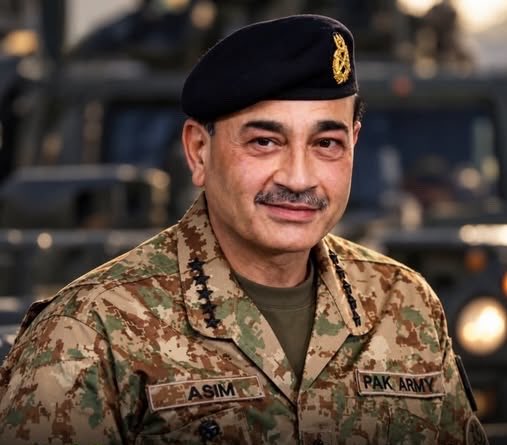
Pakistan has emerged as a potentially important diplomatic player in efforts to resolve the conflict, despite facing several strategic complications. Its expanding defence partnership with Saudi Arabia, geographical proximity to Iran, strengthening strategic relations with Türkiye, and longstanding relationship with the United States place Islamabad in a particularly sensitive diplomatic position. These competing strategic considerations have also brought Field Marshal Syed Asim Munir, Pakistan’s Chief of Defence Forces and Chief of Army Staff, into greater prominence as an emerging figure in regional military diplomacy and peacebuilding.
General Munir’s diplomatic engagement reflects Islamabad’s broader policy of maintaining constructive relations with countries across competing regional blocs. Pakistan is increasingly seeking to provide a diplomatic platform for states with divided political and strategic interests, positioning Islamabad as a potentially significant channel of communication.
However, Pakistan remains in a difficult position. Managing its relationships with Saudi Arabia and Iran while avoiding direct military involvement in regional confrontations, particularly those involving Yemen, is essential to protecting its national security, economic interests, counterterrorism efforts, and domestic stability.
The emerging defence partnership among Pakistan, Saudi Arabia, and Türkiye reflects a new dimension of strategic cooperation. The agreement establishes an important framework for collective security, including the principle that an attack against one party may be considered a threat to the others. Meanwhile, Pakistan has continued to encourage diplomatic engagement between Iran and the United States in pursuit of de-escalation and a possible peaceful settlement.
General Munir has undertaken several engagements with Iranian officials, seeking to maintain communication with Tehran while preserving Pakistan’s broader regional relationships. Islamabad has also continued its diplomatic engagement with other regional states. According to Reuters, Pakistan’s diplomatic efforts have included discussions concerning regional tensions, particularly those associated with Houthi attacks and Saudi Arabia’s security concerns.
Islamabad’s continued engagement in the current Middle Eastern crisis reflects Pakistan’s longstanding commitment to international peace and security. Nevertheless, the extent to which Pakistan can translate its diplomatic engagement into tangible results remains an important question.
Between Riyadh and Tehran
Pakistan has longstanding strategic, military, and economic ties with Saudi Arabia that extend beyond conventional diplomatic engagement. Pakistani military personnel have historically provided training and professional support to Saudi armed forces, reinforcing institutional cooperation between the two countries.
Recent developments involving a joint strategic framework among Pakistan, Saudi Arabia, and Türkiye have added another dimension to this partnership. Türkiye’s participation adds a broader regional security perspective and could strengthen Pakistan’s strategic position.
Iran, however, represents a different but equally important strategic consideration. Pakistan’s geographical position makes stability along its western frontier a fundamental national security priority. Islamabad must prevent cross-border tensions and regional instability from creating additional security challenges. It therefore has compelling reasons to avoid a complete breakdown in relations with Tehran.
This explains the importance of General Munir’s engagement with Iranian officials. Such contacts should not be understood exclusively as military communication. Rather, they form part of a broader diplomatic effort to maintain dialogue between countries whose political and security interests are increasingly diverging.
Pakistan’s military diplomacy, particularly General Munir’s engagement with Iranian leadership, therefore has implications beyond bilateral relations. It potentially strengthens Pakistan’s position as a facilitator of communication and a contributor to international peace and security.
Nevertheless, Pakistan faces fundamental challenges. Successful mediation depends on the confidence of competing parties, while formal defence partnerships can create expectations of military alignment. Islamabad must therefore demonstrate that its commitment to regional security does not necessarily require taking sides in every regional confrontation.
The Saudi Question and the Situation in Yemen
One of the most immediate challenges concerns Yemen, where the evolving security situation has emerged as another significant threat to regional stability. Saudi Arabia faces serious security concerns associated with Houthi forces, including attacks targeting strategically important infrastructure and the potential threat to sensitive locations and religious sites, including Makkah and Madinah.
Islamabad has raised concerns with Iranian leadership and emphasised the potential consequences of further escalation. According to Reuters, Pakistan’s diplomatic engagement with Tehran has also involved discussions concerning Saudi security. This raises an important question for Islamabad: how should Pakistan respond if Riyadh requests military assistance under the framework of its defence arrangements?
Pakistan’s position on Saudi Arabia’s security in the current situation involving Yemen presents a particularly difficult diplomatic challenge.
Also Read: Kenya Ranked Among Pakistan’s Top Five Export Markets
In 2015, Pakistan’s Parliament declined to support direct military participation in the Saudi-led intervention in Yemen. Islamabad consequently avoided direct involvement in the military campaign, reflecting its preference for maintaining a balanced regional position.
The circumstances today are considerably different. Pakistan’s defence relationship with Riyadh has taken on a more formal character, potentially raising expectations of cooperation in the event of a serious security threat.
Nevertheless, a defence agreement does not necessarily translate into automatic participation in every military operation. Its implementation depends on the provisions of the agreement, the nature of the threat, and the circumstances surrounding any request for assistance.
This distinction provides Pakistan with a degree of diplomatic flexibility.
Islamabad can reassure Saudi Arabia of its commitment to bilateral security cooperation without necessarily accepting immediate involvement in a broader regional military confrontation.
General Munir’s Emerging Diplomatic Role
Traditionally, Pakistan’s foreign policy has been represented through the Ministry of Foreign Affairs and the country’s civilian leadership, including the Prime Minister and Foreign Minister. However, the current conflict has highlighted the growing importance of military diplomacy, which appears to have become an increasingly significant instrument of regional engagement.
General Munir has emerged as a prominent figure in Pakistan’s military diplomacy across the region. The expanding defence partnerships with Saudi Arabia and Türkiye reflect the growing importance of military-to-military engagement in Islamabad’s regional strategy.
According to Al Jazeera’s reporting, General Munir has undertaken multiple visits to Iran, while his repeated diplomatic communications with regional leadership have attracted considerable international attention.
These developments highlight the importance of military-to-military relationships in contemporary international diplomacy. Defence relations can remain strong even when political relations become strained. However, diplomatic access should not be confused with the ability to influence or control the decisions of other governments.
Pakistan cannot independently determine the strategic calculations of Iran, Saudi Arabia, the United States, or the Houthi movement. Its diplomatic contribution should therefore be understood more realistically. Islamabad can facilitate communication, transmit messages, encourage restraint, and help create political opportunities for negotiations.
Ultimately, however, the success of these efforts will depend on the willingness of the principal actors to pursue a diplomatic solution.
The Economic Dimension
Pakistan’s strategic interests are closely connected to its economic challenges. Conflict in the Middle East can disrupt energy supplies, international shipping, remittance flows, and the economic stability of countries dependent on imported fuel.
The Strait of Hormuz is particularly significant as a maritime energy corridor. Any disruption to shipping through the strait could have serious consequences for international energy markets. Recent developments surrounding this waterway have demonstrated how quickly geopolitical tensions can influence oil prices and global economic expectations.
For Pakistan, the potential consequences would be particularly serious. The country depends considerably on imported energy and has millions of citizens employed across the Gulf region. Gulf countries are also among the most important sources of remittances for Pakistan.
Any prolonged instability could therefore put additional pressure on Pakistan’s foreign exchange reserves, raise energy costs, and further strain domestic economic conditions.
Consequently, Islamabad’s interest in preventing regional escalation extends beyond conventional foreign policy and military considerations. Preventing a wider regional economic crisis is essential to Pakistan’s national security.
Diplomatic engagement is therefore not simply an opportunity to enhance Pakistan’s international profile. It is also a practical necessity for protecting the country’s economic interests.
The Türkiye Factor
Türkiye introduces an important dimension into Pakistan’s evolving regional strategy. Expanding cooperation among Pakistan, Saudi Arabia, and Türkiye could create a significant framework for regional security.
However, an important question remains: how can Pakistan strengthen its relations with Riyadh and Ankara without undermining its diplomatic engagement with Tehran?
Türkiye itself maintains diplomatic and economic relations with Iran despite differences over several regional security issues. Cooperation among these three countries does not necessarily have to develop into an explicitly anti-Iran alliance. Much will depend on the scope and objectives of their security partnership.
If the partnership remains committed to collective defence, regional stability, and strategic cooperation, it could contribute to a more structured regional security environment.
However, if it evolves into a broader confrontation with other regional actors, Pakistan could face difficult diplomatic choices.
For Islamabad, maintaining clarity about the partnership’s objectives and limits is therefore essential.
What Pakistan Can Realistically Achieve
There is little doubt that General Munir’s diplomatic efforts have helped place Pakistan in a more prominent position in regional discussions. The important question, however, is what Pakistan can realistically achieve through these engagements.
Its most significant contribution could be to support peacebuilding and establish itself as a trusted channel for regional and international actors.
Pakistan has a combination of relationships that gives it a potentially useful diplomatic position: a longstanding partnership with Saudi Arabia, geographical proximity to Iran, strategic cooperation with Türkiye, and an established relationship with Washington.
Maintaining these relationships simultaneously requires considerable diplomatic effort and careful strategic calculations.
Also Read: Pakistan Hosts 25 Countries for High-Level Summit on Promoting Justice, Tolerance, and Inclusion
Islamabad must distinguish between honouring its defence commitments and participating in offensive military operations; between facilitating communication and endorsing the policies of another government; and between diplomatic mediation and strategic alignment.
Pakistan must make sustained efforts to preserve this balance.
Prime Minister Shehbaz Sharif has expressed solidarity with Saudi Arabia while emphasising the importance of diplomatic efforts by General Munir and Deputy Prime Minister and Foreign Minister Ishaq Dar to reduce regional tensions.
The challenge will be translating these diplomatic commitments into a consistent and sustainable foreign policy.
Pakistan must also recognise that maintaining relations with competing regional powers requires more than occasional high-level meetings. It demands continuity, credibility, institutional coordination, and a clear understanding of the country’s strategic limitations.
A Moment of Strategic Choice
The evolving Middle Eastern crisis has created an important strategic moment for Pakistan. Its defence partnership with Saudi Arabia, military diplomatic engagements, and expanding defence cooperation with Türkiye offer Islamabad opportunities to contribute to regional stability.
General Munir’s engagement with Tehran and Riyadh reflects the growing importance of military diplomacy in a region where traditional political relationships and strategic alignments are increasingly being tested.
Yet diplomatic access does not automatically translate into political influence, and influence does not guarantee control over regional developments.
Pakistan’s principal objective should therefore be to prevent the confrontation from developing into a wider conflict in which Islamabad has limited influence over the outcome but could bear substantial economic, political, and security costs.
The future regional order may depend not only on military partnerships and strategic deterrence but also on the ability of competing powers to establish reliable mechanisms for communication and negotiation.
For Pakistan, this creates a narrow but potentially valuable diplomatic opportunity.
If Islamabad can maintain constructive communication with Tehran while honouring its commitments to Riyadh, strengthening cooperation with Ankara, and preserving a workable relationship with Washington, it could contribute to regional de-escalation without becoming directly involved in another military confrontation.
The real test of General Munir’s leadership will therefore extend beyond military preparedness and strategic signalling. It will depend on whether Pakistan can use its existing relationships to sustain diplomatic engagement, manage competing expectations, and protect its national interests.
In an increasingly polarised Middle East, the ability to maintain meaningful relationships with opposing sides may prove to be one of Pakistan’s most valuable strategic assets.
Dr Yasir Khan wrote this article. He is an Assistant Professor and Head of the School of Political Science at Minhaj University and a Research Associate with the Austrian Institute for European Security Policy in Vienna, Austria.
Follow our WhatsApp Channel and X Account for real-time news updates, and subscribe to our YouTube Channel for in-depth interviews.