More than 100 Venezuelans deported from the United States were killed or remain missing after a powerful earthquake struck their homeland just hours after their arrival, according to family members, survivors and officials.
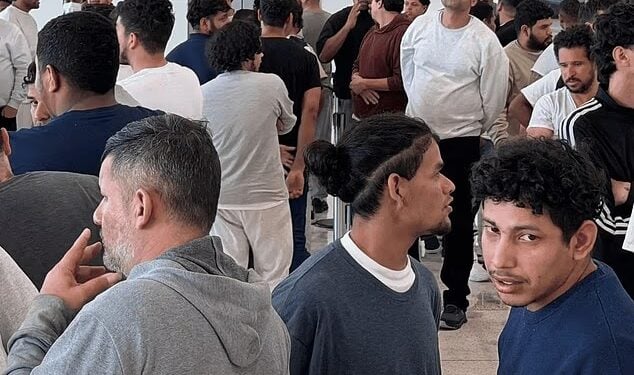
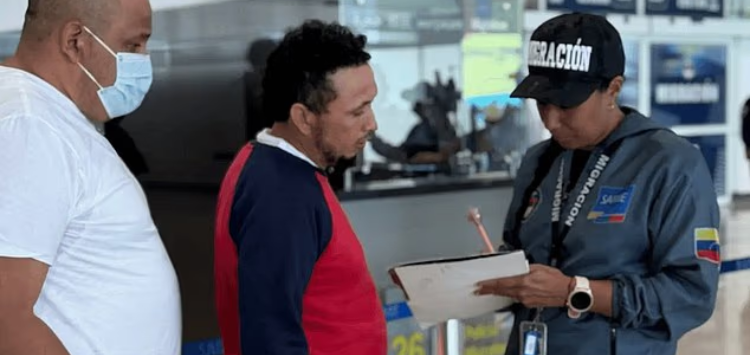
A U.S. deportation flight carrying 146 Venezuelans landed in Caracas on June 24. The group, which included 120 men, 19 women, five boys and two girls, was transported to Hotel Santuario in La Guaira for processing by Venezuelan authorities.
Within hours, a magnitude 7.5 earthquake, preceded by a 7.2 foreshock, devastated the region, collapsing buildings and trapping many of the deportees.
At least 1,750 people have been confirmed dead across Venezuela, with the toll expected to rise.
The deportees’ arrival coincided with the disaster, leaving families in desperate searches through hospitals and morgues.
Deportation Timing Raises Questions
The flight, tracked by ICE Flight Monitor, departed Miami and arrived at Simón Bolívar International Airport at 10:22 a.m. Venezuelan time.
Also Read: Insider Reveals Trump’s Secret Plan to Go After Cuba After Venezuela
Passengers were greeted by officials from the government’s Return to the Homeland Grand Mission, who shared photos and videos of the group, including children receiving toys.
A Department of Homeland Security spokesperson told reporters that the individuals were no longer in U.S. custody once they reached Venezuela.
“This flight safely reached Venezuela and all illegal aliens on board were returned home,” the spokesperson said. “When an individual is no longer in ICE custody, ICE is no longer responsible for them.”
Deportations to Venezuela had increased in recent months after the U.S. ended Temporary Protected Status for hundreds of thousands of migrants.
Survivors Describe Chaos at Hotel
Lisbeth Portillo was among those at Hotel Santuario. She told the Associated Press she was in a second-floor room with 16 other women when the shaking began.
“The sky went black,” she said. Buried under debris, she escaped with about 20 others and walked five kilometers to safety.
Anderson Daniel Salcedo survived after 40 hours under rubble but suffered life-changing injuries, including the amputation of his legs.
His grandmother, Marlene Lozano, said the deportees’ phones and documents were taken upon arrival, hindering identification efforts. “He spent 40 hours in that hole,” she said.
Also Read: US Receives 80 Million Barrels of Oil From Venezuela
Other families reported mixed information on survivor numbers, with some citing 12 and others 32. Victor Guanipa Toyo and Daniel Núñez remain unaccounted for. Angelo Mejía Meléndez was identified by a tattoo after his death.
Government Response and Rescue Efforts
Venezuelan authorities have faced criticism amid the chaos. Video from La Guaira showed residents confronting soldiers, demanding tools instead of weapons to clear rubble. “What did you bring weapons for? You should’ve brought a shovel,” one man shouted.
Mervin Maldonado, a politician with the Return to the Homeland program, had documented the deportees’ arrival.
The broader earthquake response has involved search and rescue operations across affected areas, with thousands still missing nationally.
Alonso Guanipa Toyo, whose brother Victor was detained in Texas despite no criminal record, said his family received little government assistance. “If there’s not a corpse, there’s no dead person,” he told NPR.
Human Cost of Coincidence
Oswadeliz Nuñez’s son Daniel, who had lived in Jacksonville and worked in construction, was detained en route to work.
Families described loved ones as having lived legally or with minor infractions.
The precise number of deportee fatalities remains unconfirmed, but reports consistently place it above 100. The earthquakes, centered near Yumare and affecting La Guaira and Caracas, exposed weaknesses in infrastructure and emergency response.