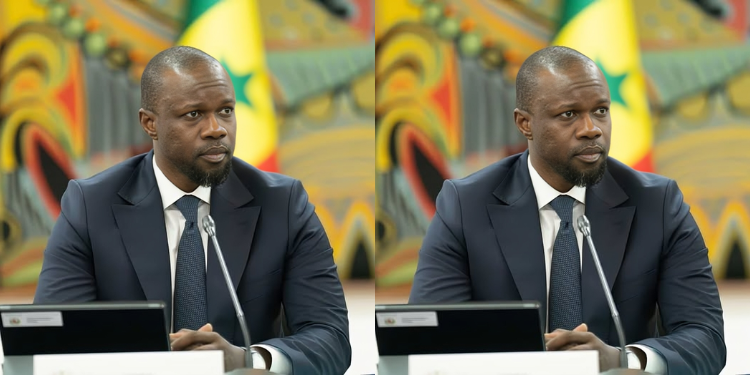
Senegal has suspended all foreign travel by ministers, warning that the ongoing war between Iran, the United States, and Israel has affected the national budget.
According to the Prime Minister, Ousmane Sonko, stated that no minister will leave the country unless the trip is expected to benefit the nation, adding that he had already canceled his trip.
“No minister in my government will leave the country unless it is for an essential mission related to the work we are currently undertaking. I have also already canceled my planned trips to Niger, Spain, and France,” said Ousmane Sonko
Senegal Suspends Foreign Travels for Ministers
Sonko argued that the rising global oil price due to the closure of the Strait of Hormuz is forcing countries to establish mitigation measures to avoid making the lives of citizens hard.
He highlighted that the steps introduced aim to limit public expenditure, noting that the country’s initial budget forecasts were based on an oil price of $62 per barrel, which is now nearly double due to the war in Iran.
Also Read: Senegal’s AFCON 2025 Win Overturned, Morocco Awarded 3-0
Sonko cited such measures as justification for debt‑laden Senegal’s own steps.
He further said that additional measures would be announced, with the Energy and Mines Minister expected to address the nation in the coming days to detail efforts to mitigate the impact of the price shock.
Senegal depends on imported oil despite having an oil refinery.
Nations React to Oil Price Rise Due to Ongoing War in Iran
Elsewhere, in regard to oil price mitigation, South Africa reduced the tax it charges on petrol to limit the increase in the cost of fuel at the pumps.
Fuel shortages in Ethiopia have forced some government institutions to send employees on annual leave, as South Sudan begins rationing electricity in its capital, Juba, while Zimbabwe is increasing the ethanol content in its petrol.
In Ghana, the National Petroleum Authority raised mandatory minimum price floors for the April 1-15 pricing window, pushing petrol prices up around 15 percent to 13.30 cedis ($1.21) per litre (0.26 US gallon) and diesel up roughly 19 percent to 17.10 cedis.
President John Mahama said on Monday that the government was considering steps to cushion consumers, including reducing fuel margins and reviewing a recently imposed levy on petroleum products.
He also raised the prospect of a formal supply agreement with Nigeria’s Dangote refinery to secure alternative sources of refined petroleum. Ghana imports about 70 percent of its refined fuel.
In Malawi, the Energy Regulatory Authority (MERA) imposed even steeper increases, raising petrol prices by 34 percent to 6,672 kwacha ($3.89) per litre and diesel by 35 percent to 6,687 kwacha.