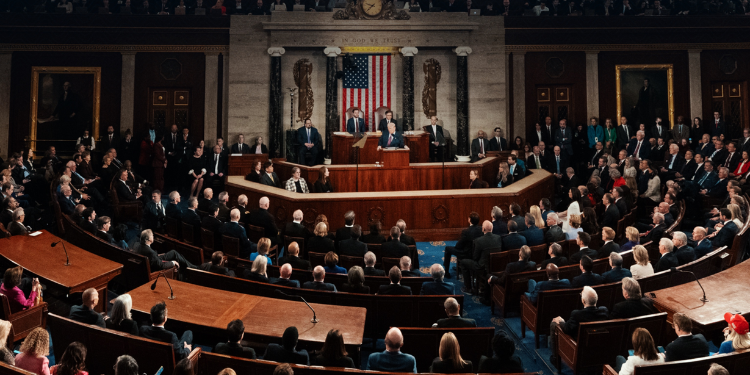
Republicans pushing for President Donald Trump’s backed Safeguard American Voter Eligibility (SAVE) America Act, say they have made major progress on a new strategy to move the bill through the Senate despite the chamber’s strict filibuster rules.
Utah Senator Mike Lee, one of the leading supporters of the voter identification legislation, on Friday, March 13, said Republican lawmakers are working with Senate leadership on what he described as a “hybrid version” of the talking filibuster.
Lee said discussions with Senate Majority Leader John Thune and his staff had been productive as the party looks for ways to keep the legislation alive on the Senate floor.
“We’ve been working closely with Leader Thune and his staff, and they’ve been great to work with,” Lee said.
Hybrid filibuster strategy emerges
According to Lee, the approach would allow Republicans to keep the bill under debate for an extended period before triggering a cloture vote.
Cloture, which ends debate and moves to a final vote, typically needs 60 votes—more than Republicans can secure alone.
Lee said the proposed approach focuses less on procedural terminology and more on maximizing time on the Senate floor.
“What we’re coming up with is something that I think is best described as a hybrid version of the talking filibuster,” he said.
“But look, let’s not get mired down in nomenclature. What matters far more than what we call it is what we do with it.”
The strategy would keep the debate active for an extended period, requiring opponents to repeatedly defend their position.
“We’re going to bring it to the floor. We’re going to debate it for an extended period of time before filing cloture,” Lee added.
Also Read: Trump Turns Up Heat on Senators Opposing Voter ID Bill Ahead of Vote
Supporters of the plan say the approach could force Democrats to publicly defend opposition to the bill during prolonged floor debates.
Lee said he believes the legislation should remain on the Senate floor “for as long as it takes to get it done.”
The bill would require Americans to provide proof of citizenship when registering to vote in federal elections. Acceptable documents would include a U.S. passport, a Real ID confirming citizenship, or a government-issued photo ID paired with a certified birth certificate or naturalization record.
Republicans argue the measure would strengthen election security and prevent non-citizens from registering to vote. Opponents say the proposal could create new barriers for legitimate voters who may not have immediate access to citizenship documentation.
Pressure campaign for SAVE America Act expands inside GOP
As Senate Republicans debate the procedural strategy, some House Republicans are ramping up pressure on the upper chamber to move forward with the legislation.
Texas Representative Brandon Gill said he plans to oppose legislation coming from the Senate until the SAVE America Act is approved.
“I’ll be voting NO on all Senate bills,” Gill said, pledging to block other measures until the voter eligibility legislation advances.
Also Read: GOP Eyes New Tactic to Push Trump’s Voter ID Bill Past Filibuster
Senator Thune has already indicated the chamber plans to take up the SAVE America Act in the coming days.
“Next week, I will bring the SAVE America Act to the floor,” Thune said earlier.
“Senate Democrats will be forced to defend their positions and explain to the American people why common sense and the Democrat Party have parted ways.”
The legislation was previously passed by the House of Representatives in February by a narrow 218–213 vote.
Even before reaching a potential filibuster showdown, Republicans must first secure 51 votes simply to begin debate, a threshold that remains uncertain as some GOP senators have not publicly confirmed their support.