A Republican senator has suggested a new strategy to force a vote on President Donald Trump’s backed SAVE America Act in the Senate if it stalls under the chamber’s filibuster rules.
Wisconsin Senator Ron Johnson, on Thursday, March 12, said he wants senators to hold a vote on eliminating the legislative filibuster after Republicans attempt to advance the voter identification legislation.
Johnson said the move would effectively put lawmakers on record regarding the 60-vote threshold that currently blocks most partisan legislation in the Senate.
“If we do go to a cloture vote on the election bill, immediately after that we ought to vote on ending the filibuster,” Johnson told reporters.
Cloture is the process in the Senate that ends debate and moves toward a final vote on legislation. It typically requires 60 votes, a number Republicans are unlikely to reach on the election measure.
Johnson acknowledged that a vote to end the filibuster would likely fail as well but said forcing the vote would expose where senators stand on weakening the rule.
Republicans push to advance SAVE America Act
The proposal comes as Senate Republicans prepare to begin consideration of the Safeguard American Voter Eligibility (SAVE) Act, a bill that would require proof of U.S. citizenship to register to vote in federal elections.
The legislation cleared the U.S. House of Representatives in February by a narrow 218–213 vote and is now awaiting action in the United States Senate.
If enacted, the bill would amend the National Voter Registration Act to require documentary proof of citizenship, such as a passport, birth certificate, or other approved identification.
Also Read: Betrayal? Top GOP Leader Warns Republicans of Mega Defeat in Midterms
Under current Senate rules, most bills require 60 votes to overcome a filibuster. Senate majority leader John Thune last week indicated the measure lacks the support needed to reach that threshold.
“We’re not even close,” Thune said when asked about the number of votes needed to advance the bill.
Even before reaching that stage, Republicans must first secure 51 votes simply to begin debating the legislation. North Carolina Republican senator Thom Tillis has already said he plans to vote against taking up the bill, while several other GOP senators have not yet revealed their positions.
Talking filibuster proposal fades
Some conservative Republicans had earlier suggested reviving a “talking filibuster” as a way to pressure Democrats to physically hold the Senate floor to block the bill. The idea was promoted by senators, including Mike Lee of Utah.
A traditional talking filibuster would require opponents to speak continuously to delay a vote, rather than simply blocking it through procedural rules.
However, the proposal has raised concerns among Republican leaders who fear it could backfire by giving Democrats the ability to delay other legislative priorities for weeks or months.
Johnson also noted that such a process could open the door for politically difficult amendment votes that might put vulnerable Republican incumbents in a challenging position ahead of the next election cycle.
Lee later suggested Republicans could instead delay filing a cloture motion for as long as possible to increase pressure on Democrats.
“We shouldn’t file for cloture until we think we can get to 60,” Lee said in a video posted online.
Republican representative from Florida and a close ally of Trump Anna Paulina Luna, last week also proposed attaching the SAVE Act to legislation renewing the Foreign Intelligence Surveillance Act (FISA).
The surveillance law is considered essential for maintaining U.S. intelligence authorities and is widely viewed as must-pass legislation.
Luna said attaching the voter eligibility bill to the measure could force the Senate to consider both measures together.
“If the Senate is unwilling to do the right thing and pass the SAVE America Act by breaking the standing filibuster, the only way to get this done is to stick it on FISA,” she said.
She had previously floated the same tactic earlier this year, arguing that attaching the proposal to critical legislation could be the most viable path to getting it to the president’s desk.
Trump intensifies push for nationwide voter ID
President Trump has repeatedly urged Congress to approve the SAVE America Act, describing it as a key safeguard for American elections.
Also Read: Republican Floats Plan B to Force Trump’s Voter ID Bill Through Senate if Blocked
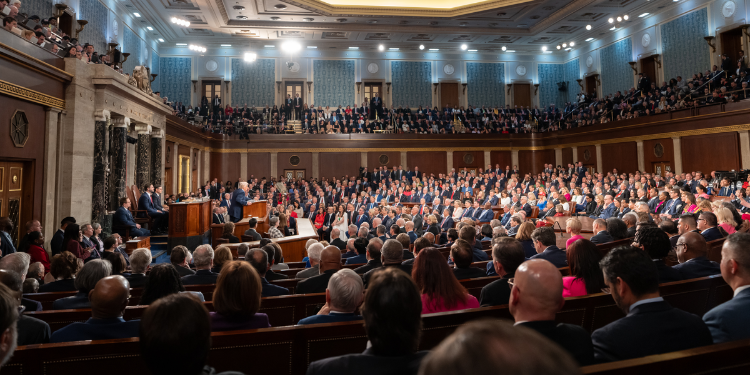
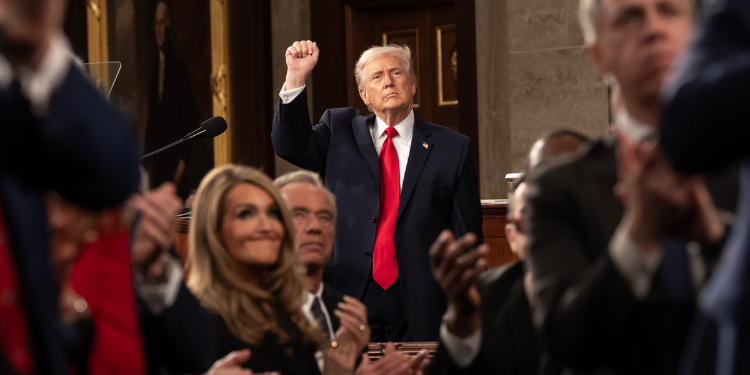
During his State of the Nation (SOTU) address to Congress, the president called on lawmakers to pass the legislation.
“I’m asking you to approve the SAVE America Act to stop illegal aliens and others who are uncommitted persons from voting in our sacred American elections,” Trump said.
The president has also indicated he could pursue executive action if Congress fails to pass the bill.
“There will be voter I.D. for the midterm elections, whether approved by Congress or not,” he said in a social media post.
Democrats and voting rights advocates have strongly criticized the proposal, arguing that stricter documentation requirements could limit access to the ballot.
Illinois governor J. B. Pritzker said the legislation is not primarily about election security.
“The SAVE Act isn’t about stopping fraud — it’s about stopping voters,” he wrote on social media.
The Senate has not yet scheduled a final vote on the legislation, though Republican leaders say debate could begin in the coming weeks.