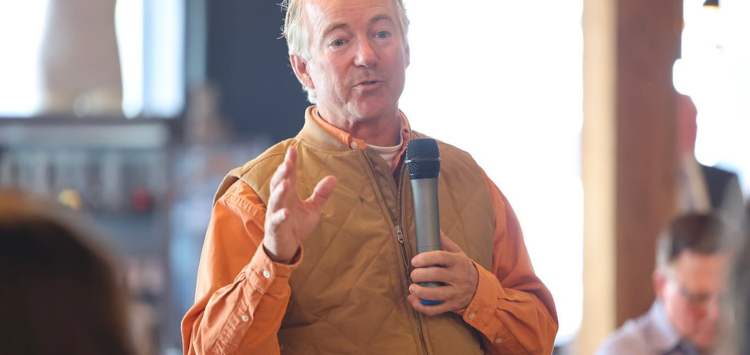
Republican Senator Rand Paul has issued a rare and stark warning that the GOP faces a potentially catastrophic loss in the upcoming 2026 midterm elections, pointing to the ongoing conflict with Iran and rising gas prices as major threats to the party’s electoral prospects.
During a March 10th interview on Fox Business Morning, Paul spoke candidly about the challenges facing Republicans. When asked how worried he was that a split party could cost them in the midterms, Paul said,
“I don’t think a split party is the problem. I think high war prices would be a problem. I think the 2026 elections, we are already behind in the polls, as far as the electoral process goes. If you add in high gas prices, and if we are still bombing Iran, people don’t want to call it war, we are going to see disastrous elections.”
Paul’s remarks underscore growing concern among some Republican lawmakers about the domestic political impact of U.S. military action in Iran. While military strikes may achieve short-term strategic goals, the consequences at home, particularly rising household energy costs and declining public approval, could significantly affect GOP candidates in swing districts.
Energy prices have already started climbing due to escalating tensions in the Middle East. Gasoline costs in key battleground states have surged above $4 per gallon, undercutting the Republican Party’s economic messaging.
Also Read: Republicans in a Tight Spot as Trump Boycotts All GOP Bills, Affecting Tens of Millions of Americans
“The Iran war is creating multiple challenges for Republicans,” said political analyst James Carver. “It’s undermining the party’s economic narrative and giving Democrats strong issues to mobilize voters around. When combined with public skepticism about the war and internal GOP disagreements, the midterms could be very difficult for the party.”
Paul’s comments also reflect concerns about the internal divisions within the Republican Party. While he downplayed party splits as the main issue, other Republicans have criticized the party’s approach to foreign policy.
Some “America First” conservatives argue that escalation in the Middle East contradicts promises of non-interventionism, creating tension between different factions within the GOP.
Recent public opinion polls show a decline in Republican approval ratings for handling both foreign policy and the economy. Some prediction markets now suggest that Democrats have a strong chance of flipping several House and Senate seats, signaling a possible shift in congressional control.
The lack of clear congressional authorization for military action in Iran adds another layer of uncertainty. Swing-district Republicans, particularly in states sensitive to energy prices and economic issues, may hesitate to fully support the administration’s strategy, fearing voter backlash.
If Republicans lose their congressional majority, it could limit the party’s ability to pass legislation on critical domestic priorities such as energy policy, healthcare, and economic reform.
Despite the challenges, Paul stressed that party unity is not the primary problem. Instead, he said, voters’ concerns over high war-related costs and public fatigue with military escalation are the real threats.
Follow our WhatsApp Channel and X Account for real-time news updates.