A close ally of President Donald Trump is proposing a new strategy to push the SAVE America Act through Congress if it fails to clear the Senate as a standalone measure.
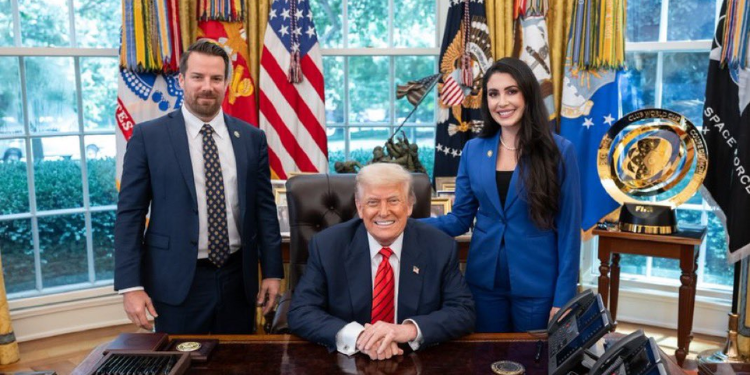
Republican Representative Anna Paulina Luna said on Friday, March 7, evening that she is considering attaching the controversial voter eligibility bill to legislation reauthorizing the Foreign Intelligence Surveillance Act (FISA).
Luna proposed that, if the Senate poses a barrier, Republicans could attach the SAVE Act to FISA reauthorization—a vital measure for maintaining national security surveillance powers.
“If the Senate is unwilling to do the right thing and pass the SAVE America Act by breaking the standing filibuster, the only way to get this done is to stick it on FISA.”
Last month, the Florida lawmaker had floated the same tactic, stating that attaching the bill to must-pass legislation might be the only way to ensure it reaches the president’s desk.
“We will attach it to FISA if we have to. Get it done! Voter ID is one of the most important issues in the world…I want it signed into law. And I think that if that’s the way that you have to do it, then so be it,” Luna said.
SAVE America Act faces Senate roadblock
The Safeguard American Voter Eligibility (SAVE) Act passed the House of Representatives on February 11, 2026, by a narrow vote of 218–213 and is now awaiting action in the Senate.
The bill would amend the National Voter Registration Act to require Americans registering to vote in federal elections to provide documentary proof of citizenship, such as a passport or birth certificate.
Supporters argue the measure would strengthen election security and prevent non-citizens from voting — an act that is already illegal under U.S. law.
Opponents, however, say the bill could create new barriers for millions of legitimate voters who may not have immediate access to citizenship documentation.
Despite Republicans holding a majority in the Senate, leaders have acknowledged the bill faces a steep hurdle.
Senate Majority Leader John Thune has indicated the legislation currently lacks the 60 votes required to overcome a Democratic filibuster.
“We’re not even close,” Thune said regarding the votes needed to advance the bill.
Also Read: Court Sides with Trump in Chicago Immigration Crackdown, Removes Limits on Federal Force
Trump has repeatedly urged lawmakers to pass the SAVE Act, describing it as a crucial safeguard for American elections.
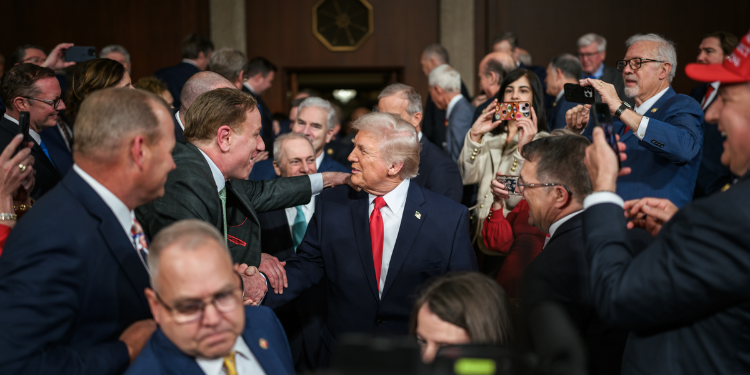
During his 2026 State of the Union (SOTU) address, the president called on Congress to approve the legislation.
“I’m asking you to approve the SAVE America Act to stop illegal aliens and others who are uncommitted persons from voting in our sacred American elections,” Trump said.
The president also argued that voters should be required to present identification and proof of citizenship when casting ballots.
Voter access issues
Democrats and voting rights advocates have strongly criticized the proposal. Illinois Governor J. B. Pritzker wrote on social media that the measure is not about fraud prevention.
“The SAVE Act isn’t about stopping fraud — it’s about stopping voters,” Pritzker said on February 25.
President Trump last month also stepped up his push for nationwide voter ID, announcing that the rule will be in place for the next midterm elections, even if Congress does not pass the bill.
He also said that checking citizenship and limiting mail-in ballots, except for military, illness, disability, or travel, are key parts of his election plans.
Trump suggested he might take executive action if Congress does not pass the bill, saying he is working on what he called an “irrefutable” legal reason to put voter ID in place nationwide.
“There will be Voter I.D. for the Midterm Elections, whether approved by Congress or not!”
Senate math
The current Republican-backed version of the bill introduces nationwide requirements for voter identification and more stringent verification of U.S. citizenship.
These provisions expand on the original SAVE Act by specifying what documentation is required for registration and how authorities should confirm citizenship status.
Also Read: With or Without Congress: Bullish Trump Vows Voter ID for Midterms
If enacted, the bill would require individuals to present specific documents proving U.S. citizenship when registering to vote.
Acceptable documents would include a U.S. passport, a Real ID that confirms citizenship, or a government-issued photo ID paired with a certified copy of a birth certificate or naturalization record.
In addition, the bill mandates that states verify the citizenship status of voters using federal databases, such as the Department of Homeland Security’s SAVE system.
States must remove non-citizens from voter rolls, and federal agencies are required to respond to state verification requests within 24 hours.
Support for stricter federal voting regulations has increased following Maine Senator Susan Collins’s decision to become the 50th Republican co-sponsor of the Trump-backed bill.
The Senate has not yet scheduled a vote on the SAVE Act, though Republican leaders say it will likely be considered in the coming weeks.
Follow our WhatsApp Channel and X Account for real-time news updates.