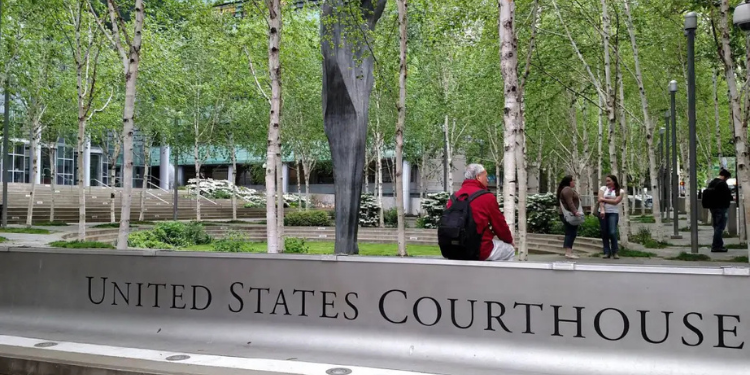
The Justice Department (DOJ) told two federal judges on Friday, June 5, that it has scrapped the $1.7 billion anti-weaponization fund and asked the courts to dismiss lawsuits challenging the program because it is no longer moving forward.
In court filings in Alexandria, Virginia, and Washington, D.C., senior DOJ officials said the cases are now moot.
DOJ Moves to Shut Down $1.7 Billion Anti-Weaponization Fund Case
The fund was never set up, they wrote, and Acting Attorney General Todd Blanche has made clear it will not happen.
This is the first time the Trump administration has put that decision in writing.
“This dispute concerns an Anti-Weaponization Fund that had not been set up and is now not going forward,” the filings state. “As a result, Plaintiffs’ claims are not justiciable.”
The documents were signed by Associate Attorney General Stanley Woodward and his senior counsel, Andrew Block.
They argue that allowing the lawsuits to proceed would enable judges to “unwind a preferable political resolution” and insert themselves into a debate that belongs in the political arena.
One lawsuit was filed by the watchdog group Citizens for Responsibility and Ethics in Washington. The other was filed by several plaintiffs, including a former federal prosecutor who worked on cases related to January 6.
Last week, U.S. District Judge Leonie Brinkema in Virginia issued a temporary block on the fund to prevent any money from going out while she considered the case.
Also Read: Explosive Backlash Erupts as Democrats, Republicans Attack Trump’s $1.8B ‘Anti-Weaponization’ Fund
The DOJ now wants Brinkema to reject calls for a longer-term injunction. Lawyers wrote that the public interest does not support courts stepping in to shut down something that has already been halted.
They described the fierce public debate over the fund as a normal part of how the constitutional system works.
The fund was part of a settlement that ended Trump’s lawsuit against the IRS over the leak of his tax returns.
The agreement included an apology from the IRS and a promise to create the $1.776 billion fund from the Treasury’s Judgment Fund.

The money was supposed to go to people who claimed they were victims of lawfare and government weaponization. A commission would have reviewed claims and decided on payouts and possible apologies.
News of the fund sparked backlash, with lawmakers from both parties showing worry it could end up paying people charged in the January 6 Capitol attack.
Also Read: California Tech Executive Arrested as DOJ Unveils Alleged Iran Nuclear Supply Operation
That concern nearly derailed a $70 billion Republican package to fund immigration agencies. The Senate passed the package early Friday without adding any restrictions on the fund.
Blanche told a House committee on Tuesday that the Justice Department was “not moving forward” with the program.
At the time, he would not commit the promise to writing, which left some lawmakers skeptical. President Trump defended the idea on Wednesday, calling it a “beautiful thing.”
The DOJ filings stated that other parts of the Trump-IRS settlement remain untouched. Trump and his family dropped their $10 billion lawsuit with prejudice. The IRS issued its apology.
And the agreement permanently bars the IRS from taking action against Trump or his companies based on prior tax returns.
The fund, announced in mid-May, drew criticism from fiscal watchdogs who questioned the granting of sweeping power to a small commission to distribute nearly $1.8 billion in taxpayer money.
What the DOJ Filing Means for Ongoing Legal Challenges
The White House and Trump allies had argued it would help ordinary citizens fight back against what they called politicized prosecutions.
The potential payout to January 6 defendants became the flashpoint that doomed it.
The Justice Department filings suggest the administration wants to end this chapter and avoid further legal entanglement.
Blanche’s earlier comments, now backed by formal court papers, appear to put an end to the program.
Some Democrats have called for legislation to prevent any similar effort from resurfacing.