President Donald Trump confirmed on Tuesday, June 9, that U.S. forces carried out strong retaliatory strikes on Iranian targets after Iran shot down an American Apache helicopter near the Strait of Hormuz.
The incident happened Monday night after Iran used a one-way Shahed attack drone to bring down the Army helicopter during a patrol.
U.S. officials said. Both crew members survived and were rescued unharmed.
Trump revealed Iran’s involvement through a social media post earlier in the day. “I have just been informed by our Great Military that last night the Iranians shot down one of our highly sophisticated Apache Helicopters while patrolling over the Strait of Hormuz,” he wrote.
“There were two pilots involved, both are safe and uninjured. Nevertheless, the United States must, of necessity, respond to this attack.”
Trump Confirms Retaliatory Action Against Iran
Later on, in comments to reporters, Trump described the ongoing U.S. response as “very strong, very powerful.” He said the military acted quickly on his orders.
U.S. Central Command issued a statement confirming the strikes began around 5 p.m. Eastern Time on Tuesday.
“CENTCOM forces began launching self-defense strikes against Iran… The mission is a proportional response to unjustified Iranian aggression,” the statement said.
Explosions rocked areas near Bandar Abbas, Qeshm Island, and Sirik Port along Iran’s southern coast.
Iranian state media, including Tasnim News Agency, reported the blasts and described them as U.S. attacks on military sites.
Iran Threatens Response as Ceasefire Faces New Test
Tasnim said Iran would deliver a “decisive response“ to what it called American aggression.
This flare-up comes against a fragile ceasefire that took hold in early April after months of wider fighting. That earlier round began in late February with major U.S. and Israeli strikes on Iranian facilities.
Iran hit back with missiles and drones across the region, and tensions have centered on control of the Strait of Hormuz ever since.
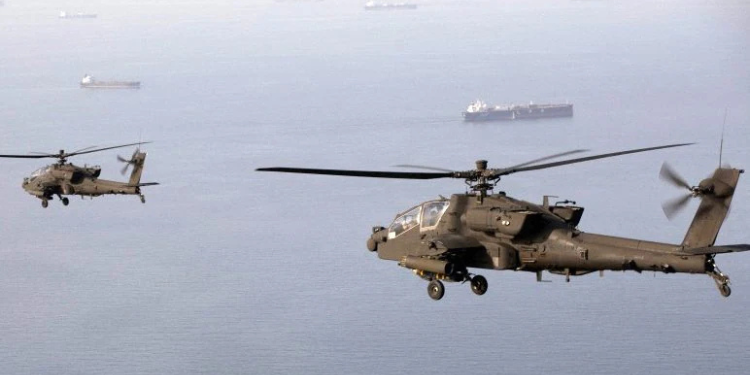
The narrow waterway carries about one-fifth of the world’s oil supply. Disruptions there have driven up global energy prices and created headaches for shippers.
Also Read: Trump Vows Revenge After Iran Shoots Down U.S. Apache Helicopter
According to several media reports, the latest U.S. action appeared limited to radar sites, coastal defenses, and naval facilities tied to the helicopter incident.
CENTCOM described it as self-defense rather than the start of a new full-scale war. Still, any strike inside Iran raises the risk of brutal retaliation.
Iranian officials rejected U.S. claims as some regime voices blamed the helicopter crash on mechanical failure or other foreign actors.
Tasnim and other Iranian outlets reported that Tehran would hit back, though they gave no timeline or specific targets.
In Washington, Trump described the response as necessary to protect American forces. “They shot down a helicopter, and we are responding as we speak,” he said.
So far, the Pentagon has not released full details on the targets hit or the damage caused.
Also Read: Trump Stuns With Iran Rebuild Proposal, Says U.S. Could Get ‘Half Their Oil’ in Return
This latest development resembles the obvious pattern of tit-for-tat actions that have kept the region on edge since the April ceasefire.
Earlier, limited exchanges targeted similar sites around Bandar Abbas and Qeshm without entirely collapsing the truce.
Gulf Arab states had earlier expressed quiet concern about spillover risks to their own territory and shipping lanes.
The war is expected to escalate if Iran’s promised response materializes, and how far it goes.
U.S. forces in the region remain on heightened alert as Tehran usually targets U.S. military assets in the Middle East during its revenge operations.
Trump’s administration has signaled that while it prefers de-escalation, it will not tolerate attacks on American personnel or assets.
Follow our WhatsApp Channel and X Account for real-time news updates.