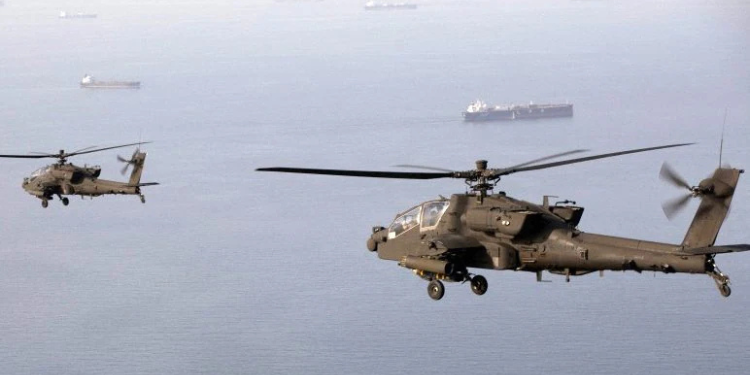
President Donald Trump has said the United States will respond after Iran shot down a U.S. Apache helicopter over the Strait of Hormuz, heightening tensions in a region already strained by fresh airstrikes and a shaky ceasefire.
Trump confirmed the attack in a post on Truth Social on Tuesday, June 9, and revealed that all crew members were rescued.
“I have just been informed by our Great Military that last night the Iranians shot down one of our highly sophisticated Apache Helicopters while patrolling over the Strait of Hormuz,” he wrote.
“There were two pilots involved, both are safe and uninjured. Nevertheless, the United States must, of necessity, respond to this attack.”
Rescue Operation Saves Two U.S. Pilots at Sea
The two pilots spent more than two hours in the water off the coast of Oman before rescue.
An unmanned speedboat picked them up in what officials described as the first mission of its kind. Both men escaped without injury.
U.S. officials say an Iranian drone struck the Apache, causing it to crash. Investigators are still examining whether the strike was deliberate or accidental.
A senior U.S. official told Axios that the drone struck the helicopter, but the review has not yet determined intent.
Also Read: Trump Stuns With Iran Rebuild Proposal, Says U.S. Could Get ‘Half Their Oil’ in Return
The incident happened near one of the world’s most critical oil shipping routes. It comes just days after Iran and Israel traded airstrikes.
Trump had pushed for the pause in fighting after what he called a “very good conversation” with Israeli Prime Minister Benjamin Netanyahu.
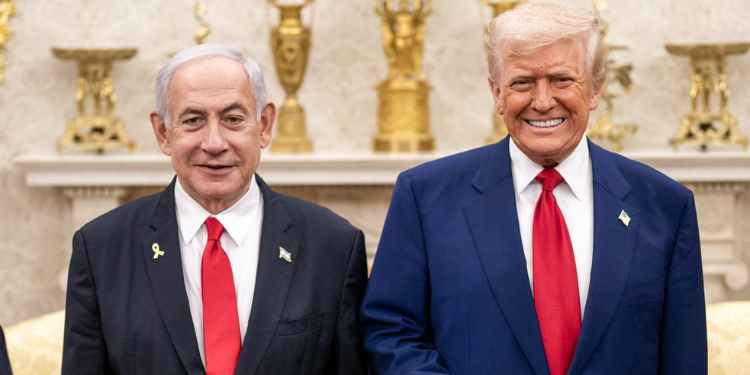
He said Monday that negotiators are in the “final throes” of a major peace deal that could be reached in “two or three days.”
How the Incident Escalates U.S.–Iran Tensions
Despite those efforts, the helicopter downing has raised fears of another spiral. Trump did not spell out what form the U.S. response would take.
In past cases of ceasefire violations, American forces have launched missiles at Iranian military sites along the coastline.
Iran’s foreign minister, Abbas Araghchi, wrote on X and warned that foreign forces operating near Iranian territory put themselves at risk through “human errors, plain accidents, or potentially being caught in crossfire.” He added, “To reduce risk, the best solution is for them to leave.”
Why Strait of Hormuz Escalation Matters
About one-fifth of global oil shipments pass through the Strait of Hormuz. The turmoil there has been driving up energy prices and shaking markets.
The U.S. has a military presence in the area to protect shipping lanes and assist allies.
This is not the first time Iranian forces have targeted American aircraft or drones in the region. Previous incidents have sometimes led to limited U.S. strikes.
Trump’s call for a necessary response echoes past statements when he ordered action against Iranian targets after attacks on U.S. assets. However, it seems he has resolved to combine diplomacy with a show of strength.
He is pressing for a final deal with Iran, while also signaling that attacks on American forces won’t go unpunished.
Also Read: Iran Fires Ballistic Missiles at Israel in First Major Attack Since Ceasefire
So far, White House officials have not released any supplementary details about possible military options or the dates.
The Apache is a highly advanced attack helicopter used for close combat support and reconnaissance.
Its loss, even without casualties, represents a serious challenge to U.S. operations in contested airspace.
U.S. Central Command has not issued a full public statement on the crash beyond confirming the drone strike and the safe rescue.
Meanwhile, the drone boat rescue of the pilots is being hailed as a technological milestone for the U.S. military’s recovery operations. Officials hope the method can reduce risk to further personnel in hostile waters.
Follow our WhatsApp Channel and X Account for real-time news updates.